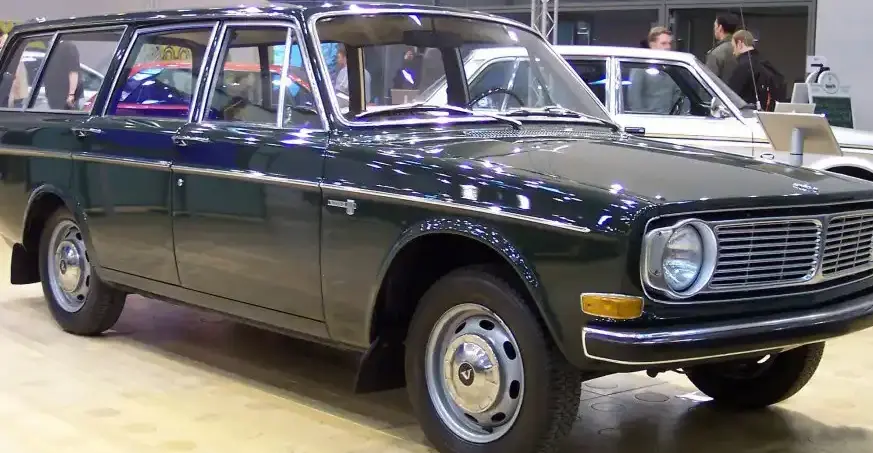
The Volvo 140 Combi (specifically the 145 model) 2.0 S, producing 82 horsepower, was a mainstay of the Swedish automaker’s lineup from 1968 to 1974. Representing a significant step forward in Volvo’s estate car offerings, the 145 combined practicality with the renowned Volvo safety features of the era. It was built on the 140 series platform, which also included sedan and coupe variants, and played a crucial role in establishing Volvo’s reputation for durable, family-oriented vehicles, particularly in European markets. The “S” designation denoted a specific trim level, typically indicating a slightly more equipped version compared to the base models.
Technical Specifications
| Brand | Volvo |
| Model | 140 |
| Generation | 140 Combi (145) |
| Type (Engine) | 2.0 S (82 Hp) |
| Start of Production | 1968 |
| End of Production | 1974 |
| Powertrain Architecture | Internal Combustion Engine |
| Body Type | Station Wagon (Estate) |
| Seats | 5 |
| Doors | 5 |
| Fuel Type | Petrol (Gasoline) |
| Power | 82 Hp |
| Engine Model/Code | B20A |
| Engine Aspiration | Naturally Aspirated |
| Engine Oil Capacity | 3.8 l (4.02 US qt | 3.34 UK qt) |
| Coolant Capacity | 8.6 l (9.09 US qt | 7.57 UK qt) |
| Fuel Tank Capacity | 58 l (15.32 US gal | 12.76 UK gal) |
Powertrain & Engine Architecture
The heart of the 145 2.0 S was the Volvo B20A engine, a 1,986 cc (121.1 cubic inch) inline-four cylinder powerplant. This engine was a cornerstone of Volvo’s engineering for many years, known for its robustness and relatively simple design. The B20A featured a cast iron block and cylinder head, with a single overhead camshaft operating pushrods to actuate the valves. Fuel delivery was managed by a Solex carburetor, a common setup for the time. The engine produced 82 horsepower at 5,200 rpm and approximately 118 lb-ft of torque at 3,000 rpm. The “S” variant typically came paired with a three-speed automatic transmission with overdrive, offering a more relaxed driving experience compared to the available four-speed manual. This automatic transmission, while providing convenience, was not known for its particularly quick shifts or sporty feel.
Driving Characteristics
The 145 2.0 S Automatic offered a comfortable, if not particularly exhilarating, driving experience. The automatic transmission, while smooth, did detract from the engine’s available power. Acceleration was adequate for everyday driving, but overtaking maneuvers required careful planning. The gear ratios were optimized for fuel economy and cruising comfort rather than outright performance. Compared to the manual transmission versions of the 145, the automatic models felt noticeably slower. The B20A engine, even in its 82 hp guise, provided sufficient torque for hauling passengers and cargo, making it a practical choice for families. The suspension, consisting of independent front suspension with coil springs and a solid rear axle with leaf springs, provided a reasonably comfortable ride, though it could feel somewhat bouncy when fully loaded.
Equipment & Trim Levels
The 145 2.0 S trim level positioned itself as a mid-range offering within the 140 Combi lineup. Standard equipment included comfortable cloth upholstery, a wood-trimmed dashboard, and basic instrumentation. The “S” designation often included features like a more comprehensive instrument cluster, upgraded interior trim, and potentially a radio as standard equipment. Optional extras included power steering, a sunroof, and upgraded audio systems. The interior was characterized by its functional design and emphasis on durability, reflecting Volvo’s commitment to practicality. The 145’s spacious interior and large cargo area were key selling points, making it a popular choice for families and those needing to transport large items.
Chassis & Braking
The 145 2.0 S utilized a robust chassis designed for both comfort and safety. The front suspension featured independent coil springs and wishbones, while the rear employed a solid axle with leaf springs. Braking was initially accomplished with drum brakes on all four wheels, though later models often received front disc brakes as standard equipment. The braking system was hydraulically operated, providing adequate stopping power for the vehicle’s weight and intended use. Steering was a traditional recirculating ball system, offering a relatively heavy but precise feel. The 145’s chassis was designed to prioritize stability and safety, reflecting Volvo’s pioneering work in automotive safety engineering.
Market Reception & Comparison
The Volvo 145 2.0 S Automatic was generally well-received by critics and consumers alike. It was praised for its practicality, durability, and safety features. However, the automatic transmission was often criticized for its sluggish performance compared to the manual versions. Compared to other estate cars of the era, such as the Ford Cortina Estate or the Vauxhall Victor Estate, the Volvo 145 offered a more refined and sophisticated driving experience, along with a stronger emphasis on safety. Fuel economy was reasonable for the time, averaging around 20-25 mpg, but was not a standout feature. The 145’s higher price point compared to some of its competitors reflected its superior build quality and safety credentials.
Legacy
The Volvo 145 2.0 S, and the 140 series as a whole, left a lasting legacy on the automotive landscape. The B20A engine proved to be exceptionally durable, with many examples still running reliably today. The 145’s emphasis on safety helped to establish Volvo’s reputation as a leader in automotive safety technology. In the used car market, the 145 2.0 S is sought after by enthusiasts and collectors for its classic styling, robust construction, and relative simplicity. While the automatic transmission may not be the preferred choice for performance enthusiasts, it remains a practical and comfortable option for those seeking a classic Volvo estate car. Parts availability is generally good, thanks to the 140 series’ popularity and the continued support from Volvo and aftermarket suppliers. The 145 2.0 S stands as a testament to Volvo’s commitment to building durable, safe, and practical vehicles.