
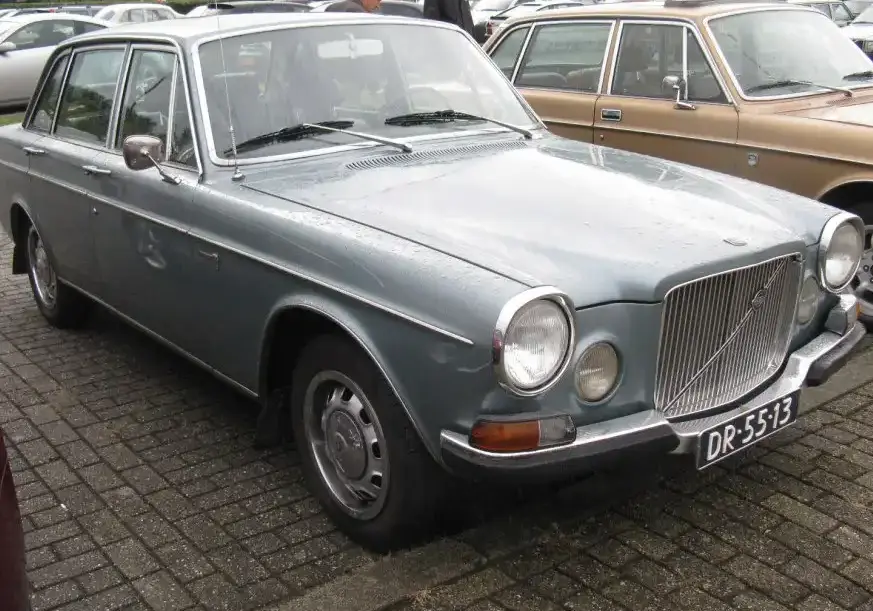
The Volvo 164 2.9, produced between 1968 and 1972, represents a pivotal moment in Volvo’s history. It was the first Volvo to feature a six-cylinder engine, marking a significant step up in refinement and performance for the Swedish automaker. Positioned as a premium offering within the Volvo lineup, the 164 aimed to compete with larger, more luxurious sedans from European manufacturers. It served as a technological showcase for Volvo, introducing features that would become hallmarks of the brand, such as advanced safety engineering and a focus on passenger comfort. The 164 was built on a lengthened version of the Volvo 140 series platform, designated internally as the P1800 series, and distinguished itself with a more sophisticated character than its four-cylinder siblings.
Technical Specifications
| Brand | Volvo |
| Model | 164 |
| Generation | 164 |
| Type (Engine) | 2.9 (160 Hp) |
| Start of Production | 1968 |
| End of Production | 1972 |
| Powertrain Architecture | Internal Combustion Engine |
| Body Type | Sedan |
| Doors | 4 |
| Fuel Type | Petrol (Gasoline) |
| Power | 160 Hp |
| Engine Model/Code | B30F |
| Engine Aspiration | Naturally Aspirated |
| Engine Oil Capacity | 6 l (6.34 US qt | 5.28 UK qt) |
| Fuel Tank Capacity | 58 l (15.32 US gal | 12.76 UK gal) |
Powertrain & Engine Architecture
The heart of the Volvo 164 2.9 is the B30F engine, a 2.855-liter (174.2 cubic inch) inline-six cylinder powerplant. This engine was a completely new design for Volvo, departing from the company’s traditional four-cylinder engines. The B30F featured a cast iron block and an aluminum cylinder head, contributing to its durability and relatively lightweight construction. It employed a single overhead camshaft (SOHC) valvetrain, operating two valves per cylinder. Fuel delivery was managed by a Solex 465 carburetor, a common setup for European cars of the era. The engine produced 160 horsepower at 5,200 rpm and 172 lb-ft of torque at 3,000 rpm. The transmission paired with the B30F was typically a four-speed manual, but a three-speed automatic transmission (Borg-Warner Type 35) was also available, and is the focus of this article. The automatic transmission, while offering convenience, did slightly diminish the car’s acceleration compared to the manual version.
Driving Characteristics
The Volvo 164 2.9 with the automatic transmission offered a smooth and refined driving experience, prioritizing comfort over outright performance. The automatic gearbox, while not particularly sporty by modern standards, provided seamless gear changes and made the car easy to drive in city traffic. Acceleration from 0 to 60 mph took approximately 10.5-11.5 seconds, which was respectable for the late 1960s/early 1970s, but noticeably slower than the manual transmission equipped models. The gear ratios in the automatic were geared more towards fuel economy and relaxed cruising than rapid acceleration. The B30F engine, however, provided ample torque, making the car feel effortless on the highway. The 164’s suspension, featuring independent front suspension with coil springs and a solid rear axle with leaf springs, provided a comfortable ride, absorbing bumps and imperfections in the road effectively. Steering was relatively light, making maneuvering easy, although it lacked the precision of more modern steering systems.
Equipment & Trim Levels
The Volvo 164 was generally well-equipped for its time, reflecting its position as a premium model. Standard features included comfortable cloth upholstery, woodgrain interior trim, and a comprehensive instrument panel. The dashboard layout was clean and functional, with clearly marked gauges for speed, fuel level, coolant temperature, and oil pressure. Power steering and power-assisted disc brakes on the front wheels were also standard. Optional extras included air conditioning, a sunroof, and a radio. The automatic transmission version often came with slightly more luxurious interior appointments as standard, appealing to buyers who prioritized convenience and comfort. Interior color schemes typically involved muted tones of blue, brown, and beige, reflecting the Scandinavian design aesthetic.
Chassis & Braking
The Volvo 164’s chassis was based on a lengthened version of the Volvo 140 series platform, providing a stable and robust foundation. The front suspension utilized independent coil springs and wishbones, while the rear suspension employed a solid axle with leaf springs. This setup provided a good balance between ride comfort and handling. Braking was handled by disc brakes on the front wheels and drum brakes on the rear wheels. The braking system was hydraulically operated and provided adequate stopping power for the car’s weight and performance. A stabilizer bar was fitted to the front suspension to reduce body roll during cornering. The 164’s relatively heavy weight (around 3,200 lbs) contributed to its stability, but also impacted its acceleration and fuel economy.
Market Reception & Comparison
The Volvo 164 was generally well-received by automotive critics and buyers alike. It was praised for its comfortable ride, spacious interior, and robust build quality. The six-cylinder engine was a significant selling point, offering a level of refinement that was not typically found in Volvo’s four-cylinder models. However, the automatic transmission version was sometimes criticized for its slightly sluggish performance compared to the manual transmission models. Compared to its competitors, such as the Mercedes-Benz 200 and the BMW 2000, the Volvo 164 offered a compelling combination of luxury, safety, and value. Fuel economy was reasonable for the era, averaging around 17-20 mpg. Reliability was generally good, although the automatic transmission could be prone to occasional issues if not properly maintained. The 164’s emphasis on safety, with features like seat belts and a reinforced passenger compartment, also resonated with buyers.
Legacy
The Volvo 164 holds a significant place in Volvo’s history as the first model to feature a six-cylinder engine. It paved the way for future Volvo models with larger engines and more luxurious appointments. The B30F engine proved to be a durable and reliable powerplant, and many examples are still on the road today. In the used car market, the Volvo 164 is appreciated by enthusiasts for its classic styling, comfortable ride, and robust construction. The automatic transmission versions are generally more affordable than the manual transmission models, making them an attractive option for buyers who prioritize convenience and ease of driving. While maintenance can be challenging due to the car’s age, parts availability is generally good, and a dedicated community of Volvo enthusiasts provides support and resources for owners. The 164 remains a testament to Volvo’s commitment to safety, quality, and Scandinavian design.
