
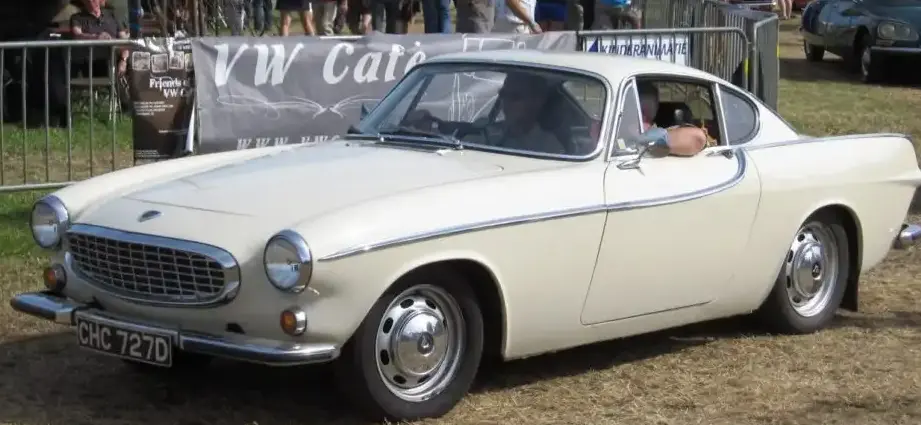
The Volvo 1800S 1.8, producing 108 horsepower, represents a pivotal iteration of the iconic Swedish coupe. Produced between 1963 and 1965, it occupied a key position within the first generation (P1800) of this model, built upon the Volvo 1HX0 chassis. This variant aimed to balance performance with affordability, offering a more accessible entry point into the 1800 range while retaining the car’s distinctive styling and sporting character. It was a significant model for Volvo, helping to establish the brand’s reputation for safety and understated elegance in the American market, where a substantial portion of these vehicles were exported.
Technical Specifications
| Brand | Volvo |
| Model | 1800 |
| Generation | 1800S |
| Type (Engine) | 1.8 (108 Hp) |
| Start of production | 1963 |
| End of production | 1965 |
| Powertrain Architecture | Internal Combustion engine |
| Body type | Coupe |
| Seats | 4 |
| Doors | 2 |
| Fuel Type | Petrol (Gasoline) |
| Maximum speed | 175 km/h (108.74 mph) |
| Weight-to-power ratio | 10.4 kg/Hp, 96.4 Hp/tonne |
| Weight-to-torque ratio | 7.5 kg/Nm, 133 Nm/tonne |
| Power | 108 Hp @ 5800 rpm |
| Power per litre | 60.7 Hp/l |
| Torque | 149 Nm @ 4000 rpm (109.9 lb.-ft. @ 4000 rpm) |
| Engine layout | Front, Longitudinal |
| Engine Model/Code | B18B |
| Engine displacement | 1780 cm3 (108.62 cu. in.) |
| Number of cylinders | 4 |
| Engine configuration | Inline |
| Cylinder Bore | 84.14 mm (3.31 in.) |
| Piston Stroke | 80 mm (3.15 in.) |
| Compression ratio | 10:1 |
| Number of valves per cylinder | 2 |
| Fuel injection system | Carburettor |
| Engine aspiration | Naturally aspirated engine |
| Valvetrain | OHV |
| Engine oil capacity | 3.75 l (3.96 US qt | 3.3 UK qt) |
| Coolant | 9 l (9.51 US qt | 7.92 UK qt) |
| Kerb Weight | 1120 kg (2469.18 lbs.) |
| Max. weight | 1400 kg (3086.47 lbs.) |
| Max load | 280 kg (617.29 lbs.) |
| Fuel tank capacity | 45 l (11.89 US gal | 9.9 UK gal) |
| Length | 4400 mm (173.23 in.) |
| Width | 1700 mm (66.93 in.) |
| Height | 1285 mm (50.59 in.) |
| Wheelbase | 2450 mm (96.46 in.) |
| Front track | 1315 mm (51.77 in.) |
| Rear (Back) track | 1315 mm (51.77 in.) |
| Ride height (ground clearance) | 155 mm (6.1 in.) |
| Minimum turning circle (turning diameter) | 10 m (32.81 ft.) |
| Drivetrain Architecture | The Internal combustion engine (ICE) drives the rear wheels of the vehicle. |
| Drive wheel | Rear wheel drive |
| Number of gears and type of gearbox | 4 gears, manual transmission |
| Front suspension | Coil spring, Wishbone, Transverse stabilizer |
| Rear suspension | Rigid axle suspension, Trailing arm, Coil spring |
| Front brakes | Disc |
| Rear brakes | Drum |
| Tires size | 165/80 R15 |
| Wheel rims size | 4.5J x 15 |
Powertrain & Engine Architecture
The heart of the 1800S 1.8 was the Volvo B18B engine, an inline-four cylinder unit displacing 1778 cc (108.62 cubic inches). This engine featured a cast iron block and an aluminum cylinder head, a relatively modern construction for the early 1960s. The B18B utilized a single SU carburetor for fuel delivery, a common setup for the time, and an overhead valve (OHV) valvetrain. The engine produced 108 horsepower at 5800 rpm and 149 Nm (109.9 lb-ft) of torque at 4000 rpm. The engine was mounted longitudinally in the front of the vehicle, driving the rear wheels. The standard transmission for this model was a four-speed manual gearbox, although an optional automatic transmission was available, albeit less common. The automatic transmission was a three-speed unit, offering a more relaxed driving experience but at the expense of some performance.
Driving Characteristics
The 1800S 1.8 with the manual transmission offered a reasonably engaging driving experience for its era. While not a high-performance sports car, it provided adequate acceleration and handling for spirited driving on winding roads. The 108 hp engine, while not overwhelming, was sufficient to propel the relatively lightweight coupe to a top speed of approximately 108.74 mph. The automatic transmission version, however, noticeably dulled the driving experience. The three-speed automatic lacked the responsiveness of the manual, and the gear ratios were not optimized for maximizing the engine’s power. Acceleration was slower, and the car felt less nimble. Compared to the later 1800S models with larger engines (like the 2.0-liter variants), the 1.8 offered a more economical and accessible option, but it lacked the outright performance of its more powerful siblings.
Equipment & Trim Levels
The 1800S 1.8 was generally well-equipped for a car of its time, though it sat in a mid-range position within the 1800 lineup. Standard features included comfortable bucket seats, a wood-trimmed dashboard, and a comprehensive instrument panel. Interior upholstery was typically vinyl, with options for cloth inserts. The 1800S also featured hydraulic disc brakes on the front wheels and drum brakes on the rear. Optional extras included a push-button radio, whitewall tires, and a sunroof. The trim level was fairly consistent, with the focus being on providing a stylish and comfortable grand touring experience.
Chassis & Braking
The 1800S 1.8 utilized a robust chassis with independent front suspension featuring coil springs, wishbones, and a transverse stabilizer bar. The rear suspension employed a rigid axle with trailing arms and coil springs. This setup provided a good balance of ride comfort and handling. As mentioned, the braking system consisted of disc brakes on the front wheels and drum brakes on the rear. While the disc brakes provided good stopping power, the drum brakes on the rear could be prone to fading under heavy use. The car’s relatively light weight (approximately 2469 lbs) helped to mitigate the limitations of the braking system.
Market Reception & Comparison
The Volvo 1800S 1.8 was generally well-received by automotive critics. It was praised for its stylish design, comfortable interior, and good build quality. However, some critics noted that the 1.8-liter engine was somewhat underpowered, particularly when paired with the automatic transmission. Compared to other European coupes of the era, such as the Triumph TR4 or the MG B, the 1800S offered a more refined and sophisticated driving experience. Fuel economy was reasonable for the time, and the car proved to be relatively reliable. The 1.8L automatic was often seen as a compromise, appealing to buyers who prioritized comfort and ease of use over outright performance.
Legacy
The Volvo 1800S 1.8, while not the most powerful or sought-after variant of the 1800, remains a desirable classic car today. The B18B engine is known for its durability and relative simplicity, making it relatively easy to maintain. Parts availability is generally good, although some components can be difficult to find. The 1800S 1.8 represents an accessible entry point into the world of classic Volvo ownership, offering a stylish and enjoyable driving experience at a reasonable price. Well-maintained examples are increasingly sought after by collectors and enthusiasts, solidifying its place as a significant piece of automotive history.
