
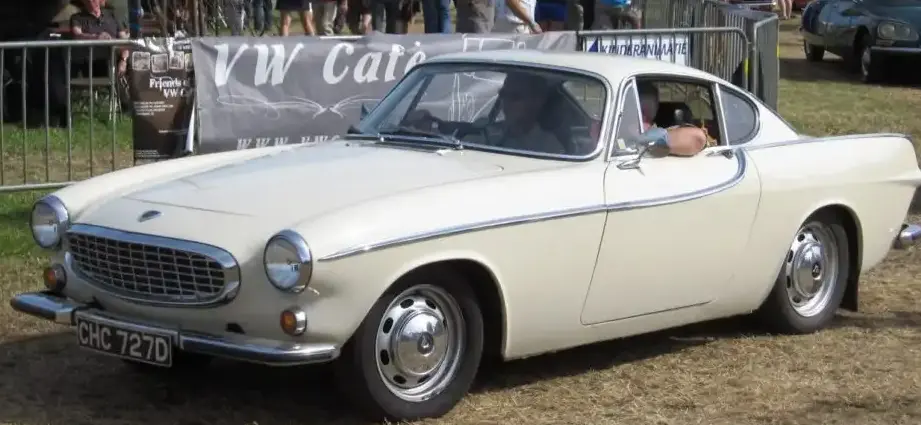
The Volvo 1800S 2.0, producing 118 horsepower, represents a significant evolution within the iconic 1800 series. Introduced in 1965 and continuing through 1969, the 1800S 2.0 occupied a sweet spot in the lineup, offering a blend of performance and refinement that appealed to a growing market of drivers seeking a stylish and capable grand tourer. It was built upon the foundation of the earlier 1800, but with key mechanical upgrades, particularly in the engine department, to enhance its overall driving experience. The 1800S, and subsequently the 2.0 variant, was Volvo’s attempt to break into the international sports car market, and it largely succeeded, becoming a symbol of Swedish engineering and design.
Technical Specifications
| Brand | Volvo |
| Model | 1800 |
| Generation | 1800S |
| Type (Engine) | 2.0 (118 Hp) |
| Start of production | 1965 |
| End of production | 1969 |
| Powertrain Architecture | Internal Combustion engine |
| Body type | Coupe |
| Seats | 4 |
| Doors | 2 |
| Fuel Type | Petrol (Gasoline) |
| Weight-to-power ratio | 9.3 kg/Hp, 107.3 Hp/tonne |
| Weight-to-torque ratio | 6.6 kg/Nm, 151.8 Nm/tonne |
| Power | 118 Hp @ 5800 rpm |
| Power per litre | 59.4 Hp/l |
| Torque | 167 Nm @ 3500 rpm (123.17 lb.-ft. @ 3500 rpm) |
| Engine layout | Front, Longitudinal |
| Engine Model/Code | B20 |
| Engine displacement | 1986 cm3 (121.19 cu. in.) |
| Number of cylinders | 4 |
| Engine configuration | Inline |
| Cylinder Bore | 88.9 mm (3.5 in.) |
| Piston Stroke | 80 mm (3.15 in.) |
| Compression ratio | 9.5:1 |
| Number of valves per cylinder | 2 |
| Fuel injection system | Carburettor |
| Engine aspiration | Naturally aspirated engine |
| Valvetrain | OHV |
| Engine oil capacity | 3.75 l (3.96 US qt | 3.3 UK qt) |
| Coolant | 8.5 l (8.98 US qt | 7.48 UK qt) |
| Kerb Weight | 1100 kg (2425.08 lbs) |
| Fuel tank capacity | 45 l (11.89 US gal | 9.9 UK gal) |
| Length | 4400 mm (173.23 in) |
| Width | 1700 mm (66.93 in) |
| Height | 1285 mm (50.59 in) |
| Wheelbase | 2450 mm (96.46 in) |
| Front track | 1315 mm (51.77 in) |
| Rear (Back) track | 1315 mm (51.77 in) |
| Ride height (ground clearance) | 155 mm (6.1 in) |
| Minimum turning circle (turning diameter) | 10 m (32.81 ft) |
| Drivetrain Architecture | The Internal combustion engine (ICE) drives the rear wheels of the vehicle. |
| Drive wheel | Rear wheel drive |
| Number of gears and type of gearbox | 4 gears, manual transmission |
| Front suspension | Coil spring, Wishbone, Transverse stabilizer |
| Rear suspension | Rigid axle suspension, Trailing arm, Coil spring |
| Front brakes | Disc |
| Rear brakes | Drum |
| Tires size | 165/80 R15 |
| Wheel rims size | 4.5J x 15 |
Powertrain & Engine Architecture
The heart of the 1800S 2.0 was the B20 engine, an inline-four cylinder unit displacing 1986cc. This represented an increase in displacement over the earlier 1.8-liter versions. The B20 featured a cast iron block and an aluminum cylinder head, a relatively modern construction for the time. It utilized a single overhead valve (OHV) valvetrain, a design choice that prioritized simplicity and reliability over outright performance. Fuel delivery was handled by twin SU carburetors, a common setup for European sports cars of the era. The B20 was known for its robust construction and relatively easy maintenance. While not a high-revving engine, it delivered a usable amount of torque throughout the rev range. The 118 horsepower output was a noticeable improvement over the earlier models, providing a more spirited driving experience.
Driving Characteristics
The 1800S 2.0, with its 118 hp and rear-wheel drive configuration, offered a driving experience that was engaging and balanced. The four-speed manual transmission was the standard offering, and it was well-matched to the engine’s characteristics. Gear ratios were spaced to provide good acceleration in everyday driving situations. While not a particularly fast car by modern standards, the 1800S 2.0 felt lively and responsive. The rear-wheel drive layout contributed to a balanced chassis, making it enjoyable to drive on winding roads. Compared to the later fuel-injected versions, the carbureted 2.0 required a bit more finesse to keep running optimally, particularly in varying weather conditions. The steering was unassisted, providing a direct connection to the road, but requiring some effort at low speeds.
Equipment & Trim Levels
The 1800S 2.0 was generally well-equipped for its time, though options were available to further enhance the interior. Standard features included comfortable bucket seats, a wood-trimmed dashboard, and a comprehensive instrument panel. Interior upholstery was typically vinyl, with cloth options available. A notable feature was the fully synchronized four-speed manual transmission. Optional extras included a push-button radio, overdrive, and various trim upgrades. The 1800S positioned itself as a more refined and comfortable grand tourer than a pure sports car, and its equipment levels reflected this.
Chassis & Braking
The 1800S 2.0 utilized a robust chassis with coil-spring independent suspension at the front and a rigid axle with coil springs at the rear. The front suspension incorporated wishbones and a transverse stabilizer bar, contributing to good handling characteristics. Braking was accomplished via disc brakes at the front and drum brakes at the rear. While the disc brakes provided adequate stopping power, the drum brakes at the rear were a limiting factor in overall braking performance. The car’s relatively light weight (around 2425 lbs) helped to offset the limitations of the braking system.
Market Reception & Comparison
The Volvo 1800S 2.0 was generally well-received by automotive critics. It was praised for its stylish design, comfortable interior, and robust mechanicals. However, some critics noted that its performance was not quite on par with some of its British and Italian competitors. Compared to the earlier 1.8-liter versions, the 2.0 offered a noticeable improvement in performance and drivability. It also offered a more refined experience than the later, more performance-focused 1800E and 1800ES models. Fuel economy was reasonable for the time, and the B20 engine proved to be remarkably reliable.
Legacy
The Volvo 1800S 2.0 has become a highly sought-after classic car. Its combination of stylish design, robust engineering, and relatively simple mechanicals has made it a favorite among enthusiasts. The B20 engine is known for its durability and is relatively easy to maintain. Today, well-maintained examples of the 1800S 2.0 command high prices in the used car market. The car’s enduring appeal is a testament to Volvo’s commitment to building safe, reliable, and stylish automobiles. It remains a symbol of a bygone era of automotive design and engineering, and a reminder of Volvo’s early ambitions to compete on the world stage.
