
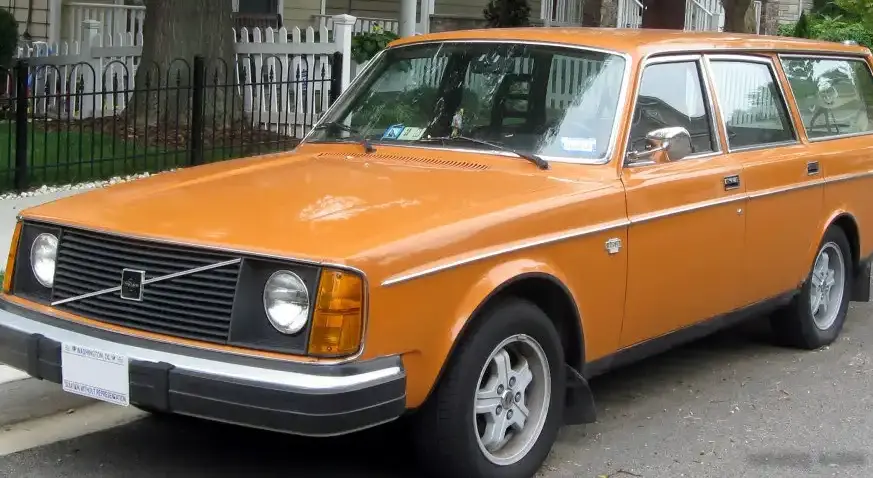
The Volvo 240 Combi, specifically the P245 variant powered by the 2.1-liter (100 horsepower) engine, represents a cornerstone of Volvo’s reputation for safety, durability, and practicality. Produced from 1975 to 1980, this iteration of the 240 series estate car occupied a significant position in the Volvo lineup, offering a spacious and robust vehicle aimed at families and those requiring substantial cargo capacity. It was part of the broader 240 series, which spanned from 1974 to 1993, becoming one of the most successful and longest-produced Volvo models. The P245, denoting the five-door estate body style, was particularly popular in Europe and North America, where the demand for versatile wagons was high.
Technical Specifications
| Brand | Volvo |
| Model | 240 |
| Generation | 240 Combi (P245) |
| Type (Engine) | 2.1 (100 Hp) |
| Start of Production | 1975 |
| End of Production | 1980 |
| Powertrain Architecture | Internal Combustion Engine |
| Body Type | Station Wagon (Estate) |
| Seats | 5 |
| Doors | 5 |
| Fuel Type | Petrol (Gasoline) |
| Power | 100 Hp |
| Engine Model/Code | B21A |
| Engine Aspiration | Naturally Aspirated |
Powertrain & Engine Architecture
The heart of the P245 2.1 was the B21A engine, a 2.1-liter inline-four cylinder gasoline engine. This engine was a development of Volvo’s earlier B20 series, known for its over-engineered robustness. The B21A featured a cast iron block and an aluminum cylinder head, contributing to its longevity. It utilized a Solex carburetor for fuel delivery, a common setup for the time, though less efficient than later fuel injection systems. The engine employed a single overhead camshaft (SOHC) valvetrain, operating two valves per cylinder. The 100 horsepower output was achieved at approximately 5200 rpm, with peak torque of around 128 lb-ft at 3000 rpm. This engine was known for its smooth, if not particularly exciting, power delivery. The transmission paired with this engine was typically a three-speed automatic with overdrive, or a four-speed manual. The automatic transmission, while providing convenience, did impact acceleration and fuel economy compared to the manual option.
Driving Characteristics
The 100 hp, automatic transmission combination in the P245 resulted in a driving experience focused on comfort and practicality rather than performance. Acceleration was adequate for everyday driving, but overtaking maneuvers required planning. The automatic transmission’s gear ratios were geared towards fuel efficiency and smooth cruising, rather than rapid acceleration. The car’s substantial weight, typical of Volvo construction, further limited its performance potential. However, the P245 excelled in providing a stable and comfortable ride, particularly on long journeys. The suspension, consisting of independent front suspension with coil springs and a solid rear axle with leaf springs, absorbed bumps effectively. Compared to the manual transmission versions, the automatic P245 felt noticeably slower, especially in hilly terrain. Higher-powered versions, such as those with the B23 engine, offered significantly improved performance, but at a higher price point.
Equipment & Trim Levels
The P245 2.1 typically came with a relatively basic level of equipment, reflecting its positioning as a practical family vehicle. Standard features included cloth upholstery, a basic AM/FM radio, and manual windows. The interior was characterized by its functional design and durable materials. Optional extras included a sunroof, upgraded stereo systems, and more comfortable seating options. Volvo was already renowned for its safety features, and the P245 included features like front disc brakes, seat belts for all occupants, and a reinforced passenger safety cage. Trim levels were relatively limited; the 2.1 represented a mid-range offering, positioned above the base models but below the more luxurious and powerful variants. Interior color schemes were typically subdued, with options like brown, blue, and grey.
Chassis & Braking
The P245’s chassis was a robust body-on-frame construction, contributing to its durability and longevity. The front suspension utilized independent coil springs and wishbones, providing a comfortable ride and good handling. The rear suspension employed a solid axle with leaf springs, which was well-suited for carrying heavy loads. Braking was initially provided by front disc brakes and rear drum brakes. Later models often featured rear disc brakes as standard equipment, improving stopping performance. The steering was a recirculating ball system, providing a stable but somewhat indirect feel. Stabilizer bars were fitted to both the front and rear axles to reduce body roll during cornering. The P245’s relatively heavy weight necessitated a robust braking system, and the Volvo’s brakes were generally considered reliable and effective for the era.
Market Reception & Comparison
The Volvo 240 Combi P245 2.1 was generally well-received by critics and consumers alike. It was praised for its practicality, safety, and durability. However, the 100 hp engine and automatic transmission combination were often criticized for being underpowered, particularly when compared to competitors offering more powerful engines. Fuel economy was reasonable for the time, but not exceptional. Compared to the manual transmission versions, the automatic P245 offered less engaging driving experience. The higher-powered 240 models, such as those with the B23 engine, were favored by enthusiasts seeking more performance. However, the 2.1 offered a more affordable entry point into the 240 range, appealing to families and those prioritizing practicality over outright speed. Its main competitors included other European estate cars, such as the Audi 80 Avant and the Ford Taunus Turnier.
Legacy
The Volvo 240 Combi P245 2.1 has earned a reputation as a remarkably reliable and durable vehicle. Many examples are still on the road today, a testament to Volvo’s engineering and build quality. The B21A engine is known for its longevity, and with proper maintenance, can withstand hundreds of thousands of miles. The automatic transmission, while not as sporty as a manual, is also generally reliable. In the used car market, the P245 2.1 remains a popular choice for those seeking a classic Volvo estate car. Its simplicity and robust construction make it relatively easy to maintain and repair. While not a performance icon, the P245 2.1 represents a significant chapter in Volvo’s history, embodying the brand’s commitment to safety, practicality, and enduring quality. It’s often sought after by enthusiasts for restoration projects and as a reliable daily driver.
