
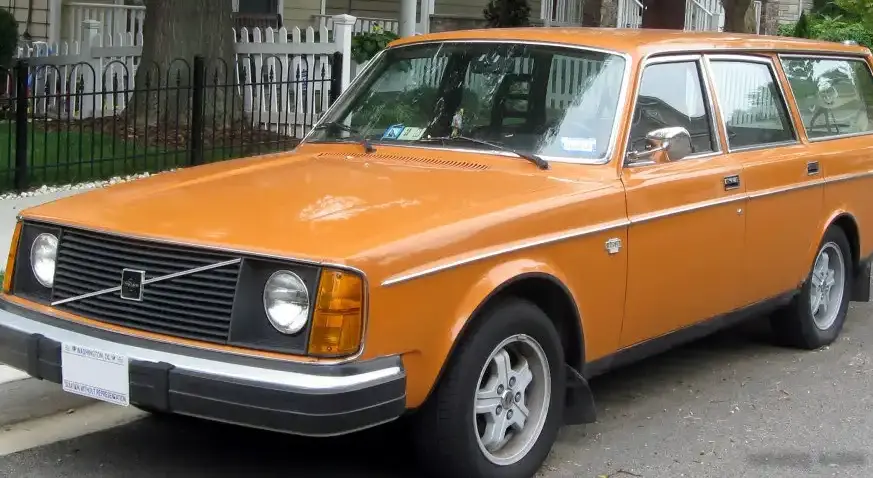
The Volvo 240 Combi, specifically the P245 variant powered by the 2.1-liter (107 hp) engine, represents a significant iteration of Volvo’s long-running and highly respected 240 series. Produced between 1980 and 1984, this model occupied a crucial position in Volvo’s lineup as a practical, durable, and safe family vehicle. The P245, denoting the estate or station wagon body style, was renowned for its spacious interior, robust construction, and unwavering reliability – qualities that cemented Volvo’s reputation for building cars that could withstand the rigors of daily life and harsh climates. This particular 2.1-liter version served as a mid-range offering, balancing affordability with acceptable performance for the era.
Technical Specifications
| Brand | Volvo |
| Model | 240 |
| Generation | 240 Combi (P245) |
| Type (Engine) | 2.1 (107 Hp) |
| Start of Production | 1980 |
| End of Production | 1984 |
| Powertrain Architecture | Internal Combustion Engine |
| Body Type | Station Wagon (Estate) |
| Seats | 5 |
| Doors | 5 |
| Fuel Type | Petrol (Gasoline) |
| Power | 107 Hp |
| Engine Model/Code | B21F |
| Engine Aspiration | Naturally Aspirated |
| Engine Oil Capacity | 3.9 l (4.12 US qt | 3.43 UK qt) |
| Coolant Capacity | 9.4 l (9.93 US qt | 8.27 UK qt) |
Powertrain & Engine Architecture
The heart of the P245 2.1 is the B21F engine, a 2.1-liter inline-four cylinder powerplant. This engine is a descendant of Volvo’s long-standing red-block series, known for its over-engineered durability. The B21F featured a cast iron block and an aluminum cylinder head, contributing to its longevity. Fuel delivery was managed by Bosch mechanical fuel injection – a system chosen for its reliability and relative simplicity compared to emerging electronic fuel injection systems of the time. The engine employed a single overhead camshaft (SOHC) valvetrain, operating two valves per cylinder. While not a high-revving engine, the B21F produced a respectable 107 horsepower and approximately 136 lb-ft of torque. This power was delivered in a relatively flat curve, prioritizing usability over outright performance.
The transmission paired with the B21F in this variant was a three-speed automatic with overdrive. This transmission, while providing convenience, was not known for its sporty characteristics. It was geared towards smooth operation and fuel efficiency, rather than rapid acceleration. The automatic transmission contributed to a more relaxed driving experience, making the P245 2.1 appealing to families and drivers prioritizing comfort.
Driving Characteristics
The driving experience in a P245 2.1 Automatic is best described as comfortable and composed. Acceleration was adequate for highway merging and passing maneuvers, but it wasn’t particularly brisk. The three-speed automatic transmission, while smooth, lacked the responsiveness of a manual gearbox or a more modern automatic. Gear ratios were optimized for cruising, resulting in a relaxed feel at highway speeds. The engine’s torque curve meant that the car felt reasonably capable even when fully loaded with passengers and cargo. Compared to the manual transmission versions of the 240, the automatic offered less driver engagement but greater ease of use. Compared to the higher-output 2.3-liter or turbocharged variants, the 2.1 automatic was noticeably slower, but it offered a more economical and less demanding driving experience.
Equipment & Trim Levels
The P245 2.1 typically came equipped with a fairly comprehensive list of standard features for the early 1980s. These included cloth upholstery, a basic AM/FM radio, and manual windows and door locks. Volvo’s commitment to safety was evident in the standard inclusion of front disc brakes and rear drum brakes, along with seatbelts for all five occupants. Optional extras included a sunroof, upgraded stereo systems, and power windows. Interior trim levels varied, with some models featuring more luxurious cloth options or woodgrain accents on the dashboard. The 2.1 trim generally sat in the middle of the 240 Combi range, offering a good balance of features and affordability. It wasn’t as spartan as the base models, but it lacked the premium features found in the higher-spec versions.
Chassis & Braking
The P245 2.1 utilized a robust, body-on-frame construction, contributing to its legendary durability. The suspension consisted of independent front suspension with coil springs and a solid rear axle with leaf springs. This setup provided a comfortable ride, although it wasn’t particularly sporty. The rear drum brakes were adequate for normal driving conditions, but they lacked the stopping power of disc brakes. A stabilizer bar was fitted to the front suspension to reduce body roll during cornering. The chassis was designed to prioritize safety and practicality over handling precision. The relatively heavy weight of the vehicle, combined with the suspension setup, resulted in a stable and predictable driving experience.
Market Reception & Comparison
The Volvo 240 Combi 2.1 Automatic was generally well-received by critics and consumers alike. It was praised for its practicality, safety, and reliability. While the performance wasn’t thrilling, it was considered adequate for its intended purpose. Fuel economy was reasonable for the time, although it wasn’t a standout feature. Compared to other station wagons of the era, the P245 2.1 offered a unique combination of durability, safety, and spaciousness. The automatic transmission was seen as a convenience feature, appealing to drivers who preferred a more relaxed driving experience. However, some critics noted that the automatic transmission reduced the car’s overall performance and fuel efficiency compared to the manual transmission versions. Reliability was a major selling point, with the B21F engine and the three-speed automatic proving to be remarkably durable.
Legacy
The Volvo 240 Combi P245 2.1 has earned a devoted following among classic car enthusiasts. Its reputation for reliability and durability has ensured that many examples are still on the road today. The B21F engine is known for its longevity, and the three-speed automatic transmission, while not particularly sophisticated, is relatively simple to maintain. In the used car market, these Volvos command a reasonable price, reflecting their enduring appeal and the increasing scarcity of well-maintained examples. The P245 2.1 represents a high point in Volvo’s history, embodying the company’s commitment to building safe, reliable, and practical vehicles. It remains a testament to the enduring appeal of simple, well-engineered automobiles.
