
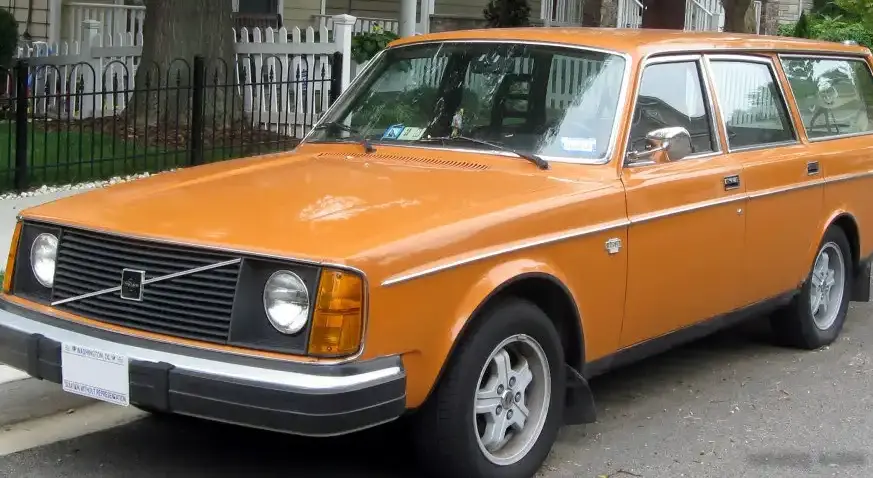
The Volvo 240 Combi, specifically the P245 variant powered by the 2.1-liter B21E engine producing 122 horsepower, represents a significant chapter in Volvo’s long-standing reputation for safety, durability, and practicality. Produced from 1974 to 1979, this iteration of the 240 series estate car was a mainstay for families and those requiring a robust vehicle capable of handling diverse needs. It occupied a middle ground within the 240 Combi lineup, offering a balance between affordability and performance compared to the higher-output 2.3-liter and turbocharged models.
Technical Specifications
| Brand | Volvo |
| Model | 240 |
| Generation | 240 Combi (P245) |
| Type (Engine) | 2.1 (122 Hp) |
| Start of Production | 1974 |
| End of Production | 1979 |
| Powertrain Architecture | Internal Combustion Engine |
| Body Type | Station Wagon (Estate) |
| Seats | 5 |
| Doors | 5 |
| Fuel Type | Petrol (Gasoline) |
| Power | 122 Hp |
| Engine Model/Code | B21E |
| Engine Aspiration | Naturally Aspirated |
| Engine Oil Capacity | 3.9 l (4.12 US qt | 3.43 UK qt) |
| Coolant Capacity | 9.4 l (9.93 US qt | 8.27 UK qt) |
| Fuel Tank Capacity | 60 l (15.85 US gal | 13.2 UK gal) |
Introduction
The Volvo 240 series, launched in 1974, was a pivotal model for Volvo, embodying the company’s commitment to safety and longevity. The P245 Combi, the station wagon variant, quickly gained popularity for its spacious interior, practical design, and robust construction. The 2.1-liter (B21E) version, introduced within the first few years of production, provided a sensible option for buyers seeking a reliable and economical family vehicle. It was positioned as a step up from the base 2.0-liter engine, offering a noticeable increase in power without the added cost of the larger displacement or more complex fuel injection systems found in later models. This particular configuration was primarily sold in European markets, with a smaller presence in North America where larger engines were generally preferred.
Powertrain & Engine Architecture
The heart of the P245 2.1 is the B21E engine, a 2.127-liter (129.9 cubic inches) inline-four cylinder engine. This engine is a naturally aspirated, overhead valve (OHV) design, utilizing a cast iron block and an aluminum cylinder head. The B21E featured a Bosch mechanical fuel injection system, a significant advancement over the carburetors used in earlier Volvo models. This system improved fuel efficiency and reduced emissions while providing smoother power delivery. The engine produced 122 horsepower at 5,800 rpm and 109 lb-ft of torque at 3,500 rpm. The engine’s robust design and relatively simple mechanicals contributed to its legendary reliability.
The P245 2.1 was typically paired with a three-speed automatic transmission (BW35), sourced from Borg-Warner. This transmission was known for its durability but wasn’t particularly sophisticated. It featured a torque converter for smooth launches and relatively simple gear selection. The automatic transmission contributed to the car’s ease of use, making it an appealing option for drivers prioritizing comfort over sporty performance.
Driving Characteristics
The driving experience in a P245 2.1 with the automatic transmission is characterized by smooth, predictable performance. Acceleration is adequate for everyday driving, but it’s not a particularly quick vehicle. The automatic transmission’s gear ratios are geared towards fuel economy and comfortable cruising rather than rapid acceleration. Compared to the manual transmission versions or the 2.3-liter models, the 2.1 automatic feels noticeably slower, especially when fully loaded. However, the engine’s torque delivery is reasonably strong at lower RPMs, making it suitable for hauling loads or navigating hilly terrain. The steering is relatively heavy, typical of Volvo’s of this era, providing a solid and connected feel to the road.
Equipment & Trim Levels
The P245 2.1 typically came with a fairly basic level of equipment, reflecting its position as a mid-range model. Standard features included cloth upholstery, vinyl flooring, and a basic instrument cluster. Power steering and central locking were often optional extras. Interior trim levels varied, with some models featuring upgraded cloth or even leather upholstery. The dashboard layout was functional and straightforward, prioritizing usability over aesthetics. Options included a sunroof, upgraded audio systems, and auxiliary lighting. The emphasis was on practicality and durability rather than luxury.
Chassis & Braking
The P245 2.1 utilized a robust chassis with independent front suspension featuring MacPherson struts and a solid rear axle with leaf springs. This suspension setup provided a comfortable ride, although it wasn’t particularly sporty. The braking system consisted of disc brakes on the front wheels and drum brakes on the rear wheels. While adequate for the vehicle’s weight and performance, the rear drum brakes were a point of criticism compared to the all-disc brake setups found on some higher-spec models. A stabilizer bar was fitted to the front suspension to reduce body roll during cornering.
Market Reception & Comparison
The P245 2.1 was generally well-received by automotive critics as a practical and reliable family vehicle. It was praised for its spacious interior, robust construction, and excellent safety features. However, the automatic transmission and 2.1-liter engine were sometimes criticized for their lack of performance compared to the manual transmission and larger engine options. Fuel economy was considered reasonable for the time, but not exceptional. Compared to the 2.3-liter models, the 2.1 offered a lower purchase price but sacrificed some performance. Compared to the turbocharged models, the 2.1 was significantly less powerful but offered greater reliability and lower maintenance costs.
Legacy
The Volvo 240 Combi P245 2.1 has earned a reputation as a remarkably durable and long-lasting vehicle. Many examples are still on the road today, a testament to Volvo’s engineering and build quality. The B21E engine is known for its ability to withstand high mileage with proper maintenance. In the used car market, these vehicles are sought after by enthusiasts and those seeking a classic Volvo with a reputation for reliability. While not the fastest or most luxurious version of the 240 Combi, the 2.1 automatic remains a practical and appealing option for those who value durability, safety, and a classic Volvo driving experience. Parts availability remains relatively good, making maintenance and repairs manageable for dedicated owners.
