
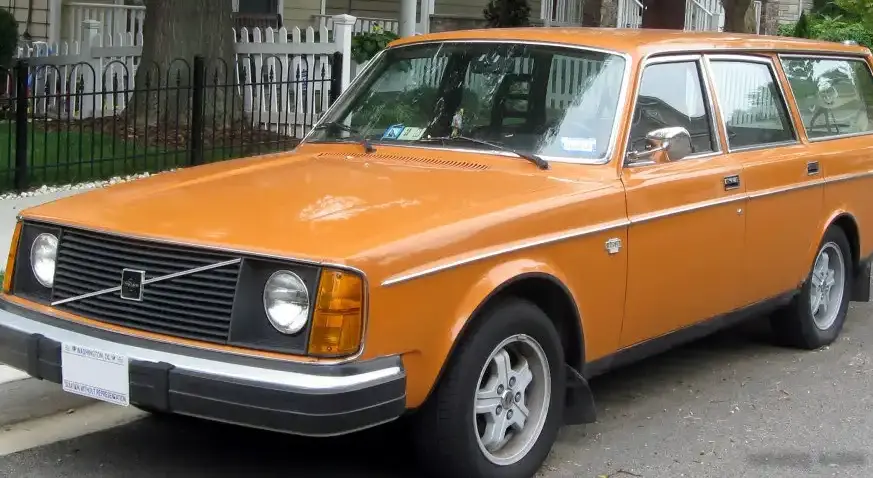
The Volvo 240 Combi, specifically the P245 variant powered by the 2.3-liter (112 hp) engine, represents a significant iteration of Volvo’s long-running and highly respected 240 series. Produced between 1980 and 1984, this model occupied a crucial position in Volvo’s lineup as a practical, durable, and safe family vehicle. The P245, denoting the estate or station wagon body style, was particularly popular in Europe where demand for versatile vehicles was high. It built upon the foundation laid by the earlier 240 series, known for its boxy but functional design and robust construction, offering increased cargo capacity without sacrificing the renowned Volvo safety standards.
Technical Specifications
| Brand | Volvo |
| Model | 240 |
| Generation | 240 Combi (P245) |
| Type (Engine) | 2.3 (112 Hp) |
| Start of Production | 1980 |
| End of Production | 1984 |
| Powertrain Architecture | Internal Combustion Engine |
| Body Type | Station Wagon (Estate) |
| Seats | 5 |
| Doors | 5 |
| Fuel Type | Petrol (Gasoline) |
| Power | 112 Hp |
| Engine Model/Code | B23A |
| Engine Aspiration | Naturally Aspirated |
| Engine Oil Capacity | 3.85 l (4.07 US qt | 3.39 UK qt) |
| Coolant Capacity | 9.5 l (10.04 US qt | 8.36 UK qt) |
| Fuel Tank Capacity | 60 l (15.85 US gal | 13.2 UK gal) |
Powertrain & Engine Architecture
The heart of the P245 2.3 was the Volvo B23A engine, a 2.3-liter inline-four cylinder powerplant. This engine was a cornerstone of Volvo’s engineering philosophy, prioritizing reliability and longevity over outright performance. The B23A featured a cast iron block and an aluminum cylinder head, a common configuration for the era. It employed a single overhead camshaft (SOHC) design operating two valves per cylinder. Fuel delivery was managed by Bosch K-Jetronic mechanical fuel injection, a system known for its precision and durability, though it could be complex to diagnose and repair. The engine produced 112 horsepower and approximately 140 lb-ft of torque. The automatic transmission paired with this engine was typically a three-speed unit, designed for smooth operation and ease of use rather than sporty acceleration. It was a robust transmission, but not known for its efficiency compared to later designs.
Driving Characteristics
The 2.3-liter automatic P245 offered a comfortable and predictable driving experience. Acceleration was adequate for everyday driving, but it wasn’t a particularly quick vehicle. The three-speed automatic transmission, while smooth, resulted in relatively wide gear ratios. This meant that the engine often operated at higher RPMs during highway cruising, impacting fuel economy and potentially increasing noise levels. Compared to the manual transmission versions of the 240, or the later 2.4-liter engines, the 2.3 automatic felt noticeably less responsive. However, the automatic transmission appealed to a broader audience, particularly those seeking a hassle-free driving experience. The car’s suspension, tuned for comfort, absorbed bumps well, making it a pleasant long-distance cruiser. Steering was relatively light, though lacking the precision of more modern systems.
Equipment & Trim Levels
The P245 2.3 typically came with a fairly comprehensive list of standard features for the early 1980s. These included cloth upholstery, a basic AM/FM radio, and manual windows and door locks. Volvo’s commitment to safety was evident in the standard inclusion of front disc brakes and rear drum brakes, along with seatbelts for all five occupants. Optional extras included a sunroof, upgraded stereo systems, and power windows. Interior trim levels varied, with some models featuring more luxurious cloth or even leather upholstery. The dashboard layout was functional and straightforward, prioritizing ease of use over aesthetic flair. The P245 2.3 generally represented a mid-range trim level within the 240 Combi lineup, positioned above the base models but below the more luxurious and powerful variants.
Chassis & Braking
The Volvo 240 series, including the P245, utilized a robust body-on-frame construction, contributing to its legendary durability. The suspension consisted of independent front suspension with coil springs and a solid rear axle with leaf springs. This setup provided a comfortable ride, but wasn’t particularly sporty. The braking system featured disc brakes on the front wheels and drum brakes on the rear. While adequate for the vehicle’s weight and performance, the rear drum brakes were a point of criticism compared to the all-disc setups found on some higher-spec models. Stabilizer bars were fitted to both the front and rear axles, helping to reduce body roll during cornering. The P245’s relatively heavy weight (around 3,200 lbs) contributed to its stability, but also impacted its acceleration and fuel economy.
Market Reception & Comparison
The Volvo 240 Combi P245 2.3 was generally well-received by automotive critics and consumers alike. It was praised for its practicality, safety, and durability. However, the 2.3-liter engine with the automatic transmission was often seen as a compromise. Critics noted that the combination lacked the performance of the manual transmission versions or the larger-displacement engines. Fuel economy, while reasonable for the time, wasn’t exceptional. Compared to other station wagons of the era, such as the Ford Fairmont Squire or the Chevrolet Citation wagon, the Volvo offered a more refined driving experience and a stronger emphasis on safety. The 240 Combi consistently outperformed its American competitors in crash tests and was known for its long-term reliability. The automatic transmission, while convenient, was often seen as detracting from the overall driving experience compared to the more engaging manual gearbox.
Legacy
The Volvo 240 series, and the P245 Combi in particular, has achieved a cult following among automotive enthusiasts. The B23A engine, in its various iterations, is renowned for its robustness and ability to withstand high mileage. The P245 2.3 automatic, while not the most sought-after variant, remains a viable and affordable option in the used car market. Its simplicity and durability make it relatively easy to maintain, and parts availability is generally good. Today, these vehicles are often seen as classic cars, appreciated for their timeless design, safety features, and enduring quality. The P245 2.3 automatic represents a practical and reliable choice for those seeking a classic Volvo estate car, offering a comfortable and safe driving experience with a touch of Scandinavian charm.
