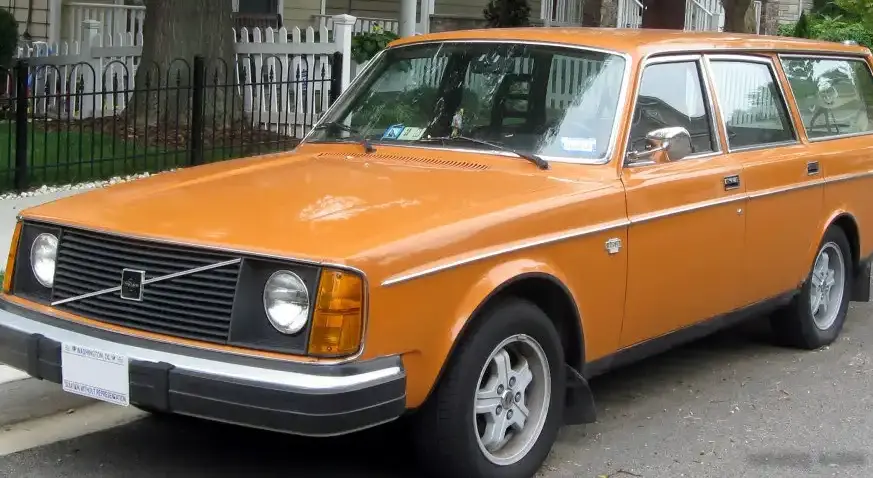
The Volvo 240 Combi (P245) 2.4 Diesel, produced between 1988 and 1993, represents a unique offering within the long-running and highly respected 240 series. This variant, powered by the D24 diesel engine, was primarily aimed at European markets where diesel fuel was more readily available and economically advantageous. While the 240 series as a whole was known for its robustness and longevity, the 2.4 Diesel Combi occupied a specific niche, offering practicality and fuel efficiency for families and businesses needing a spacious, durable estate car. It was positioned as the entry-level diesel option within the 240 Combi range, below the more powerful turbocharged diesel variants.
Technical Specifications
| Brand | Volvo |
| Model | 240 |
| Generation | 240 Combi (P245) |
| Type (Engine) | 2.4 Diesel (79 Hp) |
| Start of production | 1988 |
| End of production | 1993 |
| Powertrain Architecture | Internal Combustion engine |
| Body type | Station wagon (estate) |
| Seats | 5 |
| Doors | 5 |
| Fuel Type | Diesel |
| Power | 79 Hp |
| Power per litre | 32.9 Hp/l |
| Engine layout | Front, Longitudinal |
| Engine Model/Code | D24 |
| Engine displacement | 2400 cm3 / 146.46 cu. in. |
| Number of cylinders | 6 |
| Engine configuration | Inline |
| Number of valves per cylinder | 2 |
| Fuel injection system | Precombustion chamber injection |
| Engine aspiration | Naturally aspirated engine |
| Engine oil capacity | 7 l / 7.4 US qt | 6.16 UK qt |
| Coolant capacity | 9.5 l / 10.04 US qt | 8.36 UK qt |
| Fuel tank capacity | 60 l / 15.85 US gal | 13.2 UK gal |
| Drivetrain Architecture | Rear wheel drive |
| Drive wheel | Rear wheel drive |
| Number of gears and type of gearbox | 5 gears, manual transmission |
| Front suspension | Independent type McPherson |
| Front brakes | Disc |
| Rear brakes | Disc |
| Steering type | Steering rack and pinion |
Powertrain & Engine Architecture
The heart of the 240 Combi 2.4 Diesel is the Volvo D24 engine, a 2.4-liter inline-six cylinder diesel. This engine is notable for its indirect injection system, utilizing precombustion chambers. This design, common in older diesel engines, involves injecting fuel into a small chamber connected to the main cylinder, where it’s partially ignited before entering the main combustion chamber. This promotes smoother combustion and reduces engine noise compared to direct injection systems of the time. The D24 is a naturally aspirated engine, meaning it doesn’t employ a turbocharger or supercharger. The engine produces 79 horsepower and a respectable amount of torque for its displacement, though specific torque figures varied slightly depending on the year and market. The five-speed manual transmission was the standard offering for this variant, providing a relatively long-legged gearing setup optimized for fuel economy and cruising. The transmission itself is a robust unit, known for its durability, but lacks the refinement of more modern gearboxes.
Driving Characteristics
The driving experience in the 240 Combi 2.4 Diesel is characterized by its relaxed and unhurried nature. With only 79 horsepower propelling a relatively heavy estate car, acceleration is modest. The engine delivers its peak torque at lower RPMs, making it well-suited for hauling loads or tackling inclines, but it lacks the punch of the turbocharged diesel options. The five-speed manual transmission allows drivers to keep the engine in its optimal power band, but frequent downshifts are often necessary when overtaking or climbing hills. Steering is relatively heavy but provides good feedback, and the McPherson strut front suspension offers a comfortable ride, though it’s not particularly sporty. The rear-wheel-drive layout contributes to balanced handling, but the car’s weight and high center of gravity limit its cornering ability. Overall, the 2.4 Diesel Combi prioritizes practicality and durability over outright performance.
Equipment & Trim Levels
The 240 Combi 2.4 Diesel typically came with a fairly basic level of equipment, reflecting its position as an entry-level model. Standard features generally included cloth upholstery, a simple dashboard layout with analog gauges, and manual windows and door locks. Heating and ventilation were standard, but air conditioning was often an optional extra. The exterior trim was relatively understated, with black plastic bumpers and minimal chrome accents. Optional extras could include a sunroof, upgraded stereo system, and power windows. The interior space was a major selling point, offering ample room for passengers and cargo. The rear seats could be folded down to create a large, flat loading area, making it ideal for transporting bulky items.
Chassis & Braking
The 240 Combi 2.4 Diesel utilizes a robust chassis and suspension setup designed for durability and practicality. The front suspension features independent McPherson struts, providing a comfortable ride and reasonable handling. The rear suspension employs a solid axle with leaf springs, a traditional design that contributes to the car’s load-carrying capacity. Braking is provided by disc brakes on all four wheels, offering adequate stopping power for the vehicle’s weight and performance. However, the braking system lacks the advanced features found on more modern cars, such as ABS. The steering system is a rack and pinion setup, providing precise steering control, although it requires a fair amount of effort, especially at low speeds.
Market Reception & Comparison
The Volvo 240 Combi 2.4 Diesel was generally well-received in European markets as a practical and reliable estate car. Critics praised its spacious interior, durable construction, and fuel efficiency. However, its modest performance and basic equipment levels were often noted. Compared to the turbocharged diesel versions of the 240 Combi, the 2.4 Diesel offered significantly less power and acceleration. However, it was also more affordable and simpler to maintain. Compared to other estate cars in its class, such as the Ford Sierra Estate or the Opel/Vauxhall Ascona Estate, the Volvo 240 Combi 2.4 Diesel offered a reputation for superior build quality and safety. Fuel economy was competitive for the time, making it an attractive option for drivers covering long distances.
Legacy
The Volvo 240 series, including the 2.4 Diesel Combi, has earned a legendary reputation for its longevity and reliability. The D24 engine, in particular, is known for its ability to withstand high mileage and its relatively simple mechanical design, making it easier to repair and maintain. Today, the 240 Combi 2.4 Diesel is a popular choice among classic car enthusiasts and those seeking a durable and practical vehicle. Parts availability remains relatively good, and the car’s simple construction makes it a rewarding project for DIY mechanics. While not a performance icon, the 240 Combi 2.4 Diesel represents a bygone era of automotive engineering, where durability and practicality were prioritized over speed and luxury. It continues to be appreciated for its honest character and unwavering reliability.