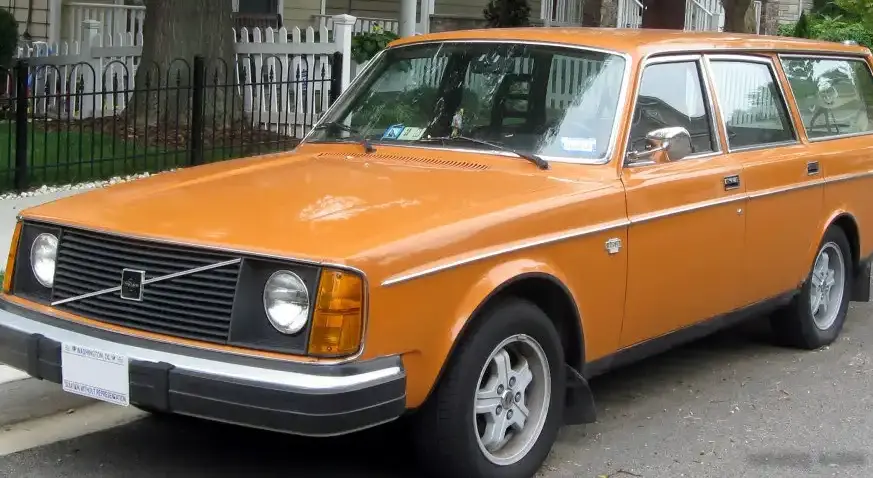
The Volvo 240 series, produced from 1974 to 1993, represents a cornerstone of Volvo’s reputation for safety, durability, and practicality. Within this long-running series, the 2.4 Diesel variant, introduced in 1979 and continuing through the end of production, offered a fuel-efficient alternative, particularly appealing in European markets where diesel fuel was more affordable and readily available. This specific configuration, producing 82 horsepower, was primarily aimed at buyers prioritizing economy and longevity over outright performance. The 240 Diesel occupied a unique position in the lineup, serving as the entry-level option for those seeking the renowned Volvo build quality and safety features without the higher cost of the gasoline-powered models.
Technical Specifications
| Brand | Volvo |
| Model | 240 |
| Generation | 240 (P242, P244) |
| Type (Engine) | 2.4 Diesel (82 Hp) |
| Start of production | 1979 |
| End of production | 1993 |
| Powertrain Architecture | Internal Combustion engine |
| Body type | Sedan |
| Seats | 5 |
| Fuel consumption (urban) | 10 l/100 km (23.5 US mpg) |
| Fuel consumption (extra urban) | 6 l/100 km (39.2 US mpg) |
| Fuel consumption (combined) | 7.5 l/100 km (31.4 US mpg) |
| Fuel Type | Diesel |
| Weight-to-power ratio | 22.3 kg/Hp |
| Weight-to-torque ratio | 13.1 kg/Nm |
| Power | 82 Hp |
| Power per litre | 34.4 Hp/l |
| Torque | 140 Nm (103.26 lb.-ft.) |
| Engine Model/Code | D24 |
| Engine displacement | 2382 cm3 (145.36 cu. in.) |
| Number of cylinders | 6 |
| Cylinder Bore | 76.5 mm (3.01 in.) |
| Piston Stroke | 86.4 mm (3.4 in.) |
| Compression ratio | 23.5:1 |
| Number of valves per cylinder | 2 |
| Fuel injection system | Precombustion chamber injection |
| Engine aspiration | Naturally aspirated |
| Valvetrain | dohc |
| Engine oil capacity | 7 l (7.4 US qt | 6.16 UK qt) |
| Coolant capacity | 9.5 l (10.04 US qt | 8.36 UK qt) |
| Kerb Weight | 1830 kg (4034.46 lbs.) |
| Max. weight | 2380 kg (5247 lbs.) |
| Max load | 550 kg (1212.54 lbs.) |
| Trunk (boot) space | 580 l (20.48 cu. ft.) |
| Fuel tank capacity | 60 l (15.85 US gal | 13.2 UK gal) |
| Minimum turning circle | 10.1 m (33.14 ft.) |
| Drivetrain | Rear wheel drive |
| Number of gears | 3 |
| Gearbox type | Automatic transmission |
| Front suspension | Independent type McPherson |
| Front brakes | Ventilated discs |
| Rear brakes | Disc |
| Steering type | Steering rack and pinion |
| Power steering | Hydraulic |
Powertrain & Engine Architecture
The heart of the 240 2.4 Diesel is the Volvo D24 engine, a robust and overbuilt six-cylinder diesel. This engine utilizes a precombustion chamber injection system, a common design for diesels of this era. This system involves injecting fuel into a small precombustion chamber connected to the main cylinder, where it ignites and then ignites the main fuel charge. This design aids in smoother combustion and reduces engine noise compared to direct injection systems. The D24 features a double overhead camshaft (dohc) valvetrain, operating two valves per cylinder. The 82 horsepower output is achieved at a relatively low engine speed, prioritizing torque over peak power. The three-speed automatic transmission, while providing convenience, was not known for its responsiveness or efficiency. It was a fairly basic unit, designed for durability rather than performance.
Driving Characteristics
The 240 2.4 Diesel with the automatic transmission delivers a driving experience focused on comfort and ease of use. Acceleration is modest, with the 82 horsepower engine requiring a deliberate throttle input. The automatic transmission’s gear ratios are geared towards fuel economy, resulting in a relaxed cruising speed. Compared to the manual transmission versions of the same engine, the automatic noticeably diminishes responsiveness. The higher-output gasoline engines, such as the 2.3L or the turbocharged variants, offered significantly more spirited performance. However, the diesel’s ample low-end torque makes it well-suited for everyday driving and hauling loads. The rear-wheel-drive configuration provides a balanced feel, though it lacks the modern handling characteristics of front-wheel-drive vehicles.
Equipment & Trim Levels
The 240 2.4 Diesel typically came with a relatively basic level of equipment, reflecting its position as the entry-level model. Standard features generally included cloth upholstery, a simple dashboard layout, and manual windows and door locks. Power steering was often included, but air conditioning and other comfort features were typically optional extras. Higher trim levels, such as the GL or SE, offered upgrades like leather upholstery, upgraded audio systems, and more comprehensive instrumentation. The interior design prioritized functionality and durability over luxury, with a focus on clear and easy-to-use controls.
Chassis & Braking
The 240 series chassis is renowned for its strength and rigidity, contributing to the car’s excellent safety record. The 2.4 Diesel models utilized an independent McPherson strut front suspension and a solid rear axle. Front brakes were typically ventilated discs, providing adequate stopping power, while rear brakes were often discs, though some earlier models featured drum brakes. Stabilizer bars were fitted to both the front and rear axles to reduce body roll during cornering. The suspension was tuned for comfort, providing a smooth ride over a variety of road surfaces. The relatively heavy weight of the diesel engine and automatic transmission necessitated a robust suspension setup.
Market Reception & Comparison
The Volvo 240 2.4 Diesel was generally well-received by critics and buyers alike, particularly in Europe. Its fuel efficiency and durability were major selling points, appealing to those seeking a reliable and economical family car. Compared to the gasoline-powered 240 models, the diesel offered significantly better fuel economy, but at the expense of performance. The 2.4 Diesel was often compared to other European diesel sedans of the time, such as the Mercedes-Benz 190D and the Peugeot 505 Diesel. While these competitors offered similar fuel economy, the Volvo 240 was often praised for its superior safety features and build quality.
Legacy
The Volvo 240 2.4 Diesel has earned a reputation as a remarkably durable and long-lasting vehicle. Many examples are still on the road today, a testament to the quality of engineering and construction. The D24 engine is known for its ability to withstand high mileage with proper maintenance. In the used car market, these models are often sought after by enthusiasts and those looking for a reliable and affordable classic car. While parts availability can be a concern, many components are still readily available, and the engine’s simplicity makes it relatively easy to repair. The 240 Diesel represents a bygone era of automotive engineering, prioritizing durability, safety, and practicality over outright performance and luxury.