
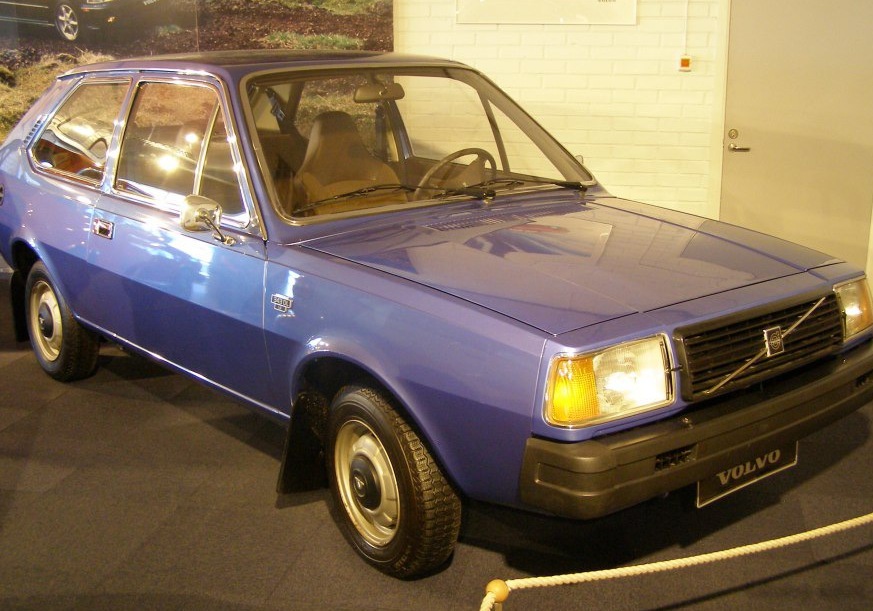
The Volvo 340 and 360 series, specifically the 343 and 345 models equipped with the 1.4-liter engine producing 64 horsepower, represented Volvo’s entry into the compact hatchback market. Produced from 1979 to 1983, these models were a significant departure for the Swedish automaker, traditionally known for larger, more luxurious vehicles. The 340/360 series was designed as a modern, fuel-efficient alternative, aimed at a broader customer base, particularly in Europe where smaller cars were favored. This variant, the base model, served as the gateway to the Volvo brand, offering practicality and Volvo’s renowned safety features at a more accessible price point.
Technical Specifications
| Brand | Volvo |
| Model | 340-360 (343, 345) |
| Generation | 340-360 (343, 345) |
| Type (Engine) | 1.4 (64 Hp) |
| Start of Production | 1979 |
| End of Production | 1983 |
| Powertrain Architecture | Internal Combustion Engine |
| Body Type | Hatchback |
| Seats | 5 |
| Doors | 5 |
| Fuel Type | Petrol (Gasoline) |
| Power | 64 Hp |
| Engine Model/Code | B14 |
| Engine Aspiration | Naturally Aspirated |
| Engine Oil Capacity | 4 l (4.23 US qt | 3.52 UK qt) |
| Coolant Capacity | 6.5 l (6.87 US qt | 5.72 UK qt) |
| Fuel Tank Capacity | 45 l (11.89 US gal | 9.9 UK gal) |
Powertrain & Engine Architecture
The heart of the 343/345 1.4 was the B14 engine, a 1397cc inline-four cylinder unit. This engine was a relatively simple design, featuring a single overhead camshaft (SOHC) and a two-barrel carburetor. The B14 was known for its robustness and reliability, though it wasn’t a powerhouse. Fuel delivery was managed by a Zenith-Stromberg carburetor, a common setup for European cars of the era. The engine utilized a conventional valvetrain with pushrods operating the valves. Volvo paired this engine with a four-speed manual transmission as standard, but a three-speed automatic transmission was also offered, though less common. The automatic transmission was a Borg-Warner unit, chosen for its durability and relatively smooth operation. The B14 engine was designed with a focus on fuel efficiency and low emissions, reflecting the growing environmental concerns of the late 1970s and early 1980s.
Driving Characteristics
The 1.4-liter, 64 horsepower engine in the 343/345 provided adequate, but not exhilarating, performance. Acceleration was modest, with a 0-60 mph time estimated around 15-17 seconds. The automatic transmission, while offering convenience, further reduced performance due to its relatively wide gear ratios and inherent power loss. In real-world driving, the car felt best suited for city commuting and shorter trips. The automatic transmission’s shift points were calibrated for fuel economy, meaning the engine often operated at lower RPMs, resulting in a somewhat sluggish response when needing to accelerate quickly. Compared to the later 340 models with larger engines (like the 1.6 or 2.0 liter variants), the 1.4 felt noticeably underpowered, especially when fully loaded with passengers and cargo. The manual transmission version offered a slightly more engaging driving experience, allowing the driver to better utilize the engine’s limited power band.
Equipment & Trim Levels
The 343/345 1.4 was the base trim level, and as such, it came with a relatively sparse equipment list. Standard features typically included cloth upholstery, vinyl floor covering, and basic instrumentation – speedometer, fuel gauge, and temperature gauge. Power steering and central locking were not standard, but could be added as optional extras. The dashboard was functional and straightforward, prioritizing practicality over aesthetics. Optional extras included a radio, heated seats, and upgraded interior trim. The 345 model, introduced later in the production run, featured a slightly more refined interior and a larger rear window compared to the 343. The exterior trim was minimal, with black plastic bumpers and relatively simple steel wheels being the norm.
Chassis & Braking
The Volvo 340/360 series utilized a front-wheel-drive layout with a MacPherson strut front suspension and a solid axle rear suspension. The suspension was tuned for comfort and stability, providing a relatively smooth ride, even on uneven surfaces. The 1.4-liter models typically featured drum brakes on the rear wheels and disc brakes on the front. Steering was unassisted in the base models, requiring a bit more effort at low speeds. Stabilizer bars were not standard on the base 1.4 models, contributing to a slightly more pronounced body roll in corners. The chassis was designed with safety in mind, incorporating a reinforced passenger safety cell, a hallmark of Volvo engineering.
Market Reception & Comparison
The 340/360 1.4 received mixed reviews upon its introduction. Critics praised its fuel efficiency, safety features, and build quality, but many found the engine underpowered and the driving experience somewhat uninspiring. Compared to other compact hatchbacks of the era, such as the Ford Escort or Opel Kadett, the Volvo 340/360 1.4 offered a more refined interior and a stronger emphasis on safety. However, it was generally more expensive than its competitors. The 1.6-liter and 2.0-liter versions of the 340/360 offered significantly better performance and were often preferred by buyers willing to spend a bit more. Fuel economy for the 1.4-liter model was respectable for the time, averaging around 30-35 mpg in mixed driving conditions.
Legacy
The Volvo 340/360 series, including the 1.4-liter variant, holds a unique place in Volvo’s history. It was the company’s first foray into the compact hatchback segment and paved the way for future models. While the 1.4-liter engine isn’t known for its performance, it proved to be remarkably durable and reliable. Today, well-maintained examples of the 343/345 1.4 are becoming increasingly sought after by classic car enthusiasts, particularly those who appreciate their simplicity and affordability. Parts availability can be a challenge, but a dedicated community of Volvo enthusiasts continues to support the preservation of these cars. The 340/360 series remains a testament to Volvo’s commitment to safety and build quality, even in its entry-level models.
