
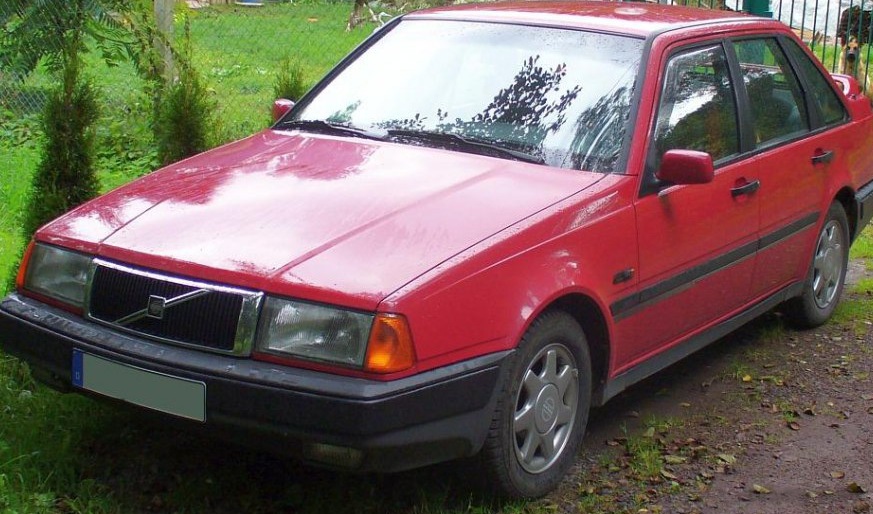
The Volvo 440 K, and its closely related variant the 445, represented Volvo’s foray into the compact hatchback segment. Produced from 1987 to 1993, these models were a departure from Volvo’s traditionally larger, more conservative offerings. The 1.7-liter, 82 horsepower version, equipped with an automatic transmission, occupied the entry-level position in the 440/445 lineup, aimed at buyers prioritizing fuel efficiency and affordability over outright performance. This variant was primarily sold in European markets, where smaller, economical cars were highly sought after. It was a key model in Volvo’s attempt to broaden its appeal and compete with rivals like the Ford Escort and Opel Astra.
Technical Specifications
| Brand | Volvo |
| Model | 440 K |
| Generation | 440 K (445) |
| Type (Engine) | 1.7 (82 Hp) |
| Start of production | 1987 |
| End of production | 1993 |
| Powertrain Architecture | Internal Combustion engine |
| Body type | Hatchback |
| Seats | 5 |
| Doors | 5 |
| Fuel consumption (urban) | 9.8 l/100 km (24 US mpg, 28.8 UK mpg, 10.2 km/l) |
| Fuel consumption (extra urban) | 5.5 l/100 km (42.8 US mpg, 51.4 UK mpg, 18.2 km/l) |
| Fuel consumption (combined) | 7.4 l/100 km (31.8 US mpg, 38.2 UK mpg, 13.5 km/l) |
| Fuel Type | Petrol (Gasoline) |
| Acceleration 0 – 100 km/h | 12.8 sec |
| Acceleration 0 – 62 mph | 12.8 sec |
| Acceleration 0 – 60 mph | 12.2 sec |
| Maximum speed | 165 km/h (102.53 mph) |
| Weight-to-power ratio | 12 kg/Hp, 83.7 Hp/tonne |
| Weight-to-torque ratio | 7.7 kg/Nm, 130.6 Nm/tonne |
| Power | 82 Hp @ 5000 rpm |
| Power per litre | 47.6 Hp/l |
| Torque | 128 Nm @ 3300 rpm (94.41 lb.-ft. @ 3300 rpm) |
| Engine layout | Front, Transverse |
| Engine Model/Code | B18K |
| Engine displacement | 1721 cm3 (105.02 cu. in.) |
| Number of cylinders | 4 |
| Engine configuration | Inline |
| Cylinder Bore | 81 mm (3.19 in.) |
| Piston Stroke | 83.5 mm (3.29 in.) |
| Compression ratio | 9.5:1 |
| Number of valves per cylinder | 2 |
| Fuel injection system | Carburettor |
| Engine aspiration | Naturally aspirated engine |
| Valvetrain | OHC |
| Engine oil capacity | 5.3 l (5.6 US qt | 4.66 UK qt) |
| Coolant | 7 l (7.4 US qt | 6.16 UK qt) |
| Kerb Weight | 980 kg (2160.53 lbs.) |
| Max. weight | 1570 kg (3461.26 lbs.) |
| Max load | 590 kg (1300.73 lbs.) |
| Trunk (boot) space – minimum | 330 l (11.65 cu. ft.) |
| Trunk (boot) space – maximum | 1028 l (36.3 cu. ft.) |
| Fuel tank capacity | 60 l (15.85 US gal | 13.2 UK gal) |
| Length | 4345 mm (171.06 in.) |
| Width | 1686 mm (66.38 in.) |
| Height | 1378 mm (54.25 in.) |
| Wheelbase | 2503 mm (98.54 in.) |
| Front track | 1416 mm (55.75 in.) |
| Rear (Back) track | 1425 mm (56.1 in.) |
| Drivetrain Architecture | The Internal combustion engine (ICE) drives the front wheels of the vehicle. |
| Drive wheel | Front wheel drive |
| Number of gears and type of gearbox | 5 gears, manual transmission |
| Front suspension | Wishbone |
| Rear suspension | Coil spring |
| Front brakes | Disc |
| Rear brakes | Disc |
| Assisting systems | ABS (Anti-lock braking system) |
| Steering type | Steering rack and pinion |
| Power steering | Hydraulic Steering |
| Tires size | 165/70 R14 |
| Wheel rims size | 14 |
INTRODUCTION
The Volvo 440 K, launched in 1987, was a significant departure for the Swedish automaker. Prior to this, Volvo was known for larger, more luxurious vehicles. The 440, and its station wagon derivative the 445, were designed to appeal to a broader market segment, particularly those seeking a practical and affordable family car. The 1.7-liter engine with 82 horsepower, coupled with an automatic transmission, represented the base level of the range. It was intended for buyers who valued ease of driving and fuel economy over sporty performance. Production continued until 1993, with the model being replaced by the more modern Volvo 460.
Powertrain & Engine Architecture
The heart of the 440 K 1.7 was the B18K engine, a naturally aspirated, inline-four cylinder unit displacing 1721cc. This engine utilized a single overhead camshaft (OHC) design and, crucially for this variant, a carburetor fuel delivery system. While fuel injection was becoming increasingly common in the late 1980s, the carburetor helped keep production costs down for the entry-level model. The B18K produced 82 horsepower at 5000 rpm and 128 Nm (94.41 lb-ft) of torque at 3300 rpm. The automatic transmission was a three-speed unit, chosen for its simplicity and ease of use. This transmission was not known for its responsiveness, prioritizing smooth shifts over rapid acceleration. The engine’s relatively low compression ratio of 9.5:1 meant it was designed to run on lower octane fuel, further contributing to its affordability.
Driving Characteristics
The 440 K 1.7 Automatic offered a comfortable, but uninspiring, driving experience. The automatic transmission, while convenient, resulted in noticeable acceleration delays. Zero to 60 mph took around 12.2 seconds, and top speed was limited to 165 km/h (102.53 mph). Compared to the manual transmission versions, or the more powerful 2.0-liter models, the 1.7 Automatic felt noticeably sluggish. The gear ratios were optimized for fuel efficiency rather than performance, meaning the engine often felt strained during overtaking maneuvers. However, for everyday commuting and urban driving, the 440 K 1.7 Automatic proved to be a perfectly adequate and reliable vehicle.
Equipment & Trim Levels
The 1.7 Automatic trim level was fairly basic, reflecting its position as the entry point to the 440 range. Standard features typically included cloth upholstery, a basic stereo system, and manual windows and door locks. Power steering was often included, but air conditioning was usually an optional extra. The dashboard layout was functional and straightforward, prioritizing practicality over aesthetics. Optional extras included a sunroof, upgraded stereo systems, and metallic paint finishes. The interior space was reasonably generous for a car of its size, offering comfortable seating for five passengers.
Chassis & Braking
The 440 K featured a front-wheel-drive layout with independent wishbone suspension at the front and a coil spring rear suspension. This setup provided a reasonably comfortable ride, although it wasn’t particularly sporty. Braking was handled by disc brakes on all four wheels, supplemented by an Anti-lock Braking System (ABS) which was becoming increasingly common during this period. The 440 K’s relatively light weight (980 kg or 2160.53 lbs) helped to compensate for the engine’s modest power output. Tire size was typically 165/70 R14.
Market Reception & Comparison
The 440 K 1.7 Automatic received mixed reviews from automotive critics. While praised for its fuel efficiency and affordability, it was often criticized for its lack of performance and somewhat dated interior. Compared to its rivals, such as the Ford Escort and Opel Astra, the 440 K offered a slightly more refined driving experience, but at a higher price point. The 1.9 TDI diesel version, while more expensive, offered significantly better fuel economy and torque, making it a popular choice for high-mileage drivers. The 2.0-liter gasoline models provided a noticeable performance boost, but at the expense of fuel efficiency.
Legacy
The Volvo 440 K 1.7 Automatic, while not a performance icon, proved to be a reliable and durable vehicle. The B18K engine, despite its carburetor fuel system, was generally considered to be robust and long-lasting. Today, these cars are relatively rare, and well-maintained examples are sought after by Volvo enthusiasts. The automatic transmission, while not particularly sophisticated, is generally reliable if properly serviced. The 440 K represents a unique chapter in Volvo’s history, demonstrating the company’s willingness to experiment with new market segments and broaden its appeal. Its simple design and robust construction have ensured that a number of these cars remain on the road today, serving as a testament to Volvo’s engineering prowess.
