
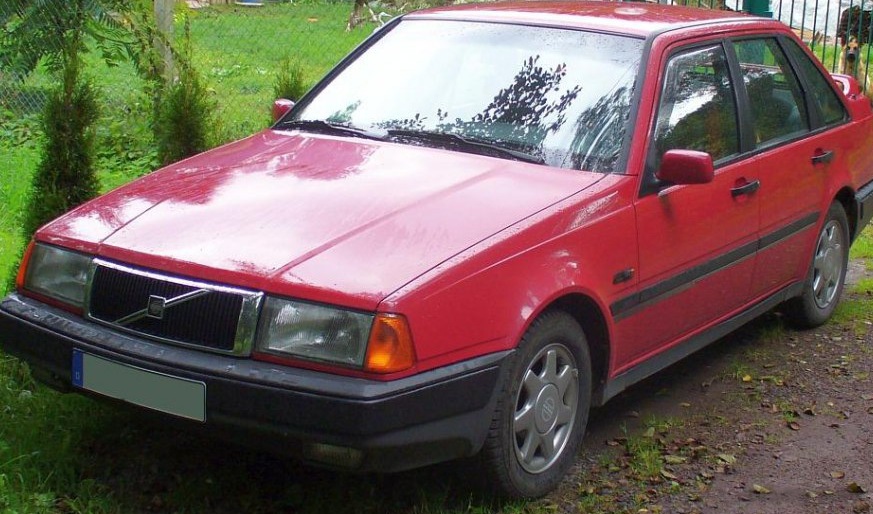
The Volvo 440 K, and its five-door variant the 445, represented a significant departure for Volvo when it was introduced in 1987 and remained in production through 1993. This compact hatchback, built in Born, Netherlands, and Ghent, Belgium, was Volvo’s first front-wheel-drive vehicle and a deliberate attempt to appeal to a broader, more modern market. The 1.7-liter, 90 horsepower version occupied the entry-level position in the 440/445 lineup, offering a balance of affordability and Volvo’s renowned safety features. It was positioned below the more powerful 2.0-liter variants and served as a practical, economical option for families and commuters.
Technical Specifications
| Brand | Volvo |
| Model | 440 K |
| Generation | 440 K (445) |
| Type (Engine) | 1.7 (90 Hp) |
| Start of production | 1987 |
| End of production | 1993 |
| Powertrain Architecture | Internal Combustion engine |
| Body type | Hatchback |
| Seats | 5 |
| Doors | 5 |
| Fuel consumption (urban) | 9.8 l/100 km (24 US mpg, 28.8 UK mpg, 10.2 km/l) |
| Fuel consumption (extra urban) | 5.5 l/100 km (42.8 US mpg, 51.4 UK mpg, 18.2 km/l) |
| Fuel consumption (combined) | 7.4 l/100 km (31.8 US mpg, 38.2 UK mpg, 13.5 km/l) |
| Fuel Type | Petrol (Gasoline) |
| Acceleration 0 – 100 km/h | 12.8 sec |
| Acceleration 0 – 62 mph | 12.8 sec |
| Acceleration 0 – 60 mph | 12.2 sec |
| Maximum speed | 165 km/h (102.53 mph) |
| Weight-to-power ratio | 10.9 kg/Hp, 91.8 Hp/tonne |
| Weight-to-torque ratio | 7.5 kg/Nm, 133.7 Nm/tonne |
| Power | 90 Hp @ 5800 rpm |
| Power per litre | 52.3 Hp/l |
| Torque | 131 Nm @ 3600 rpm (96.62 lb.-ft. @ 3600 rpm) |
| Engine layout | Front, Transverse |
| Engine Model/Code | B18KP |
| Engine displacement | 1721 cm3 (105.02 cu. in.) |
| Number of cylinders | 4 |
| Engine configuration | Inline |
| Cylinder Bore | 81 mm (3.19 in.) |
| Piston Stroke | 83.5 mm (3.29 in.) |
| Compression ratio | 9.5:1 |
| Number of valves per cylinder | 2 |
| Fuel injection system | Carburettor |
| Engine aspiration | Naturally aspirated engine |
| Valvetrain | OHC |
| Engine oil capacity | 5.3 l (5.6 US qt | 4.66 UK qt) |
| Coolant | 7 l (7.4 US qt | 6.16 UK qt) |
| Kerb Weight | 980 kg (2160.53 lbs.) |
| Max. weight | 1570 kg (3461.26 lbs.) |
| Max load | 590 kg (1300.73 lbs.) |
| Trunk (boot) space – minimum | 330 l (11.65 cu. ft.) |
| Trunk (boot) space – maximum | 1028 l (36.3 cu. ft.) |
| Fuel tank capacity | 60 l (15.85 US gal | 13.2 UK gal) |
| Length | 4345 mm (171.06 in.) |
| Width | 1686 mm (66.38 in.) |
| Height | 1378 mm (54.25 in.) |
| Wheelbase | 2503 mm (98.54 in.) |
| Front track | 1416 mm (55.75 in.) |
| Rear (Back) track | 1425 mm (56.1 in.) |
| Drivetrain Architecture | The Internal combustion engine (ICE) drives the front wheels of the vehicle. |
| Drive wheel | Front wheel drive |
| Number of gears and type of gearbox | 5 gears, manual transmission |
| Front suspension | Wishbone |
| Rear suspension | Coil spring |
| Front brakes | Disc |
| Rear brakes | Disc |
| Assisting systems | ABS (Anti-lock braking system) |
| Steering type | Steering rack and pinion |
| Power steering | Hydraulic Steering |
| Tires size | 165/70 R14 |
| Wheel rims size | 14 |
Powertrain & Engine Architecture
The 1.7-liter engine, designated the B18KP, was a naturally aspirated, inline-four cylinder unit. It featured a single overhead camshaft (OHC) design and utilized a carburetor for fuel delivery – a relatively archaic system for the late 1980s, but one that contributed to the model’s lower cost. The engine produced 90 horsepower at 5800 rpm and 131 Nm (96.62 lb-ft) of torque at 3600 rpm. The engine’s bore and stroke measured 81mm x 83.5mm, respectively, resulting in a displacement of 1721 cc. The 440 K was typically paired with a four or five-speed manual transmission, but a three-speed automatic transmission was also available, though less common. The automatic transmission was a Jatco unit, known for its durability but also for its relatively slow shift times and tendency to hunt for gears.
Driving Characteristics
The 1.7-liter engine in the 440 K provided adequate, but not exhilarating, performance. Acceleration from 0 to 60 mph took around 12.2 seconds, and the top speed was approximately 102.53 mph. The automatic transmission further diminished acceleration times. The car felt best suited for relaxed cruising and city driving. The front-wheel-drive layout offered predictable handling, but the relatively narrow tires and soft suspension settings meant that cornering grip was limited. Compared to the 2.0-liter versions, the 1.7 felt noticeably slower, particularly when fully loaded with passengers and cargo. The automatic transmission, while convenient, robbed the engine of much of its available power, making it feel even more sluggish.
Equipment & Trim Levels
The base 440 K 1.7 was fairly sparsely equipped, reflecting its position as the entry-level model. Standard features typically included cloth upholstery, a basic stereo system, and manual windows and door locks. Power steering was often included, but air conditioning was usually an optional extra. Higher trim levels, such as the GL, added features like upgraded upholstery, central locking, and electric windows. Optional extras included a sunroof, alloy wheels, and a more powerful stereo system. Interior design was functional and utilitarian, prioritizing practicality over luxury.
Chassis & Braking
The 440 K featured an independent front suspension with wishbones and coil springs, providing a comfortable ride. The rear suspension utilized a semi-independent twist beam setup. Brakes were disc brakes on all four wheels, a notable safety feature for a car in this class. An Anti-lock Braking System (ABS) was available as an option, further enhancing safety. The steering was rack and pinion, providing reasonably precise control. The 440 K rode on 14-inch wheels with 165/70 R14 tires.
Market Reception & Comparison
The Volvo 440 K 1.7 received mixed reviews. Critics praised its safety features, practicality, and fuel economy (around 31.8 US mpg combined). However, the engine was often criticized for being underpowered, and the carburetor-based fuel system was seen as outdated. Compared to the 2.0-liter versions, the 1.7 offered significantly less performance. The 2.0-liter models were favored by drivers who prioritized performance, while the 1.7 appealed to those seeking a more affordable and economical option. The 1.9 TDI diesel version, introduced later in the 440/445’s lifespan, offered superior fuel economy and torque, but at the expense of refinement.
Legacy
The Volvo 440 K, particularly the 1.7-liter variant, has developed a cult following among enthusiasts. The B18KP engine is known for its durability and relative simplicity, making it relatively easy to maintain. However, finding parts can be challenging as production ceased decades ago. The automatic transmission, while reliable, is often considered a weak point due to its sluggish performance. Today, well-maintained examples of the 440 K 1.7 are becoming increasingly collectible, representing a unique chapter in Volvo’s history as the company’s first foray into front-wheel drive. The car’s robust construction and focus on safety continue to appeal to drivers seeking a practical and reliable classic vehicle.
