
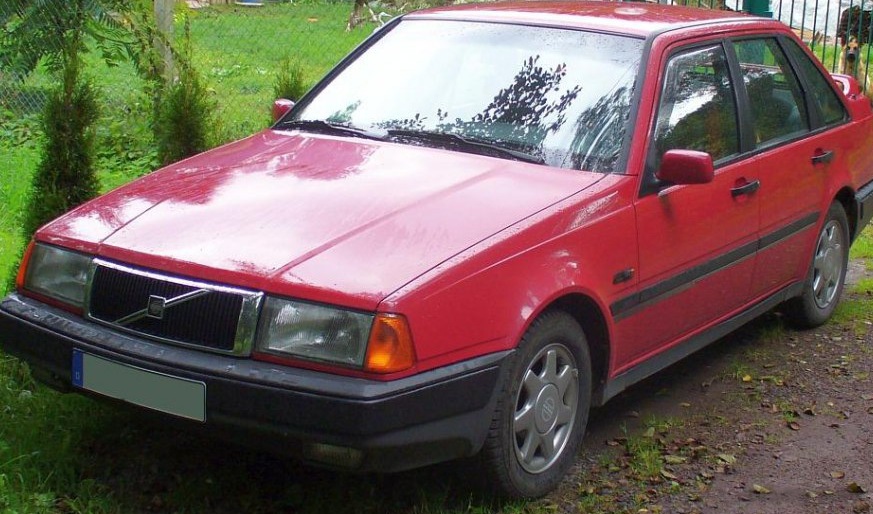
The Volvo 440 K, and its closely related variant the 445, represented a significant departure for the Swedish automaker when it debuted in 1987. Produced through 1993, this compact hatchback was Volvo’s first front-wheel-drive vehicle, marking a move away from the company’s traditional rear-wheel-drive layout. The 1.7 Turbo model, producing 120 horsepower, occupied a mid-range position within the 440/445 lineup, offering a balance between performance and economy. It was designed to appeal to buyers seeking a practical, yet relatively sporty, family car. The 440/445 series was a key model for Volvo, allowing them to compete in a growing segment of the European automotive market.
Technical Specifications
| Brand | Volvo |
| Model | 440 K |
| Generation | 440 K (445) |
| Type (Engine) | 1.7 Turbo (120 Hp) |
| Start of production | 1987 |
| End of production | 1993 |
| Powertrain Architecture | Internal Combustion engine |
| Body type | Hatchback |
| Seats | 5 |
| Doors | 5 |
| Fuel consumption (combined) | 8.5 l/100 km |
| Fuel consumption (US mpg) | 27.7 US mpg |
| Fuel consumption (UK mpg) | 33.2 UK mpg |
| Fuel consumption (km/l) | 11.8 km/l |
| Fuel Type | Petrol (Gasoline) |
| Acceleration 0 – 100 km/h | 9 sec |
| Acceleration 0 – 62 mph | 9 sec |
| Acceleration 0 – 60 mph | 8.6 sec |
| Maximum speed | 200 km/h (124.27 mph) |
| Weight-to-power ratio | 11.1 kg/Hp, 90.2 Hp/tonne |
| Weight-to-torque ratio | 7.6 kg/Nm, 131.6 Nm/tonne |
| Power | 120 Hp @ 5500 rpm |
| Power per litre | 69.7 Hp/l |
| Torque | 175 Nm @ 3300 rpm (129.07 lb.-ft. @ 3300 rpm) |
| Engine layout | Front, Transverse |
| Engine Model/Code | B18FT |
| Engine displacement | 1721 cm3 (105.02 cu. in.) |
| Number of cylinders | 4 |
| Engine configuration | Inline |
| Cylinder Bore | 81 mm (3.19 in.) |
| Piston Stroke | 83.5 mm (3.29 in.) |
| Compression ratio | 8.1:1 |
| Number of valves per cylinder | 2 |
| Fuel injection system | Multi-port manifold injection |
| Engine aspiration | Turbocharger |
| Valvetrain | OHC |
| Engine oil capacity | 5.3 l (5.6 US qt | 4.66 UK qt) |
| Coolant capacity | 7.2 l (7.61 US qt | 6.34 UK qt) |
| Kerb Weight | 1330 kg (2932.15 lbs.) |
| Max. weight | 1580 kg (3483.3 lbs.) |
| Max load | 250 kg (551.16 lbs.) |
| Trunk (boot) space – minimum | 330 l (11.65 cu. ft.) |
| Trunk (boot) space – maximum | 1028 l (36.3 cu. ft.) |
| Fuel tank capacity | 60 l (15.85 US gal | 13.2 UK gal) |
| Length | 4345 mm (171.06 in.) |
| Width | 1686 mm (66.38 in.) |
| Height | 1378 mm (54.25 in.) |
| Wheelbase | 2503 mm (98.54 in.) |
| Front track | 1416 mm (55.75 in.) |
| Rear track | 1426 mm (56.14 in.) |
| Drivetrain Architecture | Front wheel drive |
| Number of gears | 5 gears, manual transmission |
| Front suspension | Wishbone |
| Rear suspension | Coil spring |
| Front brakes | Ventilated discs |
| Rear brakes | Disc |
| Assisting systems | ABS (Anti-lock braking system) |
| Steering type | Steering rack and pinion |
| Power steering | Hydraulic Steering |
| Tires size | 185/65 R14 |
| Wheel rims size | 14 |
Powertrain & Engine Architecture
The heart of the 440 K 1.7 Turbo was the B18FT engine, a 1.7-liter inline-four cylinder powerplant. This engine utilized a Garrett T25 turbocharger and multi-port fuel injection to boost output to 120 horsepower and 175 Nm (129 lb-ft) of torque. The engine featured an overhead camshaft (OHC) valvetrain with two valves per cylinder. The B18FT was a relatively robust engine, though prone to oil leaks as it aged. The five-speed manual transmission was the standard offering, providing a decent spread of gears for both acceleration and highway cruising. The transmission was known for its smooth shifting, but wasn’t particularly sporty in feel. The engine’s transverse mounting and front-wheel-drive configuration were novel for Volvo at the time, requiring a complete redesign of the drivetrain and suspension.
Driving Characteristics
The 1.7 Turbo offered a noticeable performance improvement over the naturally aspirated 440 models. Acceleration to 60 mph took around 8.6 seconds, and top speed was approximately 124 mph. While not a sports car, the turbocharger provided a useful boost of power for overtaking and merging onto highways. The five-speed manual transmission allowed drivers to keep the engine in its optimal power band. The front-wheel-drive setup, while providing good traction in most conditions, could exhibit torque steer under hard acceleration. The suspension was tuned for comfort, resulting in a relatively soft ride, but also some body roll in corners. Compared to the base 440, the turbo model felt significantly more responsive and capable.
Equipment & Trim Levels
The 440 K 1.7 Turbo typically came with a reasonable level of standard equipment. This included power steering, front disc brakes, and a basic stereo system. Interior upholstery was typically cloth, with a functional, if somewhat austere, dashboard layout. Optional extras included a sunroof, upgraded stereo systems, and alloy wheels. The trim level was generally considered a step up from the base models, offering a more refined interior and a slightly more comprehensive feature set. The focus was on practicality and durability rather than luxury.
Chassis & Braking
The 440 K featured an independent front suspension with wishbones and coil springs, while the rear suspension utilized a semi-independent twist beam setup with coil springs. Front brakes were ventilated discs, providing adequate stopping power, while rear brakes were solid discs. ABS (Anti-lock Braking System) was available as an option, enhancing safety in slippery conditions. The chassis was designed for rigidity and crash safety, incorporating reinforced body structures. The 14-inch wheels were fitted with 185/65 R14 tires, providing a good balance between ride comfort and handling.
Market Reception & Comparison
The 440 K 1.7 Turbo was generally well-received by automotive critics as a practical and affordable family car. It offered a good level of performance for its price point, and the turbocharger provided a welcome boost in power. Fuel economy was reasonable, averaging around 27.7 mpg. Compared to other turbocharged hatchbacks of the era, such as the Volkswagen Golf GTI, the Volvo 440 K 1.7 Turbo offered a more understated and practical alternative. However, it lacked the GTI’s sporty handling and refined interior. The 440 K was often seen as a safer and more durable option, reflecting Volvo’s reputation for safety.
Legacy
The Volvo 440/445 series, including the 1.7 Turbo variant, holds a unique place in Volvo’s history as the company’s first foray into front-wheel drive. While not a groundbreaking performance car, the B18FT engine proved to be relatively reliable, and many examples are still on the road today. The 440/445 series is appreciated by enthusiasts for its simplicity, durability, and distinctive styling. In the used car market, these models are relatively affordable and offer a unique alternative to more common European hatchbacks. Parts availability can be a challenge, but a dedicated community of owners and enthusiasts helps to keep these cars running.
