
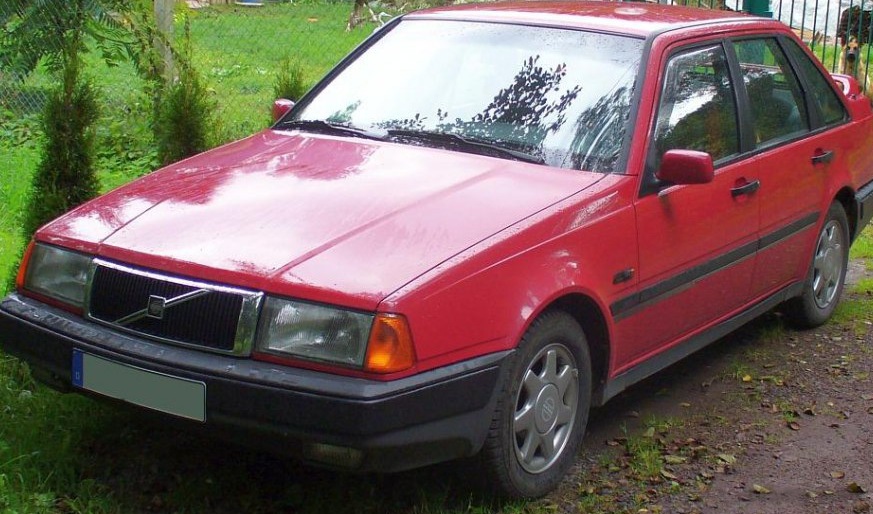
The Volvo 440 K, produced between 1991 and 1993, represented a key iteration within the broader 440/460 series, Volvo’s foray into the compact, front-wheel-drive hatchback market. Specifically, the 1.8-liter (90 hp) variant, often paired with an automatic transmission, served as an entry-level offering, aimed at buyers prioritizing fuel efficiency and affordability over outright performance. This model, designated internally as the 445, was a significant departure from Volvo’s traditionally rear-wheel-drive offerings and played a crucial role in expanding the brand’s appeal to a wider demographic, particularly in Europe. It was built on the P1 platform, shared with the later 460 model.
Technical Specifications
| Brand | Volvo |
| Model | 440 K |
| Generation | 440 K (445) |
| Type (Engine) | 1.8 (90 Hp) |
| Start of production | 1991 |
| End of production | 1993 |
| Powertrain Architecture | Internal Combustion engine |
| Body type | Hatchback |
| Seats | 5 |
| Doors | 4 |
| Fuel consumption (combined) | 7.9 l/100 km |
| Fuel consumption (US mpg) | 29.8 US mpg |
| Fuel consumption (UK mpg) | 35.8 UK mpg |
| Fuel consumption (km/l) | 12.7 km/l |
| Fuel Type | Petrol (Gasoline) |
| Acceleration 0 – 100 km/h | 11.7 sec |
| Acceleration 0 – 62 mph | 11.7 sec |
| Acceleration 0 – 60 mph | 11.1 sec |
| Maximum speed | 176 km/h (109.36 mph) |
| Weight-to-power ratio | 11.5 kg/Hp, 87.2 Hp/tonne |
| Weight-to-torque ratio | 7.4 kg/Nm, 135.7 Nm/tonne |
| Power | 90 Hp @ 6000 rpm |
| Power per litre | 50.2 Hp/l |
| Torque | 140 Nm @ 2500 rpm (103.26 lb.-ft. @ 2500 rpm) |
| Engine layout | Front, Transverse |
| Engine Model/Code | B18U-103 |
| Engine displacement | 1794 cm3 (109.48 cu. in.) |
| Number of cylinders | 4 |
| Engine configuration | Inline |
| Cylinder Bore | 82.7 mm (3.26 in.) |
| Piston Stroke | 83.5 mm (3.29 in.) |
| Compression ratio | 9.7:1 |
| Number of valves per cylinder | 2 |
| Fuel injection system | Single-point injection |
| Engine aspiration | Naturally aspirated engine |
| Valvetrain | OHC |
| Engine oil capacity | 5 l (5.28 US qt | 4.4 UK qt) |
| Coolant capacity | 7 l (7.4 US qt | 6.16 UK qt) |
| Kerb Weight | 1032 kg (2275.17 lbs.) |
| Max. weight | 1580 kg (3483.3 lbs.) |
| Max load | 548 kg (1208.13 lbs.) |
| Trunk (boot) space – minimum | 330 l (11.65 cu. ft.) |
| Trunk (boot) space – maximum | 1028 l (36.3 cu. ft.) |
| Fuel tank capacity | 60 l (15.85 US gal | 13.2 UK gal) |
| Length | 4345 mm (171.06 in.) |
| Width | 1686 mm (66.38 in.) |
| Height | 1378 mm (54.25 in.) |
| Wheelbase | 2503 mm (98.54 in.) |
| Front track | 1416 mm (55.75 in.) |
| Rear track | 1426 mm (56.14 in.) |
| Drivetrain Architecture | Front wheel drive |
| Number of gears | 5 |
| Gearbox type | Automatic transmission |
| Front suspension | Wishbone |
| Rear suspension | Coil spring |
| Front brakes | Disc |
| Rear brakes | Drum |
| Assisting systems | ABS (Anti-lock braking system) |
| Steering type | Steering rack and pinion |
| Power steering | Hydraulic Steering |
| Tires size | 185/65 R14 |
| Wheel rims size | 14 |
Powertrain & Engine Architecture
The heart of the 440 K 1.8 was the B18U-103 engine, a 1.8-liter inline-four cylinder unit. This engine utilized a single-point fuel injection system, a relatively common technology in the early 1990s, but less sophisticated than the multi-point injection systems found in some competitors. The engine featured an overhead camshaft (OHC) valvetrain with two valves per cylinder. The B18U engine family was known for its robustness, though it wasn’t particularly powerful. The 90 horsepower output at 6000 rpm and 140 Nm (103 lb-ft) of torque at 2500 rpm were modest, even for the time. The automatic transmission, typically a four-speed unit sourced from various suppliers over the production run, was geared for economy rather than acceleration. It was designed to provide smooth, comfortable shifts, prioritizing ease of use over sporty responsiveness.
Driving Characteristics
The 440 K 1.8 with the automatic transmission offered a relaxed driving experience. Acceleration was adequate for everyday driving, but overtaking maneuvers required careful planning. The automatic transmission’s gear ratios were optimized for fuel efficiency, resulting in a noticeable delay before downshifting for increased power. Compared to the five-speed manual version, the automatic suffered a slight performance penalty, adding roughly a second to the 0-60 mph time. The front-wheel-drive configuration provided predictable handling, but the car wasn’t particularly engaging for enthusiastic drivers. The suspension, tuned for comfort, absorbed bumps reasonably well, but body roll was noticeable in corners.
Equipment & Trim Levels
The 440 K 1.8 automatic typically came with a fairly basic level of equipment. Standard features included power steering, central locking, and a basic stereo system. Interior upholstery was typically cloth, with a durable, if somewhat utilitarian, design. Optional extras included power windows, a sunroof, and upgraded audio systems. The trim level was generally considered entry-level within the 440 range, positioned below the more powerful 2.0-liter variants and the more luxurious 460 models. The dashboard layout was functional and straightforward, prioritizing ergonomics over aesthetics.
Chassis & Braking
The 440 K featured a front-wheel-drive chassis with independent wishbone suspension at the front and a coil-sprung rear axle. The braking system consisted of disc brakes at the front and drum brakes at the rear, a common configuration for cars in this price range during the early 1990s. Anti-lock braking system (ABS) was available as an option, enhancing safety in slippery conditions. The car’s relatively light weight (around 2275 lbs) helped to compensate for the modest engine output and braking performance.
Market Reception & Comparison
The 440 K 1.8 automatic was generally well-received as a practical and affordable family car. Critics praised its fuel efficiency and comfortable ride, but noted its lack of performance and somewhat uninspired styling. Compared to rivals like the Ford Escort and Opel Astra, the 440 K offered a slightly more refined driving experience, but lacked the sporting pretensions of some competitors. The 2.0-liter versions of the 440 offered significantly more power, appealing to drivers seeking a more engaging driving experience, while the 1.9 TDI diesel models provided superior fuel economy. The automatic transmission, while convenient, was often criticized for its sluggishness compared to the manual gearbox.
Legacy
The Volvo 440 K 1.8 automatic, while not a performance icon, proved to be a reliable and durable car. The B18U engine, despite its simplicity, was known for its longevity, and many examples remain on the road today. The automatic transmission, while not particularly sophisticated, generally held up well over time. In the used car market, these models are often sought after by enthusiasts looking for a classic Volvo at an affordable price. Their simplicity makes them relatively easy to maintain and repair, and their robust construction ensures they can withstand years of use. The 440 K represents a pivotal moment in Volvo’s history, marking the brand’s transition to front-wheel-drive and a broader appeal to the mass market.
