
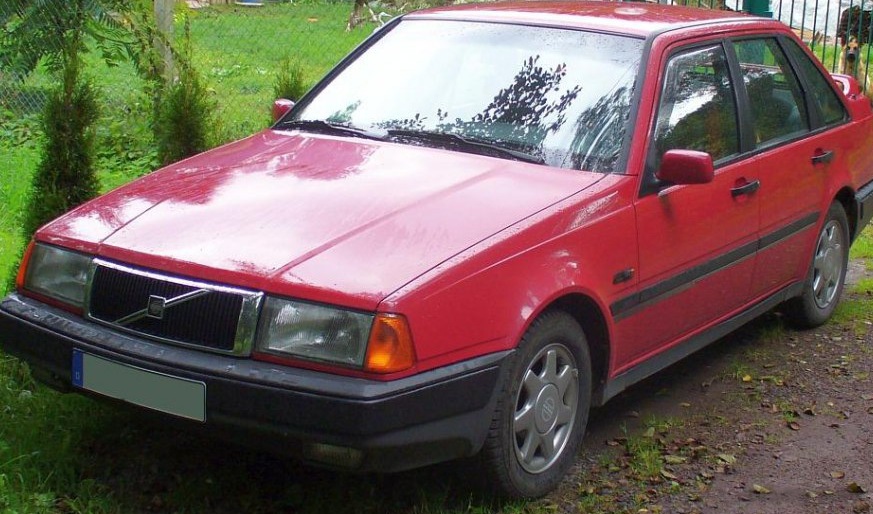
The Volvo 440 K, specifically the 445 variant with the 1.9-liter turbocharged diesel engine producing 90 horsepower, was a relatively late addition to the 440/460 series produced between 1994 and 1996. Positioned as an economy-focused option within the lineup, it aimed to provide improved fuel efficiency and torque compared to the gasoline-powered models, particularly appealing to European drivers seeking lower running costs. This variant represented Volvo’s attempt to cater to the growing diesel market, offering a practical and durable hatchback for everyday use. The 440 series, built on Volvo’s new (at the time) front-wheel-drive platform, was a significant departure from the company’s traditionally rear-wheel-drive offerings.
Technical Specifications
| Brand | Volvo |
| Model | 440 K |
| Generation | 440 K (445) |
| Type (Engine) | 1.9 Turbo-Diesel (90 Hp) |
| Start of production | 1994 |
| End of production | 1996 |
| Powertrain Architecture | Internal Combustion engine |
| Body type | Hatchback |
| Seats | 5 |
| Doors | 5 |
| Fuel consumption (combined) | 5.8 l/100 km (40.6 US mpg, 48.7 UK mpg, 17.2 km/l) |
| Fuel Type | Diesel |
| Acceleration 0 – 100 km/h | 12.3 sec |
| Acceleration 0 – 62 mph | 12.3 sec |
| Acceleration 0 – 60 mph | 11.7 sec |
| Maximum speed | 176 km/h (109.36 mph) |
| Weight-to-power ratio | 12.2 kg/Hp, 81.9 Hp/tonne |
| Weight-to-torque ratio | 6.2 kg/Nm, 160.1 Nm/tonne |
| Power | 90 Hp @ 4250 rpm |
| Power per litre | 48.1 Hp/l |
| Torque | 176 Nm @ 2250 rpm (129.81 lb.-ft. @ 2250 rpm) |
| Engine layout | Front, Transverse |
| Engine Model/Code | D19T |
| Engine displacement | 1870 cm3 (114.11 cu. in.) |
| Number of cylinders | 4 |
| Engine configuration | Inline |
| Cylinder Bore | 80 mm (3.15 in.) |
| Piston Stroke | 93 mm (3.66 in.) |
| Compression ratio | 20.5:1 |
| Number of valves per cylinder | 2 |
| Fuel injection system | Diesel Commonrail |
| Engine aspiration | Turbocharger |
| Valvetrain | OHC |
| Engine oil capacity | 5 l (5.28 US qt | 4.4 UK qt) |
| Coolant | 6.5 l (6.87 US qt | 5.72 UK qt) |
| Kerb Weight | 1099 kg (2422.88 lbs.) |
| Max. weight | 1580 kg (3483.3 lbs.) |
| Max load | 481 kg (1060.42 lbs.) |
| Trunk (boot) space – minimum | 330 l (11.65 cu. ft.) |
| Trunk (boot) space – maximum | 1028 l (36.3 cu. ft.) |
| Fuel tank capacity | 60 l (15.85 US gal | 13.2 UK gal) |
| Length | 4345 mm (171.06 in.) |
| Width | 1686 mm (66.38 in.) |
| Height | 1378 mm (54.25 in.) |
| Wheelbase | 2503 mm (98.54 in.) |
| Front track | 1416 mm (55.75 in.) |
| Rear (Back) track | 1426 mm (56.14 in.) |
| Drivetrain Architecture | The Internal combustion engine (ICE) drives the front wheels of the vehicle. |
| Drive wheel | Front wheel drive |
| Number of gears and type of gearbox | 5 gears, manual transmission |
| Front suspension | Wishbone |
| Rear suspension | Coil spring |
| Front brakes | Disc |
| Rear brakes | Disc |
| Assisting systems | ABS (Anti-lock braking system) |
| Steering type | Steering rack and pinion |
| Power steering | Hydraulic Steering |
| Tires size | 185/65 R14 |
| Wheel rims size | 14 |
Introduction
The Volvo 440 K 1.9 Turbo-Diesel, produced from 1994 to 1996, was a five-door hatchback designed to offer a fuel-efficient and practical transportation solution. It was part of the broader 440/460 series, Volvo’s first foray into front-wheel-drive vehicles. The ‘K’ designation denoted the hatchback body style, while the 445 specifically refers to the five-door configuration. This diesel variant was primarily aimed at the European market, where diesel engines were gaining popularity due to their superior fuel economy and lower running costs compared to gasoline alternatives. It sat within the 440 range as the entry-level diesel option, below the more powerful (though not available in all markets) gasoline engines.
Powertrain & Engine Architecture
The heart of the 440 K 1.9 Turbo-Diesel is the D19T engine, a 1.9-liter inline-four cylinder diesel. This engine featured a turbocharger to boost power and torque, despite its relatively small displacement. The D19T utilized a direct injection system, a common feature in diesel engines of the era, delivering fuel directly into the combustion chamber for improved efficiency. The engine employed an overhead camshaft (OHC) valvetrain, operating two valves per cylinder. The high compression ratio of 20.5:1 is typical for diesel engines, contributing to their efficiency. The engine was transversely mounted in the front of the vehicle, driving the front wheels. The 440 K was equipped with a five-speed manual transmission, chosen for its efficiency and affordability. While an automatic transmission was available on some 440 models, it was not offered with the 1.9 Turbo-Diesel engine.
Driving Characteristics
The 90 horsepower and 176 Nm (129.81 lb-ft) of torque produced by the D19T engine provided adequate, but not exhilarating, performance. Acceleration from 0 to 60 mph took around 11.7 seconds, and top speed was approximately 109 mph. The turbocharger helped to mitigate some of the inherent lag associated with diesel engines, providing a noticeable boost in power at higher RPMs. However, compared to the gasoline-powered 440 models, the diesel felt noticeably slower, particularly during acceleration. The five-speed manual transmission was well-matched to the engine’s characteristics, allowing drivers to keep the engine in its optimal power band. The gear ratios were relatively long, prioritizing fuel economy over outright performance. The driving experience was characterized by its practicality and fuel efficiency, rather than sporty handling or rapid acceleration.
Equipment & Trim Levels
The 440 K 1.9 Turbo-Diesel was generally equipped with a fairly basic level of standard features, reflecting its position as an economy-focused model. Standard equipment typically included power steering, central locking, and a basic stereo system. Interior upholstery was typically cloth, with a durable and practical design. Optional extras included power windows, a sunroof, and upgraded stereo systems. The dashboard layout was functional and straightforward, with clearly labeled controls. Safety features, such as ABS anti-lock brakes, were often included as standard equipment, reflecting Volvo’s commitment to safety.
Chassis & Braking
The 440 K featured a relatively simple chassis design. The front suspension utilized a wishbone configuration, while the rear suspension employed coil springs. This setup provided a comfortable ride, although handling was not particularly sporty. The braking system consisted of disc brakes on all four wheels, providing adequate stopping power. The ABS anti-lock braking system helped to prevent wheel lockup during hard braking, improving stability and control. The steering was rack and pinion, providing precise and responsive steering feel. The 440 K was equipped with 185/65 R14 tires, mounted on 14-inch steel wheels.
Market Reception & Comparison
The Volvo 440 K 1.9 Turbo-Diesel was generally well-received by critics as a practical and fuel-efficient hatchback. However, it was often criticized for its relatively slow performance compared to gasoline-powered rivals. Compared to the gasoline-powered 440 models, the diesel offered significantly better fuel economy, but at the expense of performance. The 1.9 Turbo-Diesel was also often compared to other diesel hatchbacks of the era, such as the Volkswagen Golf and Ford Escort. The Volvo offered a reputation for durability and safety, but often lacked the refinement and driving dynamics of its competitors. Fuel economy was a strong point, achieving around 40.6 US mpg in combined driving.
Legacy
The Volvo 440 K 1.9 Turbo-Diesel, while not a performance icon, has proven to be a durable and reliable vehicle. The D19T engine, while not known for its sophistication, is generally considered to be a robust and long-lasting unit. Today, these vehicles are relatively rare, but those that remain are often sought after by enthusiasts and collectors. The 440 K represents a significant chapter in Volvo’s history, marking the company’s transition to front-wheel-drive vehicles. The 1.9 Turbo-Diesel variant, in particular, is remembered for its fuel efficiency and practicality, making it a popular choice for drivers seeking a reliable and economical hatchback.
