
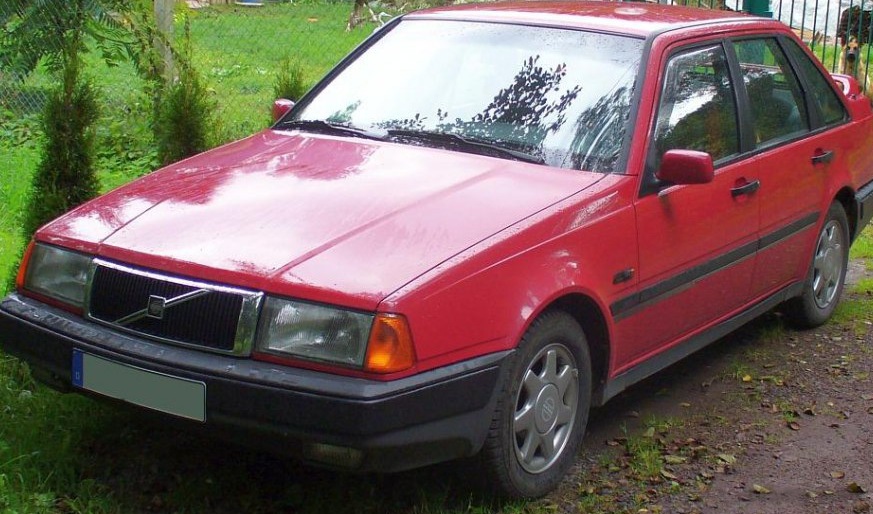
The Volvo 440 K, produced between 1993 and 1996, represented a refinement of Volvo’s compact hatchback offering. Positioned as a mid-range variant within the 440/460 series (internally designated as the 445), the 2.0-liter (1998cc) 109 horsepower model aimed to provide a balance between performance and economy for European buyers. This generation, built upon the front-wheel-drive platform first introduced in 1987, sought to modernize Volvo’s image while retaining the brand’s reputation for safety and durability. The 440 K with the B20F engine was a key part of Volvo’s strategy to appeal to a broader customer base in a competitive segment.
Technical Specifications
| Brand | Volvo |
| Model | 440 K |
| Generation | 440 K (445) |
| Type (Engine) | 2.0 (109 Hp) |
| Start of production | 1993 |
| End of production | 1996 |
| Powertrain Architecture | Internal Combustion engine |
| Body type | Hatchback |
| Seats | 5 |
| Doors | 5 |
| Fuel consumption (combined) | 8 l/100 km (29.4 US mpg, 35.3 UK mpg, 12.5 km/l) |
| Fuel Type | Petrol (Gasoline) |
| Acceleration 0 – 100 km/h | 10.3 sec |
| Acceleration 0 – 62 mph | 10.3 sec |
| Acceleration 0 – 60 mph | 9.8 sec |
| Maximum speed | 190 km/h (118.06 mph) |
| Weight-to-power ratio | 9.8 kg/Hp, 102.3 Hp/tonne |
| Weight-to-torque ratio | 6.5 kg/Nm, 154.8 Nm/tonne |
| Power | 109 Hp @ 5200 rpm |
| Power per litre | 54.6 Hp/l |
| Torque | 165 Nm @ 3500 rpm (121.7 lb.-ft. @ 3500 rpm) |
| Engine layout | Front, Transverse |
| Engine Model/Code | B20F116 |
| Engine displacement | 1998 cm3 (121.93 cu. in.) |
| Number of cylinders | 4 |
| Engine configuration | Inline |
| Cylinder Bore | 82.7 mm (3.26 in.) |
| Piston Stroke | 93 mm (3.66 in.) |
| Compression ratio | 9.5:1 |
| Number of valves per cylinder | 2 |
| Fuel injection system | Multi-port manifold injection |
| Engine aspiration | Naturally aspirated engine |
| Valvetrain | OHC |
| Engine oil capacity | 5 l (5.28 US qt | 4.4 UK qt) |
| Coolant | 7 l (7.4 US qt | 6.16 UK qt) |
| Kerb Weight | 1066 kg (2350.13 lbs.) |
| Max. weight | 1580 kg (3483.3 lbs.) |
| Max load | 514 kg (1133.18 lbs.) |
| Trunk (boot) space – minimum | 330 l (11.65 cu. ft.) |
| Trunk (boot) space – maximum | 1028 l (36.3 cu. ft.) |
| Fuel tank capacity | 60 l (15.85 US gal | 13.2 UK gal) |
| Length | 4345 mm (171.06 in.) |
| Width | 1686 mm (66.38 in.) |
| Height | 1378 mm (54.25 in.) |
| Wheelbase | 2503 mm (98.54 in.) |
| Front track | 1416 mm (55.75 in.) |
| Rear (Back) track | 1426 mm (56.14 in.) |
| Drivetrain Architecture | The Internal combustion engine (ICE) drives the front wheels of the vehicle. |
| Drive wheel | Front wheel drive |
| Number of gears and type of gearbox | 5 gears, manual transmission |
| Front suspension | Wishbone |
| Rear suspension | Coil spring |
| Front brakes | Disc |
| Rear brakes | Disc |
| Assisting systems | ABS (Anti-lock braking system) |
| Steering type | Steering rack and pinion |
| Power steering | Hydraulic Steering |
| Tires size | 185/65 R14 |
| Wheel rims size | 14 |
Powertrain & Engine Architecture
The heart of the 440 K 2.0 was the B20F116 engine, a 1998cc inline-four cylinder unit. This engine was a development of Volvo’s earlier ‘Redblock’ series, known for its robustness. The B20F featured a single overhead camshaft (OHC) operating two valves per cylinder. Fuel delivery was handled by Bosch multi-port fuel injection, a significant upgrade from earlier carbureted models. The engine produced 109 horsepower at 5200 rpm and 165 Nm (121.7 lb-ft) of torque at 3500 rpm. The engine’s relatively modest output was a deliberate choice, aimed at providing adequate performance for everyday driving while prioritizing fuel efficiency. The engine was transversely mounted, driving the front wheels. The 440 K utilized a 5-speed manual transmission as standard, offering a reasonably direct driving experience.
Driving Characteristics
The 440 K 2.0, with its 109 hp and manual transmission, offered a practical and usable driving experience. Acceleration to 60 mph took around 9.8 seconds, and top speed was approximately 118 mph. While not a sports car, the engine provided sufficient power for overtaking and highway cruising. The gear ratios were tuned for economy, meaning the engine needed to be revved to access its full potential. Compared to the more powerful 440 Turbo, the 2.0 felt noticeably slower, but it offered better fuel economy and lower running costs. The handling was safe and predictable, typical of Volvo’s engineering philosophy, but lacked the sharpness of some contemporary rivals. The front-wheel-drive layout contributed to a tendency towards understeer when pushed hard.
Equipment & Trim Levels
The 440 K 2.0 typically came equipped with features considered standard for a mid-range European hatchback in the mid-1990s. This included power steering, central locking, and an AM/FM radio. Interior upholstery was typically cloth, with a functional, if somewhat austere, dashboard layout. Optional extras included power windows, a sunroof, and upgraded audio systems. Higher trim levels, such as the SE, added features like alloy wheels, upgraded interior trim, and additional exterior detailing. The 440 K prioritized practicality over luxury, with a focus on durable materials and a spacious interior.
Chassis & Braking
The 440 K utilized a relatively simple chassis design. Front suspension consisted of independent wishbones, while the rear employed a coil-sprung semi-independent setup. Brakes were disc brakes all around, providing adequate stopping power for the vehicle’s weight and performance. An Anti-lock Braking System (ABS) was standard, enhancing safety in emergency braking situations. The suspension was tuned for comfort, providing a relatively smooth ride over uneven surfaces. Stabilizer bars were fitted to both the front and rear axles to reduce body roll during cornering.
Market Reception & Comparison
The Volvo 440 K 2.0 was generally well-received by automotive critics as a sensible and practical family car. It was praised for its safety features, durability, and spacious interior. However, it was often criticized for its somewhat bland styling and uninspiring driving dynamics. Compared to rivals like the Ford Escort and Opel Astra, the 440 K offered a more robust build quality and a stronger emphasis on safety. Fuel economy was competitive for the time, averaging around 29.4 US mpg. The 440 K 2.0 represented a good value proposition for buyers seeking a reliable and practical hatchback.
Legacy
The B20F engine, found in the 440 K 2.0, proved to be a durable and reliable unit. Many examples are still on the road today, testament to Volvo’s engineering quality. While not highly sought after by collectors, the 440 K has gained a following among enthusiasts who appreciate its simplicity and practicality. Parts availability remains reasonable, making it a relatively affordable classic car to maintain. The 440 K represents a significant chapter in Volvo’s history, marking a transition towards more modern design and engineering while retaining the brand’s core values of safety and durability.
