
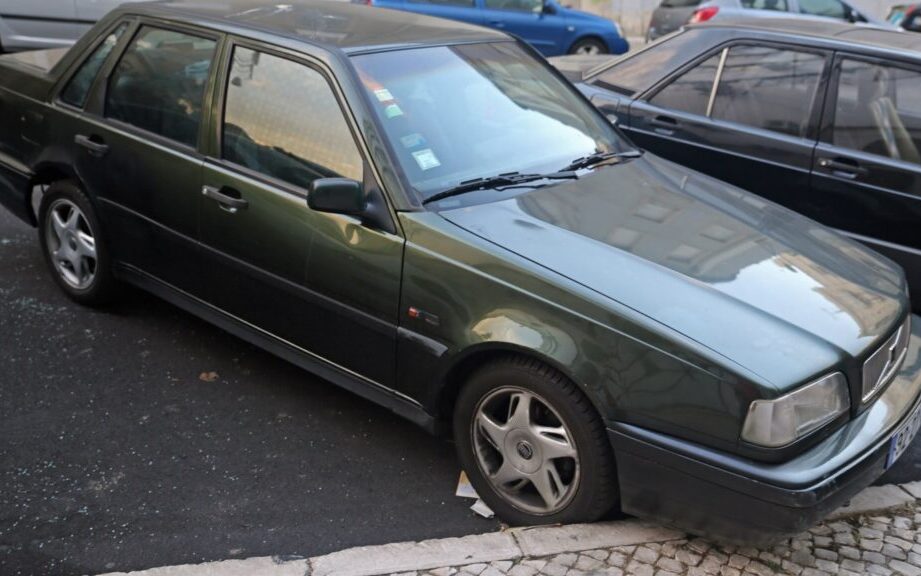
The Volvo 460 L, specifically the 1.6-liter (82 horsepower) variant produced between 1993 and 1996, represented Volvo’s entry-level offering in the compact sedan segment. Part of the 460 series (chassis code 464), it was positioned below the more luxurious 480 ES coupe. This model aimed to provide a practical, safe, and fuel-efficient vehicle for families and commuters, primarily targeting the European market. While not a performance leader, the 460 L 1.6 offered a balance of affordability and Volvo’s renowned safety features. It was a key part of Volvo’s strategy to broaden its appeal beyond its traditional, more upscale customer base.
Technical Specifications
| Brand | Volvo |
| Model | 460 L |
| Generation | 460 L (464) |
| Type (Engine) | 1.6 (82 Hp) |
| Start of production | 1993 |
| End of production | 1996 |
| Powertrain Architecture | Internal Combustion engine |
| Body type | Sedan |
| Seats | 5 |
| Doors | 4 |
| Fuel consumption (combined) | 7.6 l/100 km |
| Fuel consumption (US mpg) | 30.9 US mpg |
| Fuel consumption (UK mpg) | 37.2 UK mpg |
| Fuel consumption (km/l) | 13.2 km/l |
| Fuel Type | Petrol (Gasoline) |
| Acceleration 0 – 100 km/h | 12.5 sec |
| Acceleration 0 – 62 mph | 12.5 sec |
| Acceleration 0 – 60 mph | 11.9 sec |
| Maximum speed | 172 km/h (106.88 mph) |
| Weight-to-power ratio | 12.5 kg/Hp |
| Weight-to-torque ratio | 8.2 kg/Nm |
| Power | 82 Hp @ 5500 rpm |
| Power per litre | 51.4 Hp/l |
| Torque | 125 Nm @ 4000 rpm (92.2 lb.-ft. @ 4000 rpm) |
| Engine layout | Front, Transverse |
| Engine Model/Code | B16F |
| Engine displacement | 1596 cm3 (97.39 cu. in.) |
| Number of cylinders | 4 |
| Engine configuration | Inline |
| Cylinder Bore | 78 mm (3.07 in.) |
| Piston Stroke | 83.5 mm (3.29 in.) |
| Compression ratio | 10:1 |
| Number of valves per cylinder | 2 |
| Fuel injection system | Single-point injection |
| Engine aspiration | Naturally aspirated engine |
| Valvetrain | OHC |
| Engine oil capacity | 5 l (5.28 US qt | 4.4 UK qt) |
| Coolant capacity | 7 l (7.4 US qt | 6.16 UK qt) |
| Kerb Weight | 1024 kg (2257.53 lbs.) |
| Max. weight | 1580 kg (3483.3 lbs.) |
| Max load | 556 kg (1225.77 lbs.) |
| Trunk (boot) space – minimum | 453 l (16 cu. ft.) |
| Trunk (boot) space – maximum | 948 l (33.48 cu. ft.) |
| Fuel tank capacity | 60 l (15.85 US gal | 13.2 UK gal) |
| Length | 4435 mm (174.61 in.) |
| Width | 1686 mm (66.38 in.) |
| Height | 1378 mm (54.25 in.) |
| Wheelbase | 2503 mm (98.54 in.) |
| Front track | 1416 mm (55.75 in.) |
| Rear track | 1426 mm (56.14 in.) |
| Drivetrain Architecture | Front wheel drive |
| Number of gears | 5 |
| Gearbox type | Manual transmission |
| Front suspension | Wishbone |
| Rear suspension | Coil spring |
| Front brakes | Disc |
| Rear brakes | Disc |
| Assisting systems | ABS (Anti-lock braking system) |
| Steering type | Steering rack and pinion |
| Power steering | Hydraulic Steering |
| Tires size | 185/65 R14 |
| Wheel rims size | 14 |
Powertrain & Engine Architecture
The heart of the 460 L 1.6 was the Volvo B16F engine, a 1.6-liter inline-four cylinder unit. This engine, part of Volvo’s ‘Redblock’ family, featured a single overhead camshaft (OHC) design and utilized single-point fuel injection. While relatively simple in its design, the B16F was known for its durability and ease of maintenance. The engine produced 82 horsepower at 5500 rpm and 125 Nm (92.2 lb-ft) of torque at 4000 rpm. The five-speed manual transmission was the standard offering, providing a reasonably efficient power delivery. The engine’s transverse mounting and front-wheel-drive configuration were typical for European compact cars of the era, maximizing interior space and improving fuel economy.
Driving Characteristics
The 460 L 1.6, with its modest power output, wasn’t designed for spirited driving. Acceleration from 0 to 60 mph took around 11.9 seconds, and top speed was limited to 172 km/h (106.88 mph). The five-speed manual transmission helped to keep the engine in its optimal power band, but the lack of torque meant frequent downshifts were necessary for overtaking or climbing hills. Compared to the more powerful 460 models, such as those equipped with the 1.9-liter engine, the 1.6 felt noticeably slower. However, the 1.6 offered a smoother and more economical driving experience, making it well-suited for urban commuting and long-distance highway journeys. The gear ratios were tuned for fuel efficiency rather than outright performance.
Equipment & Trim Levels
The 460 L 1.6 typically came with a fairly basic level of equipment, reflecting its position as the entry-level model. Standard features included power steering, central locking, and a basic stereo system. Interior upholstery was typically cloth, and the dashboard featured a functional, if somewhat austere, design. Optional extras included power windows, a sunroof, and upgraded audio systems. Safety features, a hallmark of Volvo, were relatively comprehensive even on the base model, including ABS anti-lock brakes and reinforced body structure. Trim levels were generally limited, with most variations stemming from the addition of optional packages.
Chassis & Braking
The 460 L utilized a relatively simple chassis design. Front suspension consisted of wishbones, while the rear employed a coil spring setup. Disc brakes were fitted to all four wheels, providing adequate stopping power for the vehicle’s weight and performance. The ABS system further enhanced braking safety, particularly on slippery surfaces. The suspension was tuned for comfort rather than sporty handling, resulting in a relatively soft ride quality. Stabilizer bars were present, but their thickness was modest, contributing to the car’s tendency to roll slightly in corners.
Market Reception & Comparison
The 460 L 1.6 received mixed reviews from automotive critics. While praised for its safety, fuel efficiency, and build quality, it was often criticized for its lack of performance and somewhat dated interior design. Compared to rivals like the Ford Escort and Opel Astra, the 460 L offered a more refined driving experience and a stronger emphasis on safety. However, it was generally more expensive to purchase and maintain. Fuel economy was competitive for the time, averaging around 30.9 US mpg. Reliability was generally good, although the single-point fuel injection system could occasionally require maintenance.
Legacy
The Volvo 460 L 1.6, while not a groundbreaking vehicle, played an important role in Volvo’s history. It broadened the brand’s appeal to a wider audience and demonstrated Volvo’s commitment to safety and practicality. Today, the 460 L 1.6 is a relatively rare sight on the roads, but well-maintained examples are sought after by Volvo enthusiasts. The B16F engine is known for its durability, and parts availability remains reasonable. The car’s simple design makes it relatively easy to maintain and repair, making it a viable option for those seeking a classic Volvo with a focus on reliability and affordability. Its legacy lies in its embodiment of Volvo’s core values: safety, durability, and practicality.
