
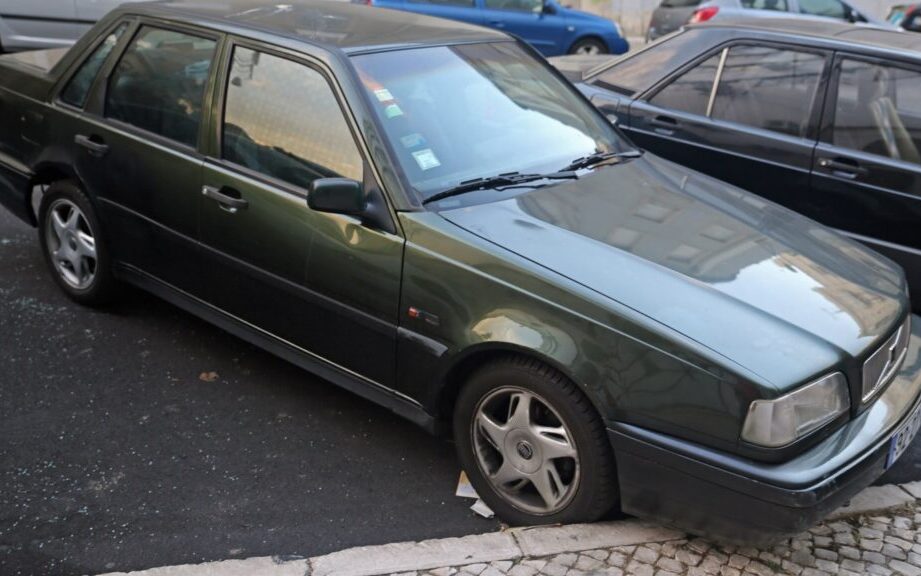
The Volvo 460 L, specifically the 1.8-liter (90 horsepower) variant produced between 1991 and 1993, represented Volvo’s entry-level offering in the compact sedan segment. This model, designated internally as the 464 series, was a key part of Volvo’s attempt to broaden its appeal beyond its traditional, safety-focused customer base. It was built on the Volvo 400 series platform (P4), sharing many components with the 440 and 480 models, but distinguished itself with a more refined interior and a focus on providing comfortable, economical transportation. The 460 L aimed to compete with European and increasingly Japanese rivals in a market segment that demanded both practicality and affordability.
Technical Specifications
| Brand | Volvo |
| Model | 460 L |
| Generation | 460 L (464) |
| Type (Engine) | 1.8 (90 Hp) |
| Start of production | 1991 |
| End of production | 1993 |
| Powertrain Architecture | Internal Combustion engine |
| Body type | Sedan |
| Seats | 5 |
| Doors | 4 |
| Fuel consumption (urban) | 9.3 l/100 km (25.3 US mpg) |
| Fuel consumption (extra urban) | 6.5 l/100 km (36.2 US mpg) |
| Fuel consumption (combined) | 7.9 l/100 km (29.8 US mpg) |
| Fuel Type | Petrol (Gasoline) |
| Acceleration 0 – 100 km/h | 11.7 sec |
| Acceleration 0 – 62 mph | 11.7 sec |
| Acceleration 0 – 60 mph | 11.1 sec |
| Maximum speed | 176 km/h (109.36 mph) |
| Weight-to-power ratio | 11.5 kg/Hp |
| Weight-to-torque ratio | 7.4 kg/Nm |
| Power | 90 Hp @ 6000 rpm |
| Torque | 140 Nm @ 2500 rpm (103.26 lb.-ft. @ 2500 rpm) |
| Engine layout | Front, Transverse |
| Engine Model/Code | B18U-103 |
| Engine displacement | 1794 cm3 (109.48 cu. in.) |
| Number of cylinders | 4 |
| Engine configuration | Inline |
| Cylinder Bore | 82.7 mm (3.26 in.) |
| Piston Stroke | 83.5 mm (3.29 in.) |
| Compression ratio | 9.7:1 |
| Number of valves per cylinder | 2 |
| Fuel injection system | Single-point injection |
| Engine aspiration | Naturally aspirated |
| Valvetrain | OHC |
| Engine oil capacity | 5 l (5.28 US qt | 4.4 UK qt) |
| Coolant capacity | 7 l (7.4 US qt | 6.16 UK qt) |
| Kerb Weight | 1034 kg (2279.58 lbs.) |
| Max. weight | 1580 kg (3483.3 lbs.) |
| Max load | 546 kg (1203.72 lbs.) |
| Trunk (boot) space – minimum | 453 l (16 cu. ft.) |
| Trunk (boot) space – maximum | 948 l (33.48 cu. ft.) |
| Fuel tank capacity | 60 l (15.85 US gal | 13.2 UK gal) |
| Length | 4435 mm (174.61 in.) |
| Width | 1686 mm (66.38 in.) |
| Height | 1378 mm (54.25 in.) |
| Wheelbase | 2503 mm (98.54 in.) |
| Front track | 1416 mm (55.75 in.) |
| Rear track | 1426 mm (56.14 in.) |
| Drivetrain Architecture | Front wheel drive |
| Number of gears | 5 |
| Gearbox type | Manual transmission |
| Front suspension | Wishbone |
| Rear suspension | Coil spring |
| Front brakes | Disc |
| Rear brakes | Disc |
| Assisting systems | ABS (Anti-lock braking system) |
| Steering type | Steering rack and pinion |
| Power steering | Hydraulic |
| Tires size | 185/65 R14 |
| Wheel rims size | 14 |
Powertrain & Engine Architecture
The heart of the 1991-1993 Volvo 460 L 1.8 was the B18U-103 engine, a 1.8-liter inline-four cylinder powerplant. This engine was a relatively simple design, utilizing a single overhead camshaft (OHC) and two valves per cylinder. Fuel delivery was handled by a single-point fuel injection system, which, while less sophisticated than multi-point injection, contributed to reasonable fuel economy and acceptable emissions for the time. The B18U engine family was known for its robustness, though it wasn’t particularly powerful. The 90 horsepower output at 6000 rpm and 140 Nm (103 lb-ft) of torque at 2500 rpm were adequate for everyday driving but didn’t offer significant performance reserves. The engine was transversely mounted in the front of the vehicle, driving the front wheels. The 460 L was typically equipped with a 5-speed manual transmission, although a 4-speed automatic transmission was also available, albeit less common. The automatic transmission, while offering convenience, further reduced acceleration performance.
Driving Characteristics
The 460 L 1.8 with the manual transmission offered a reasonably engaging driving experience for its class. Acceleration to 60 mph took around 11.1 seconds, and top speed was approximately 109 mph. The engine felt somewhat strained at higher speeds, and passing maneuvers required careful planning. The automatic transmission version was noticeably slower, with a 0-60 mph time closer to 12 seconds. The gear ratios in the manual transmission were well-spaced, providing decent flexibility in various driving situations. The steering was light and precise, making the car easy to maneuver in urban environments. The suspension, while comfortable, wasn’t particularly sporty, resulting in some body roll during cornering. Overall, the driving experience was geared towards comfort and practicality rather than outright performance.
Equipment & Trim Levels
The 460 L 1.8 typically came with a fairly basic level of equipment. Standard features included power steering, front disc brakes, and a relatively comfortable interior with cloth upholstery. Optional extras included power windows, central locking, and a sunroof. The interior design was functional and understated, reflecting Volvo’s emphasis on practicality and safety. Trim levels were relatively limited, with the 1.8 model serving as the entry point to the 460 L range. Higher trim levels, typically equipped with the more powerful 2.0-liter engine, offered more luxurious features and a more refined interior.
Chassis & Braking
The 460 L utilized a front-wheel-drive chassis with independent wishbone suspension at the front and a coil spring rear suspension. The braking system featured disc brakes on all four wheels, which was a notable safety feature for a car in this segment. An Anti-lock Braking System (ABS) was available as an option, further enhancing braking performance and safety. The chassis was designed to provide a comfortable ride and predictable handling, prioritizing stability over sporty dynamics. The relatively light curb weight of around 2280 lbs helped to offset the modest engine output.
Market Reception & Comparison
The Volvo 460 L 1.8 was generally well-received by critics as a practical and reliable family sedan. However, it was often criticized for its lack of performance and somewhat bland styling. Compared to its siblings, the 440 and 480, the 460 L offered a more refined interior and a slightly more upmarket feel. The 2.0-liter versions of the 460 L provided significantly more power and were favored by drivers who prioritized performance. The 1.9 TDI diesel versions of the 440/460 offered superior fuel economy but lacked the refinement of the gasoline engines. In terms of reliability, the 460 L proved to be a durable car, although some owners reported issues with the single-point fuel injection system and the electrical components.
Legacy
The Volvo 460 L, particularly the 1.8-liter variant, has become a relatively affordable classic car. The B18U engine is known for its longevity, and many examples are still on the road today. While not a particularly sought-after model, the 460 L represents a significant chapter in Volvo’s history, demonstrating the company’s attempt to broaden its appeal and compete in the mainstream compact sedan market. Parts availability is generally good, and the car’s simple mechanical design makes it relatively easy to maintain for DIY enthusiasts. The 460 L remains a testament to Volvo’s commitment to safety and durability, even in its more affordable offerings.
