
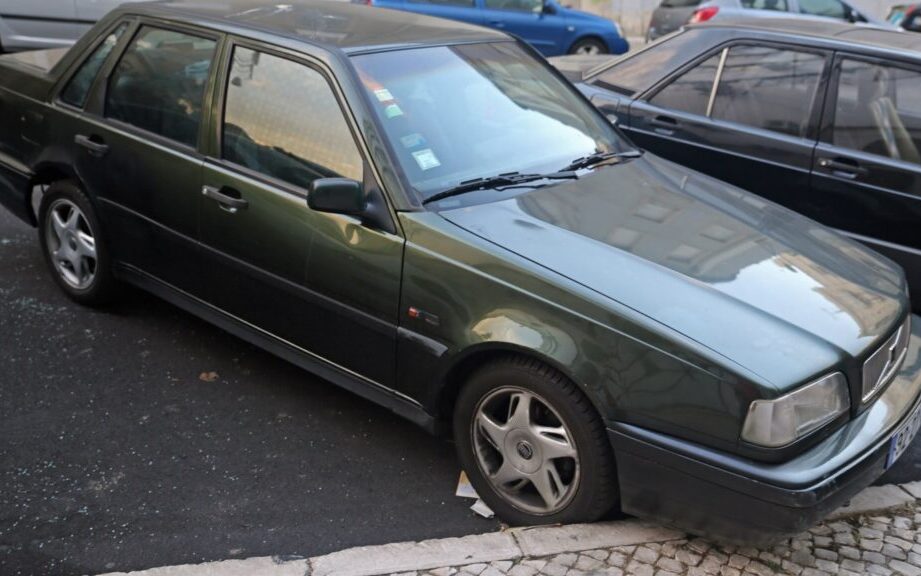
The Volvo 460 L, specifically the 1.9 Turbo-Diesel variant producing 90 horsepower, was a relatively short-lived but significant addition to the Volvo lineup. Produced between 1994 and 1996, this model represented Volvo’s attempt to offer a more fuel-efficient and affordable option within the compact executive sedan segment. It was part of the 460 series (internally designated 464), which aimed to provide a blend of Scandinavian practicality, safety, and a touch of understated luxury. This particular diesel version occupied the lower end of the 460 L range, positioned as an entry-level choice for buyers prioritizing economy over outright performance. It was a late addition to the 460 line, as Volvo prepared to move towards the newer S40/V40 series.
Technical Specifications
| Brand | Volvo |
| Model | 460 L |
| Generation | 460 L (464) |
| Type (Engine) | 1.9 Turbo-Diesel (90 Hp) |
| Start of production | 1994 |
| End of production | 1996 |
| Powertrain Architecture | Internal Combustion engine |
| Body type | Sedan |
| Seats | 5 |
| Doors | 4 |
| Fuel consumption (combined) | 5.8 l/100 km (40.6 US mpg, 48.7 UK mpg, 17.2 km/l) |
| Fuel Type | Diesel |
| Acceleration 0 – 100 km/h | 12.3 sec |
| Acceleration 0 – 62 mph | 12.3 sec |
| Acceleration 0 – 60 mph | 11.7 sec |
| Maximum speed | 176 km/h (109.36 mph) |
| Weight-to-power ratio | 12.3 kg/Hp, 81.6 Hp/tonne |
| Weight-to-torque ratio | 6.3 kg/Nm, 159.6 Nm/tonne |
| Power | 90 Hp @ 4250 rpm |
| Power per litre | 48.1 Hp/l |
| Torque | 176 Nm @ 2250 rpm (129.81 lb.-ft. @ 2250 rpm) |
| Engine layout | Front, Transverse |
| Engine Model/Code | D19T |
| Engine displacement | 1870 cm3 (114.11 cu. in.) |
| Number of cylinders | 4 |
| Engine configuration | Inline |
| Cylinder Bore | 80 mm (3.15 in.) |
| Piston Stroke | 93 mm (3.66 in.) |
| Compression ratio | 20.5:1 |
| Number of valves per cylinder | 2 |
| Fuel injection system | Diesel Commonrail |
| Engine aspiration | Turbocharger |
| Valvetrain | OHC |
| Engine oil capacity | 5 l (5.28 US qt | 4.4 UK qt) |
| Coolant | 6.5 l (6.87 US qt | 5.72 UK qt) |
| Kerb Weight | 1103 kg (2431.7 lbs.) |
| Max. weight | 1580 kg (3483.3 lbs.) |
| Max load | 477 kg (1051.6 lbs.) |
| Trunk (boot) space – minimum | 453 l (16 cu. ft.) |
| Trunk (boot) space – maximum | 948 l (33.48 cu. ft.) |
| Fuel tank capacity | 60 l (15.85 US gal | 13.2 UK gal) |
| Length | 4435 mm (174.61 in.) |
| Width | 1686 mm (66.38 in.) |
| Height | 1378 mm (54.25 in.) |
| Wheelbase | 2503 mm (98.54 in.) |
| Front track | 1416 mm (55.75 in.) |
| Rear (Back) track | 1426 mm (56.14 in.) |
| Drivetrain Architecture | The Internal combustion engine (ICE) drives the front wheels of the vehicle. |
| Drive wheel | Front wheel drive |
| Number of gears and type of gearbox | 5 gears, manual transmission |
| Front suspension | Wishbone |
| Rear suspension | Coil spring |
| Front brakes | Disc |
| Rear brakes | Disc |
| Assisting systems | ABS (Anti-lock braking system) |
| Steering type | Steering rack and pinion |
| Power steering | Hydraulic Steering |
| Tires size | 185/65 R14 |
| Wheel rims size | 14 |
Powertrain & Engine Architecture
The heart of the 460 L 1.9 Turbo-Diesel was the D19T engine, a 1.9-liter inline-four cylinder diesel. This engine utilized a turbocharger to boost power output to 90 horsepower, a respectable figure for a diesel engine of that era. The D19T featured a diesel common rail fuel injection system, a relatively advanced technology for the mid-1990s, contributing to improved fuel efficiency and reduced emissions compared to older diesel designs. The engine employed a single overhead camshaft (OHC) valvetrain, operating two valves per cylinder. The high compression ratio of 20.5:1 was typical for diesel engines, maximizing combustion efficiency. The engine was transversely mounted in the front of the vehicle, driving the front wheels. The 5-speed manual transmission was the only gearbox option available with this engine.
Driving Characteristics
The 1.9 Turbo-Diesel 460 L offered a distinctly different driving experience compared to the gasoline-powered versions. While lacking the outright acceleration of its petrol siblings, it provided a usable amount of torque at low engine speeds, making it suitable for everyday driving. The 0-60 mph time of around 11.7 seconds and a top speed of 109 mph were adequate, but not particularly exciting. The turbocharger did provide a noticeable boost in power once spooled up, but the engine could feel somewhat strained at higher RPMs. The manual transmission, while not particularly sporty, was precise and easy to use. The gear ratios were optimized for fuel economy rather than performance.
Equipment & Trim Levels
The 1.9 Turbo-Diesel 460 L typically came with a fairly basic level of equipment, reflecting its position as the entry-level model. Standard features generally included power steering, central locking, and an AM/FM radio. Interior upholstery was typically cloth, and the dashboard featured a functional but somewhat austere design. Optional extras included power windows, a sunroof, and upgraded audio systems. Safety features, a Volvo hallmark, were reasonably well-equipped even on the base model, with ABS being a standard inclusion.
Chassis & Braking
The 460 L utilized a relatively simple chassis design. Front suspension consisted of wishbones, while the rear employed a coil spring setup. The braking system featured disc brakes on all four wheels, providing adequate stopping power for the vehicle’s weight and performance. The ABS system helped to maintain steering control during hard braking. The car’s relatively light weight (around 2432 lbs) contributed to its decent handling characteristics.
Market Reception & Comparison
The 1.9 Turbo-Diesel 460 L was generally well-received by critics for its fuel economy and practicality. However, it was often criticized for its lack of performance and somewhat unrefined engine noise. Compared to the gasoline-powered 460 L models, the diesel offered significantly better fuel economy but considerably less power. It also tended to be more expensive to maintain due to the complexity of the diesel fuel injection system. Against competitors like the Ford Escort Diesel or Opel Astra Diesel, the Volvo offered a more premium feel and a reputation for safety.
Legacy
The Volvo 460 L 1.9 Turbo-Diesel, while not a high-volume seller, represents an interesting chapter in Volvo’s history. The D19T engine proved to be reasonably durable, and well-maintained examples can still be found on the road today. However, finding parts can be challenging due to the car’s age and limited production numbers. In the used car market, these models are often sought after by enthusiasts looking for a classic Volvo with good fuel economy and a unique character. The 460 L paved the way for Volvo’s later successes in the compact executive segment, and its focus on safety and practicality continues to be a defining characteristic of the brand.
