
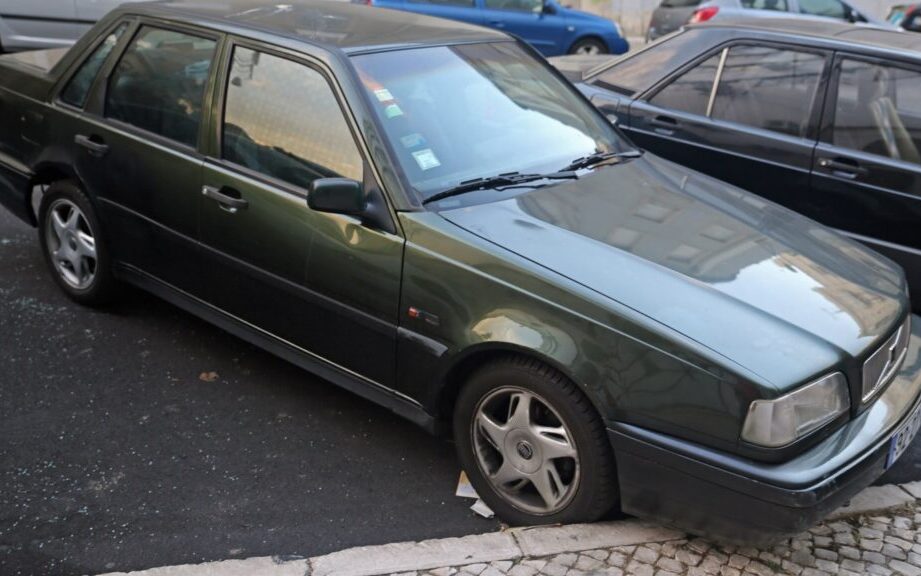
The Volvo 460 L, specifically the 2.0-liter (110 horsepower) variant produced between 1993 and 1995, represents a transitional period for the Swedish automaker. Falling within the 464 series, this model was Volvo’s entry-level offering, positioned below the more luxurious 850 series. It was designed to appeal to buyers seeking a practical, safe, and relatively affordable sedan, primarily targeting the European market. The 460 L aimed to provide Volvo’s renowned safety features in a more compact and economical package, competing with vehicles like the Ford Sierra and Opel Vectra.
Technical Specifications
| Brand | Volvo |
| Model | 460 L |
| Generation | 460 L (464) |
| Type (Engine) | 2.0 (110 Hp) |
| Start of production | 1993 |
| End of production | 1995 |
| Powertrain Architecture | Internal Combustion engine |
| Body type | Sedan |
| Seats | 5 |
| Doors | 4 |
| Fuel consumption (urban) | 11.1 l/100 km (21.2 US mpg) |
| Fuel consumption (extra urban) | 5.9 l/100 km (39.9 US mpg) |
| Fuel consumption (combined) | 8.1 l/100 km (29 US mpg) |
| Fuel Type | Petrol (Gasoline) |
| Acceleration 0 – 100 km/h | 10.2 sec |
| Acceleration 0 – 62 mph | 10.2 sec |
| Acceleration 0 – 60 mph | 9.7 sec |
| Maximum speed | 190 km/h (118.06 mph) |
| Weight-to-power ratio | 9.4 kg/Hp |
| Weight-to-torque ratio | 6.2 kg/Nm |
| Power | 110 Hp @ 5500 rpm |
| Torque | 165 Nm @ 3500 rpm (121.7 lb.-ft. @ 3500 rpm) |
| Engine layout | Front, Transverse |
| Engine Model/Code | B20F116 |
| Engine displacement | 1998 cm3 (121.93 cu. in.) |
| Number of cylinders | 4 |
| Engine configuration | Inline |
| Cylinder Bore | 82.7 mm (3.26 in.) |
| Piston Stroke | 93 mm (3.66 in.) |
| Compression ratio | 9.5:1 |
| Number of valves per cylinder | 2 |
| Fuel injection system | Multi-port manifold injection |
| Engine aspiration | Naturally aspirated engine |
| Valvetrain | OHC |
| Engine oil capacity | 5 l (5.28 US qt | 4.4 UK qt) |
| Coolant capacity | 7 l (7.4 US qt | 6.16 UK qt) |
| Kerb Weight | 1030 kg (2270.76 lbs.) |
| Max. weight | 1520 kg (3351.03 lbs.) |
| Max load | 490 kg (1080.27 lbs.) |
| Trunk (boot) space – minimum | 453 l (16 cu. ft.) |
| Trunk (boot) space – maximum | 948 l (33.48 cu. ft.) |
| Fuel tank capacity | 60 l (15.85 US gal | 13.2 UK gal) |
| Length | 4435 mm (174.61 in.) |
| Width | 1686 mm (66.38 in.) |
| Height | 1378 mm (54.25 in.) |
| Wheelbase | 2503 mm (98.54 in.) |
| Front track | 1416 mm (55.75 in.) |
| Rear track | 1426 mm (56.14 in.) |
| Drivetrain Architecture | Front wheel drive |
| Number of gears | 5 |
| Gearbox type | Manual transmission |
| Front suspension | Wishbone |
| Rear suspension | Coil spring |
| Front brakes | Disc |
| Rear brakes | Disc |
| Assisting systems | ABS (Anti-lock braking system) |
| Steering type | Steering rack and pinion |
| Power steering | Hydraulic |
| Tires size | 175/65 R14 |
| Wheel rims size | 14 |
INTRODUCTION
The Volvo 460 L 2.0, produced from 1993 to 1995, was a four-door sedan built on Volvo’s 400 series platform (internally designated 464). This platform, shared with the closely related Renault 21, represented a collaborative effort between the two manufacturers. The 2.0-liter engine, designated B20F, was a key component of this model, offering a balance between performance and fuel efficiency. Within the 460 L lineup, the 2.0-liter version served as a mid-range option, offering more power than the base 1.7-liter engine but remaining more affordable than potential future higher-performance variants.
Powertrain & Engine Architecture
The heart of the 460 L 2.0 is the B20F inline-four cylinder engine, displacing 1998cc. This engine utilizes a naturally aspirated configuration with multi-port fuel injection. The B20F is an evolution of Volvo’s ‘Redblock’ engine family, known for its robustness and relatively simple design. It features a single overhead camshaft (OHC) operating two valves per cylinder. The engine’s 9.5:1 compression ratio contributed to its 110 horsepower output at 5500 rpm and 165 Nm (121.7 lb-ft) of torque at 3500 rpm. The engine was transversely mounted, driving the front wheels. The 460 L 2.0 was typically paired with a five-speed manual transmission, although a four-speed automatic transmission was also available, albeit less common. The automatic transmission, while offering convenience, did impact acceleration and fuel economy compared to the manual version.
Driving Characteristics
The 460 L 2.0 with the five-speed manual transmission offered a reasonably engaging driving experience for its class. Acceleration from 0-60 mph took approximately 9.7 seconds, and it could reach a top speed of around 118 mph. The engine provided adequate power for everyday driving, with a usable torque curve that made it relatively easy to navigate city streets and maintain highway speeds. The automatic transmission version, however, felt noticeably slower, with acceleration times closer to 10.2 seconds for 0-62 mph. The gear ratios in the automatic were optimized for fuel economy rather than performance. Steering was light and precise, typical of Volvo’s designs, and the suspension provided a comfortable ride, although it wasn’t particularly sporty.
Equipment & Trim Levels
The 460 L 2.0 typically came equipped with a reasonable level of standard features for its time. These included power steering, central locking, and a basic stereo system. Interior upholstery was typically cloth, with a relatively simple and functional dashboard layout. Optional extras included power windows, a sunroof, and upgraded audio systems. The trim level was generally consistent across the 2.0-liter models, with variations primarily stemming from the addition of optional packages. Safety features, a hallmark of Volvo, were standard, including seatbelt pre-tensioners and a reinforced safety cage.
Chassis & Braking
The 460 L utilized a front-wheel-drive layout with an independent wishbone front suspension and a coil spring rear suspension. This setup provided a good balance between ride comfort and handling. Braking was handled by disc brakes on all four wheels, supplemented by an Anti-lock Braking System (ABS) as standard equipment. The ABS system enhanced braking performance and stability, particularly on slippery surfaces. The 460 L’s relatively lightweight construction (around 2270 lbs) contributed to its manageable handling characteristics.
Market Reception & Comparison
The Volvo 460 L 2.0 received generally positive reviews from automotive critics. It was praised for its safety features, comfortable ride, and relatively fuel-efficient engine. However, it was also criticized for its somewhat bland styling and lack of a truly sporty driving experience. Compared to the base 1.7-liter model, the 2.0-liter offered a noticeable improvement in performance, making it a more appealing option for drivers who frequently traveled on highways or carried passengers. Compared to the larger and more expensive Volvo 850, the 460 L offered a more affordable entry point into the Volvo brand. Fuel economy was competitive for its class, averaging around 29 US mpg in combined driving conditions.
Legacy
The Volvo 460 L, including the 2.0-liter variant, has developed a modest following among classic Volvo enthusiasts. The B20F engine is known for its reliability and durability, although regular maintenance is essential to prevent issues such as oil leaks and timing belt failures. Parts availability is generally good, although some specific components may be becoming increasingly difficult to find. Today, the 460 L 2.0 represents an affordable and practical classic car, offering a taste of Volvo’s renowned safety and build quality. While not a performance icon, it remains a capable and comfortable vehicle for everyday use, and its relatively simple mechanical design makes it a rewarding car for DIY mechanics.
