
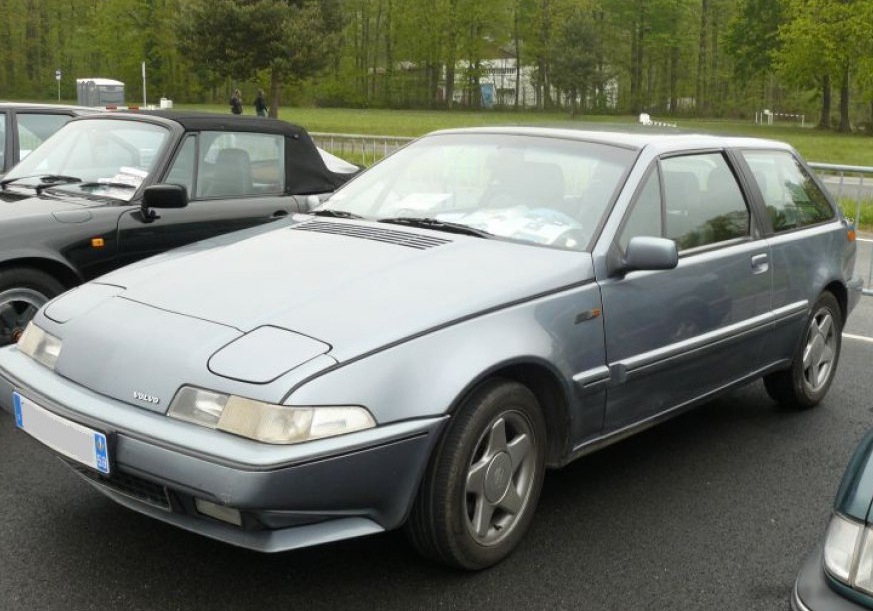
The Volvo 480 E 1.7, produced between 1989 and 1990, represents a unique chapter in Volvo’s history. This front-wheel-drive coupe, designated as part of the 480 series (1986-1995), was Volvo’s attempt to enter the compact, sporty coupe market, primarily aimed at the European consumer. It stood out for its distinctive wedge-shaped design and, unusually for Volvo at the time, its transverse engine layout. The “E” designation signified a specific engine and trim level, positioned as a mid-range offering within the 480 lineup. The 480 series as a whole was notable for being Volvo’s first front-wheel-drive car, and the 1.7-liter engine variant offered a balance between affordability and acceptable performance.
Technical Specifications
| Brand | Volvo |
| Model | 480 E |
| Generation | 480 E |
| Type (Engine) | 1.7 (102 Hp) |
| Start of production | 1989 |
| End of production | 1990 |
| Powertrain Architecture | Internal Combustion engine |
| Body type | Coupe |
| Seats | 4 |
| Doors | 2 |
| Fuel consumption (urban) | 9.4 l/100 km (25 US mpg, 30.1 UK mpg, 10.6 km/l) |
| Fuel consumption (extra urban) | 5.1 l/100 km (46.1 US mpg, 55.4 UK mpg, 19.6 km/l) |
| Fuel consumption (combined) | 7.1 l/100 km (33.1 US mpg, 39.8 UK mpg, 14.1 km/l) |
| Fuel Type | Petrol (Gasoline) |
| Acceleration 0 – 100 km/h | 10.5 sec |
| Acceleration 0 – 62 mph | 10.5 sec |
| Acceleration 0 – 60 mph | 10 sec |
| Maximum speed | 185 km/h (114.95 mph) |
| Weight-to-power ratio | 10.1 kg/Hp |
| Weight-to-torque ratio | 7.3 kg/Nm |
| Power | 102 Hp @ 5600 rpm |
| Power per litre | 59.3 Hp/l |
| Torque | 142 Nm @ 3900 rpm (104.73 lb.-ft. @ 3900 rpm) |
| Engine layout | Front, Transverse |
| Engine Model/Code | B18E |
| Engine displacement | 1721 cm3 (105.02 cu. in.) |
| Number of cylinders | 4 |
| Engine configuration | Inline |
| Cylinder Bore | 81 mm (3.19 in.) |
| Piston Stroke | 83.5 mm (3.29 in.) |
| Compression ratio | 10:1 |
| Number of valves per cylinder | 2 |
| Fuel injection system | Multi-port manifold injection |
| Engine aspiration | Naturally aspirated engine |
| Valvetrain | OHC |
| Engine oil capacity | 5.3 l (5.6 US qt | 4.66 UK qt) |
| Coolant capacity | 7 l (7.4 US qt | 6.16 UK qt) |
| Kerb Weight | 1030 kg (2270.76 lbs.) |
| Max. weight | 1410 kg (3108.52 lbs.) |
| Max load | 380 kg (837.76 lbs.) |
| Trunk (boot) space – minimum | 160 l (5.65 cu. ft.) |
| Trunk (boot) space – maximum | 660 l (23.31 cu. ft.) |
| Fuel tank capacity | 60 l (15.85 US gal | 13.2 UK gal) |
| Length | 4258 mm (167.64 in.) |
| Width | 1710 mm (67.32 in.) |
| Height | 1323 mm (52.09 in.) |
| Wheelbase | 2503 mm (98.54 in.) |
| Front track | 1416 mm (55.75 in.) |
| Rear track | 1426 mm (56.14 in.) |
| Drivetrain Architecture | Front wheel drive |
| Number of gears | 5 |
| Gearbox type | Manual transmission |
| Front suspension | Wishbone |
| Rear suspension | Coil spring |
| Front brakes | Disc |
| Rear brakes | Disc |
| Assisting systems | ABS (Anti-lock braking system) |
| Steering type | Steering rack and pinion |
| Power steering | Hydraulic |
| Tires size | 185/60 R14 |
| Wheel rims size | 14 |
Powertrain & Engine Architecture
The Volvo 480 E 1.7 was powered by the B18E engine, a 1.7-liter inline-four cylinder gasoline engine. This engine, while relatively modest in output, was a key component in making the 480 accessible to a wider range of buyers. The B18E featured a single overhead camshaft (OHC) valvetrain operating two valves per cylinder. Fuel delivery was handled by a multi-port fuel injection system, a significant upgrade over earlier carbureted engines. The engine produced 102 horsepower at 5600 rpm and 142 Nm (104.73 lb-ft) of torque at 3900 rpm. The engine’s transverse mounting, a relatively new configuration for Volvo, contributed to the car’s front-wheel-drive layout and efficient packaging. The 480 E utilized a 5-speed manual transmission, providing a reasonable balance between fuel economy and driver engagement. The B18E engine code is crucial for identifying specific parts and maintenance requirements.
Driving Characteristics
The 1.7-liter engine in the 480 E provided adequate, but not exhilarating, performance. Acceleration from 0 to 60 mph took around 10 seconds, and the top speed was approximately 115 mph. Compared to the later 1.8 and 2.0-liter versions, the 1.7 felt noticeably less powerful, particularly when fully loaded or tackling inclines. The 5-speed manual transmission was well-matched to the engine’s characteristics, offering a decent spread of gears for both city driving and highway cruising. The gear ratios were tuned for fuel efficiency rather than outright performance. The front-wheel-drive configuration provided predictable handling, but lacked the dynamic finesse of rear-wheel-drive competitors. The relatively light weight of the 480 E (around 2270 lbs) helped to mitigate the engine’s power deficit.
Equipment & Trim Levels
The 480 E trim level offered a reasonable level of standard equipment. Interior features typically included cloth upholstery, a basic stereo system, and manual windows and door locks. The dashboard layout was functional and straightforward, typical of Volvo’s design philosophy at the time. Optional extras included power windows, central locking, a sunroof, and upgraded audio systems. The 480 E was positioned as a step up from the base model, offering a slightly more refined interior and a few additional convenience features. The exterior styling was characterized by its distinctive wedge shape, flush-fitting headlights, and a rear spoiler.
Chassis & Braking
The Volvo 480 E featured an independent front suspension with wishbones and coil springs, providing a comfortable ride and reasonable handling. The rear suspension utilized a coil spring setup. Braking duties were handled by disc brakes on all four wheels, a relatively advanced feature for a car in this class. An Anti-lock Braking System (ABS) was included as standard equipment, enhancing safety and control during emergency braking. The steering was a rack and pinion system with hydraulic power assistance, providing light and precise steering feel. The 480 E rode on 14-inch wheels with 185/60 R14 tires.
Market Reception & Comparison
The Volvo 480 E was generally well-received by automotive critics, who praised its distinctive styling, comfortable ride, and good fuel economy. However, some reviewers criticized its relatively modest performance and somewhat bland interior. Compared to other trims in the 480 lineup, the 1.7-liter version offered the most affordable entry point, making it attractive to budget-conscious buyers. The 1.8 and 2.0-liter versions provided significantly more power and performance, but at a higher price point. In terms of fuel economy, the 1.7-liter engine offered a slight advantage over the larger engines. Reliability was generally good, although some owners reported issues with the fuel injection system and electrical components.
Legacy
The Volvo 480 E, and the 480 series as a whole, holds a unique place in Volvo’s history as its first front-wheel-drive car. While not a massive sales success, it paved the way for Volvo’s future front-wheel-drive models. The B18E engine proved to be a relatively durable and reliable unit, and many examples are still on the road today. In the used car market, the 480 E is appreciated by enthusiasts for its distinctive styling, affordability, and relatively simple mechanicals. Parts availability can be a challenge, but a dedicated community of owners and specialists helps to keep these cars running. The 480 E represents a fascinating blend of Volvo’s traditional values of safety and durability with a more modern and sporty design.