
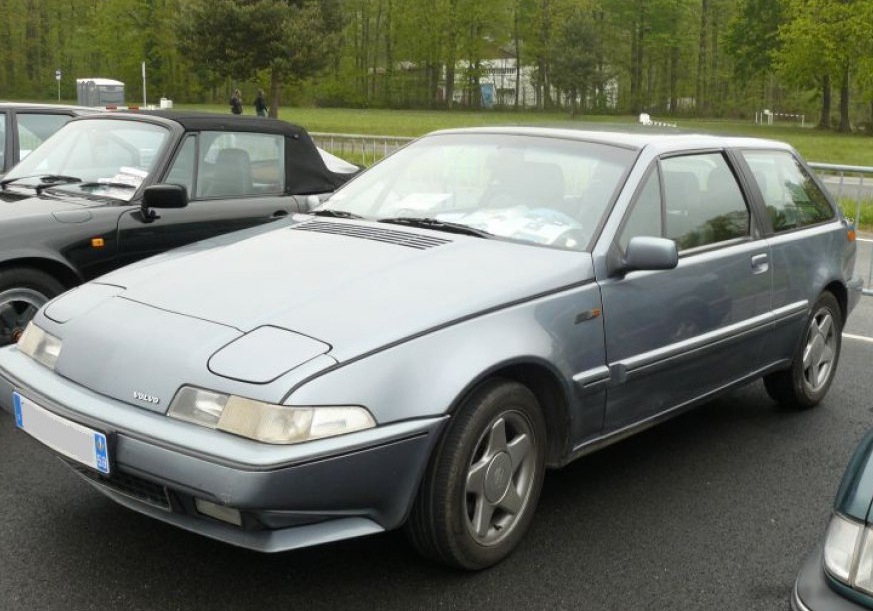
The Volvo 480 E 1.7, produced between 1986 and 1988, represents a unique chapter in Volvo’s history. This front-wheel-drive coupe, designated internally as the 480 ES (with ‘E’ denoting fuel injection), was Volvo’s first attempt at a truly sporty, compact vehicle. It was positioned as an entry-level offering, aimed at a younger demographic than traditional Volvo buyers, and served as a testbed for new technologies and design philosophies. The 480 series, and specifically the 1.7-liter variant, played a significant role in establishing Volvo’s reputation for safety and innovation in a smaller package. It was built at the Born plant in the Netherlands, a facility Volvo shared with Renault, reflecting the increasing collaboration between the two manufacturers at the time.
Technical Specifications
| Brand | Volvo |
| Model | 480 E |
| Generation | 480 E |
| Type (Engine) | 1.7 (109 Hp) |
| Start of production | 1986 |
| End of production | 1988 |
| Powertrain Architecture | Internal Combustion engine |
| Body type | Coupe |
| Seats | 4 |
| Doors | 2 |
| Fuel consumption (urban) | 10.6 l/100 km (22.2 US mpg) |
| Fuel consumption (extra urban) | 5.9 l/100 km (39.9 US mpg) |
| Fuel consumption (combined) | 7.3 l/100 km (32.2 US mpg) |
| Fuel Type | Petrol (Gasoline) |
| Acceleration 0 – 100 km/h | 10 sec |
| Acceleration 0 – 62 mph | 10 sec |
| Acceleration 0 – 60 mph | 9.5 sec |
| Maximum speed | 190 km/h (118.06 mph) |
| Weight-to-power ratio | 9.4 kg/Hp |
| Weight-to-torque ratio | 7.1 kg/Nm |
| Power | 109 Hp @ 5800 rpm |
| Torque | 145 Nm @ 4500 rpm (106.95 lb.-ft. @ 4500 rpm) |
| Engine layout | Front, Transverse |
| Engine Model/Code | B18E |
| Engine displacement | 1721 cm3 (105.02 cu. in.) |
| Number of cylinders | 4 |
| Engine configuration | Inline |
| Cylinder Bore | 81 mm (3.19 in.) |
| Piston Stroke | 83.5 mm (3.29 in.) |
| Compression ratio | 10.1:1 |
| Number of valves per cylinder | 2 |
| Fuel injection system | Multi-port manifold injection |
| Engine aspiration | Naturally aspirated engine |
| Valvetrain | OHC |
| Engine oil capacity | 5.3 l (5.6 US qt | 4.66 UK qt) |
| Coolant capacity | 7 l (7.4 US qt | 6.16 UK qt) |
| Kerb Weight | 1030 kg (2270.76 lbs.) |
| Max. weight | 1410 kg (3108.52 lbs.) |
| Max load | 380 kg (837.76 lbs.) |
| Trunk (boot) space – minimum | 160 l (5.65 cu. ft.) |
| Trunk (boot) space – maximum | 660 l (23.31 cu. ft.) |
| Fuel tank capacity | 60 l (15.85 US gal | 13.2 UK gal) |
| Length | 4258 mm (167.64 in.) |
| Width | 1710 mm (67.32 in.) |
| Height | 1323 mm (52.09 in.) |
| Wheelbase | 2503 mm (98.54 in.) |
| Front track | 1416 mm (55.75 in.) |
| Rear track | 1426 mm (56.14 in.) |
| Drivetrain Architecture | Front wheel drive |
| Number of gears | 5 gears, manual transmission |
| Front suspension | Wishbone |
| Rear suspension | Coil spring |
| Front brakes | Disc |
| Rear brakes | Disc |
| Assisting systems | ABS (Anti-lock braking system) |
| Steering type | Steering rack and pinion |
| Power steering | Hydraulic Steering |
| Tires size | 185/60 R14 |
| Wheel rims size | 14 |
Powertrain & Engine Architecture
The heart of the 480 E 1.7 was the B18E engine, a 1.7-liter inline-four cylinder gasoline engine. This engine, while relatively modest in output at 109 horsepower, was a significant departure for Volvo, which traditionally favored larger displacement engines. The B18E featured a single overhead camshaft (OHC) valvetrain operating two valves per cylinder. Fuel delivery was handled by Bosch multi-port fuel injection, a relatively advanced system for its time, contributing to improved fuel efficiency and smoother operation. The engine’s block was cast iron, while the cylinder head was aluminum, a common construction for balancing weight and durability. The 480 E exclusively came with a five-speed manual transmission, designed to maximize the engine’s limited power output. This transmission was known for its precise shift feel and relatively long gearing, prioritizing fuel economy over outright acceleration.
Driving Characteristics
The 1.7-liter 480 E offered a driving experience that was more about efficiency and practicality than outright performance. Acceleration from 0 to 60 mph took around 9.5 seconds, and top speed was approximately 118 mph. While not particularly quick, the 480 E felt nimble and responsive thanks to its relatively light weight and front-wheel-drive configuration. The long gearing of the five-speed manual transmission meant that the engine rarely felt strained at highway speeds, but it also meant that frequent downshifts were necessary for overtaking maneuvers. Compared to the later 2.0-liter versions of the 480, the 1.7 felt noticeably less powerful, but it also offered better fuel economy. The suspension provided a comfortable ride, absorbing bumps and imperfections in the road well, but it wasn’t particularly sporty or engaging.
Equipment & Trim Levels
The 480 E 1.7 was generally well-equipped for its price point. Standard features included power steering, front disc brakes, and a relatively spacious interior for a coupe of its size. Interior upholstery was typically cloth, with a simple, functional dashboard layout. Optional extras included a sunroof, alloy wheels, and upgraded audio systems. The 480 E didn’t offer a wide range of trim levels; it was largely a single specification model with a few available options. The focus was on providing a practical and affordable entry point into the Volvo brand.
Chassis & Braking
The 480 E featured a front-wheel-drive chassis with independent wishbone suspension at the front and a coil-sprung rear axle. This suspension setup provided a good balance of ride comfort and handling. Braking was handled by disc brakes on all four wheels, a relatively uncommon feature for cars in this price range during the 1980s. An anti-lock braking system (ABS) was also available as an option, further enhancing safety. The steering was a rack-and-pinion system with hydraulic power assistance, providing light and precise steering feel.
Market Reception & Comparison
The Volvo 480 E 1.7 received mixed reviews from automotive critics. While praised for its safety, build quality, and fuel efficiency, it was often criticized for its lack of outright performance. Compared to other coupes on the market at the time, such as the Ford Escort or Opel Astra, the 480 E offered a more refined and sophisticated driving experience, but at a higher price. The 1.7-liter engine was considered adequate for everyday driving, but it lacked the punch of the larger engines offered in competing models. Fuel economy was a strong point, with the 480 E achieving around 32 mpg in combined driving.
Legacy
The Volvo 480, including the 1.7-liter variant, is now considered a classic car and has a dedicated following among enthusiasts. The B18E engine is generally regarded as a reliable and durable unit, although regular maintenance is essential to prevent issues. Parts availability can be a challenge, but a network of specialist suppliers exists to cater to 480 owners. Today, well-maintained examples of the 480 E 1.7 are sought after by collectors and enthusiasts who appreciate its unique design, practicality, and historical significance. It represents a pivotal moment in Volvo’s history, demonstrating the brand’s willingness to experiment with new designs and technologies.
