
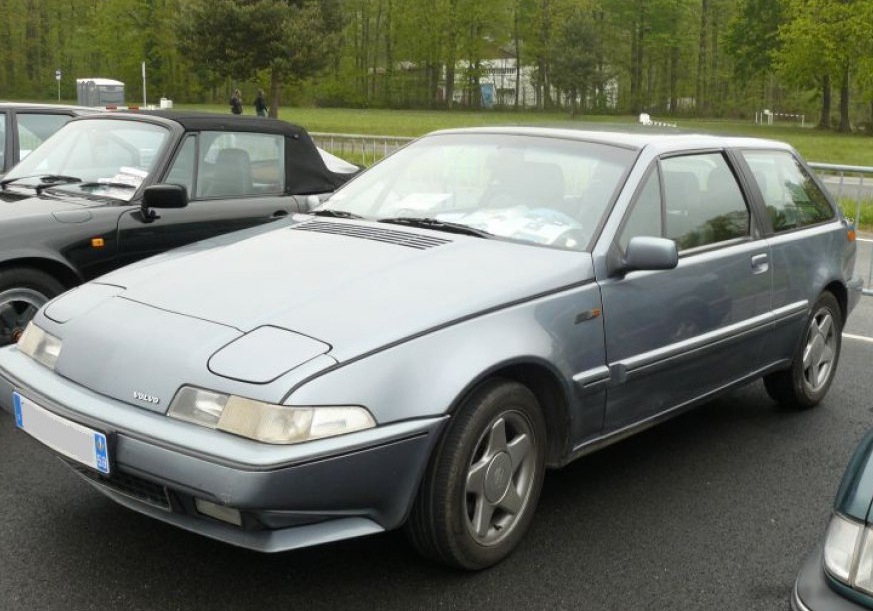
The Volvo 480 ES, produced between 1986 and 1995, represented a significant departure for the Swedish automaker. It was Volvo’s first front-wheel-drive car, and a bold attempt to appeal to a more modern, sporty demographic. The 480 ES 1.7 Turbo, introduced in 1987, was the performance variant of the range, offering a turbocharged engine and distinctive wedge-shaped styling. This model occupied the upper-mid range of the 480 lineup, positioned above the naturally aspirated 1.7 and 2.0 liter models, but below any potential future high-performance iterations that never materialized. It aimed to provide a blend of practicality, fuel efficiency, and engaging driving dynamics, a formula that proved popular, particularly in Europe.
Technical Specifications
| Brand | Volvo |
| Model | 480 ES |
| Generation | 480 ES |
| Type (Engine) | 1.7 Turbo (120 Hp) |
| Start of production | 1987 |
| End of production | 1996 |
| Powertrain Architecture | Internal Combustion engine |
| Body type | Coupe |
| Seats | 4 |
| Doors | 2 |
| Fuel consumption (combined) | 8.5 l/100 km |
| Fuel consumption (US mpg) | 27.7 US mpg |
| Fuel consumption (UK mpg) | 33.2 UK mpg |
| Fuel consumption (km/l) | 11.8 km/l |
| Fuel Type | Petrol (Gasoline) |
| Acceleration 0 – 100 km/h | 9.0 sec |
| Acceleration 0 – 62 mph | 9.0 sec |
| Acceleration 0 – 60 mph | 8.6 sec |
| Maximum speed | 195 km/h (121.17 mph) |
| Weight-to-power ratio | 9 kg/Hp |
| Weight-to-torque ratio | 6.2 kg/Nm |
| Power | 120 Hp @ 5500 rpm |
| Power per litre | 69.7 Hp/l |
| Torque | 175 Nm @ 3300 rpm (129.07 lb.-ft. @ 3300 rpm) |
| Engine layout | Front, Transverse |
| Engine Model/Code | B18FT |
| Engine displacement | 1721 cm3 (105.02 cu. in.) |
| Number of cylinders | 4 |
| Engine configuration | Inline |
| Cylinder Bore | 81 mm (3.19 in.) |
| Piston Stroke | 83.5 mm (3.29 in.) |
| Compression ratio | 8.1:1 |
| Number of valves per cylinder | 2 |
| Fuel injection system | Multi-port manifold injection |
| Engine aspiration | Turbocharger |
| Valvetrain | OHC |
| Engine oil capacity | 5.3 l (5.6 US qt | 4.66 UK qt) |
| Coolant capacity | 7.2 l (7.61 US qt | 6.34 UK qt) |
| Kerb Weight | 1079 kg (2378.79 lbs.) |
| Max. weight | 1460 kg (3218.75 lbs.) |
| Max load | 381 kg (839.96 lbs.) |
| Trunk (boot) space – minimum | 160 l (5.65 cu. ft.) |
| Trunk (boot) space – maximum | 660 l (23.31 cu. ft.) |
| Fuel tank capacity | 60 l (15.85 US gal | 13.2 UK gal) |
| Length | 4258 mm (167.64 in.) |
| Width | 1710 mm (67.32 in.) |
| Height | 1323 mm (52.09 in.) |
| Wheelbase | 2503 mm (98.54 in.) |
| Front track | 1416 mm (55.75 in.) |
| Rear track | 1426 mm (56.14 in.) |
| Drivetrain Architecture | Front wheel drive |
| Number of gears | 5 gears, manual transmission |
Powertrain & Engine Architecture
The heart of the 480 ES 1.7 Turbo was the B18FT engine, a 1.7-liter inline-four cylinder powerplant. This engine utilized a Garrett T25 turbocharger and a Bosch K-Jetronic fuel injection system, a relatively sophisticated setup for its time. The engine featured a single overhead camshaft (OHC) design with two valves per cylinder. The turbocharger provided a significant boost in power compared to the naturally aspirated versions, increasing output to 120 horsepower and 175 Nm (129 lb-ft) of torque. The engine’s transverse mounting and front-wheel-drive configuration were novel for Volvo, requiring a completely new platform design. The five-speed manual transmission was the only gearbox option available with this engine, providing drivers with full control over the power delivery. The transmission was known for its smooth shifting and robust construction.
Driving Characteristics
The 480 ES 1.7 Turbo offered a noticeably more spirited driving experience than its naturally aspirated siblings. The turbocharger provided a surge of power in the mid-range, making overtaking and highway cruising considerably easier. While not a sports car by any means, the 480 Turbo felt nimble and responsive, especially considering its front-wheel-drive layout. Acceleration from 0 to 60 mph took around 8.6 seconds, and the car could reach a top speed of 195 km/h (121 mph). The gear ratios were well-chosen to maximize the engine’s torque, providing good acceleration in all gears. Compared to the standard 1.7 and 2.0 liter models, the Turbo offered a more engaging and rewarding driving experience, though it did come with a slight penalty in fuel economy.
Equipment & Trim Levels
The 480 ES 1.7 Turbo was generally well-equipped for its price point. Standard features included power steering, front disc brakes, and a relatively comfortable interior. The interior typically featured cloth upholstery, although leather options were available. The dashboard layout was functional and straightforward, with easy-to-read gauges. Optional extras included a sunroof, alloy wheels, and upgraded audio systems. The 480 ES also featured a distinctive rear hatch with a large glass window, providing ample cargo space. The overall interior design was minimalist and Scandinavian, reflecting Volvo’s design philosophy of the time.
Chassis & Braking
The 480 ES utilized an independent front suspension with wishbones and coil springs, providing a comfortable ride and good handling. The rear suspension consisted of a twist-beam axle with coil springs. The braking system featured ventilated discs on the front wheels and solid discs on the rear, providing adequate stopping power. Anti-lock brakes (ABS) were available as an option, enhancing safety and control. The chassis was relatively lightweight, contributing to the car’s nimble handling characteristics. The steering was hydraulic power-assisted, making it easy to maneuver at low speeds.
Market Reception & Comparison
The Volvo 480 ES 1.7 Turbo was generally well-received by automotive critics. It was praised for its distinctive styling, comfortable ride, and engaging driving dynamics. However, some critics noted that the interior was somewhat basic and lacked the refinement of some of its competitors. Compared to other cars in its class, such as the Volkswagen Golf GTI and the Ford Escort RS Turbo, the 480 Turbo offered a unique blend of practicality and performance. Fuel economy was respectable, averaging around 27.7 mpg in combined driving. Reliability was generally good, although some owners reported issues with the turbocharger and fuel injection system.
Legacy
The Volvo 480 ES, and particularly the 1.7 Turbo variant, holds a special place in automotive history as Volvo’s first front-wheel-drive car. While production numbers were relatively low, the 480 ES developed a loyal following among enthusiasts. Today, well-maintained examples are becoming increasingly collectible. The B18FT engine, while not without its quirks, is generally considered to be a robust and reliable powerplant. The 480 ES 1.7 Turbo represents a unique and interesting chapter in Volvo’s history, showcasing the company’s willingness to experiment and innovate. Its distinctive styling and engaging driving dynamics continue to appeal to enthusiasts today, ensuring its place as a cult classic.
