
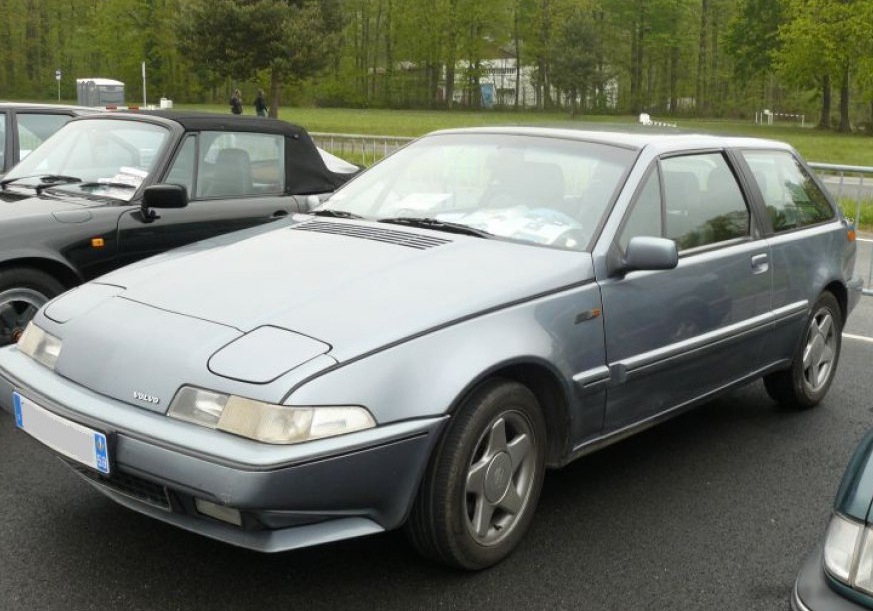
The Volvo 480 E 1.7 Turbo, produced between 1991 and 1996, represents a unique chapter in Volvo’s history. This front-wheel-drive coupe, designated internally as the 480 series, was Volvo’s attempt to enter the compact, sporty coupe market, primarily aimed at the European consumer. It was a departure from Volvo’s traditionally boxy designs and a foray into a more aerodynamic and modern aesthetic. The “E” designation signified the fuel-injected models, and the 1.7 Turbo variant, producing 122 horsepower, occupied a mid-range position within the 480 lineup, offering a balance between performance and affordability. The 480 was notable for being the first Volvo to feature a front-wheel-drive layout, a significant engineering shift for the brand.
Technical Specifications
| Brand | Volvo |
| Model | 480 E |
| Generation | 480 E |
| Type (Engine) | 1.7 Turbo (122 Hp) |
| Start of production | 1991 |
| End of production | 1996 |
| Powertrain Architecture | Internal Combustion engine |
| Body type | Coupe |
| Seats | 4 |
| Doors | 3 |
| Fuel Type | Petrol (Gasoline) |
| Maximum speed | 220 km/h (136.7 mph) |
| Power | 122 Hp |
| Power per litre | 69.3 Hp/l |
| Engine layout | Front, Transverse |
| Engine Model/Code | B18FT |
| Engine displacement | 1761 cm3 (107.46 cu. in.) |
| Number of cylinders | 4 |
| Engine configuration | Inline |
| Number of valves per cylinder | 2 |
| Fuel injection system | Multi-port manifold injection |
| Engine aspiration | Turbocharger, Intercooler |
| Engine oil capacity | 5.3 l (5.6 US qt | 4.66 UK qt) |
| Coolant | 7.2 l (7.61 US qt | 6.34 UK qt) |
| Fuel tank capacity | 70 l (18.49 US gal | 15.4 UK gal) |
| Wheelbase | 2650 mm (104.33 in.) |
| Drivetrain Architecture | The Internal combustion engine (ICE) drives the front wheels of the vehicle. |
| Drive wheel | Front wheel drive |
| Number of gears and type of gearbox | 5 gears, manual transmission |
| Front suspension | Independent, type McPherson with coil spring and anti-roll bar |
| Rear suspension | Coil spring |
| Front brakes | Ventilated discs |
| Rear brakes | Disc |
| Assisting systems | ABS (Anti-lock braking system) |
| Steering type | Steering rack and pinion |
| Power steering | Hydraulic Steering |
| Tires size | 185/60 R14 |
| Wheel rims size | 14 |
Powertrain & Engine Architecture
The heart of the 480 E 1.7 Turbo is the B18FT engine, a 1.7-liter inline-four cylinder powerplant. This engine utilized a Garrett T25 turbocharger with an intercooler, boosting power output to 122 horsepower and 170 Nm (125 lb-ft) of torque. The engine featured multi-port fuel injection, a relatively advanced system for its time, contributing to improved fuel efficiency and smoother power delivery. The B18FT engine employed a two-valve per cylinder configuration, a design choice that prioritized reliability and simplicity over outright peak power. The engine’s transverse mounting, coupled with front-wheel drive, was a first for Volvo and required a complete redesign of the drivetrain. The 480 E 1.7 Turbo was exclusively offered with a five-speed manual transmission, designed to handle the increased torque output from the turbocharged engine. This transmission featured a relatively short throw, enhancing the sporty driving experience.
Driving Characteristics
The 1.7 Turbo engine provided a noticeable performance upgrade over the naturally aspirated 480 models. Acceleration from 0 to 100 km/h (0-62 mph) was achieved in around 8.9 seconds, making it a competitive performer in its class. The turbocharger provided a distinct surge of power in the mid-range, offering brisk acceleration for overtaking maneuvers. While not a high-revving engine, the B18FT delivered a usable powerband, making it relatively easy to drive in everyday conditions. The front-wheel-drive configuration, while offering good traction in most conditions, could exhibit torque steer under hard acceleration. The 480’s suspension, tuned for a balance between comfort and handling, provided a reasonably compliant ride, although it wasn’t as sporty as some of its rivals. The manual transmission’s gear ratios were well-matched to the engine’s power characteristics, allowing for efficient cruising and responsive acceleration.
Equipment & Trim Levels
The 480 E 1.7 Turbo typically came equipped with a reasonable level of standard features. Interior appointments included cloth upholstery, a basic stereo system, and power windows. The dashboard layout was functional and driver-focused, with clearly marked gauges and controls. Optional extras included leather upholstery, a sunroof, and upgraded audio systems. The 480’s interior was known for its practicality and durability, although it lacked the luxurious appointments found in some of its competitors. The exterior styling of the 480 E 1.7 Turbo was characterized by its wedge-shaped profile, flush-fitting windows, and distinctive rear hatch.
Chassis & Braking
The 480 E 1.7 Turbo utilized an independent McPherson strut suspension at the front, providing good handling and ride comfort. The rear suspension employed a simple coil spring setup. Braking duties were handled by ventilated discs at the front and solid discs at the rear. An anti-lock braking system (ABS) was standard equipment, enhancing safety and stability during braking. The steering system was a rack-and-pinion setup with hydraulic power assistance, providing precise and responsive steering feel. The 480’s chassis was relatively lightweight, contributing to its nimble handling characteristics. The standard tire size was 185/60 R14, providing a good balance between grip and ride comfort.
Market Reception & Comparison
The Volvo 480 E 1.7 Turbo received generally positive reviews from automotive critics. It was praised for its distinctive styling, turbocharged performance, and good fuel economy. However, some critics noted its relatively basic interior and the potential for torque steer. Compared to other turbocharged coupes of the era, such as the Peugeot 205 GTI and the Renault 5 Turbo, the 480 offered a more refined and comfortable driving experience, but lacked the outright performance of its rivals. The 480 E 1.7 Turbo offered a good balance between performance and fuel efficiency, achieving around 35-40 mpg in mixed driving conditions. Reliability was generally good, although the turbocharger could be a potential source of maintenance issues if not properly maintained.
Legacy
The Volvo 480, while not a commercial blockbuster, holds a special place in Volvo’s history as its first front-wheel-drive model. The B18FT engine proved to be a durable and reliable powerplant, and many examples are still on the road today. In the used car market, the 480 E 1.7 Turbo is gaining popularity among enthusiasts who appreciate its unique styling, turbocharged performance, and relative rarity. Parts availability can be a challenge, but a dedicated community of owners and specialists exists to support the preservation of these classic Volvos. The 480’s influence can be seen in subsequent Volvo models, particularly in the adoption of front-wheel drive and the development of more aerodynamic designs. It remains a testament to Volvo’s willingness to experiment and innovate, even in the face of conventional wisdom.
