
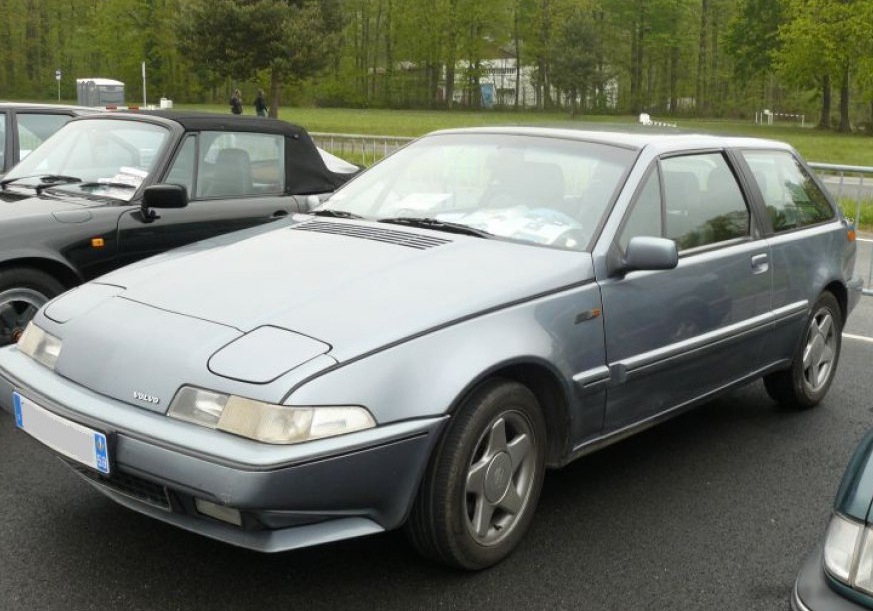
The Volvo 480 E 2.0, produced between 1992 and 1995, represents a unique chapter in Volvo’s history. This front-wheel-drive coupe, designated internally as the 480 series, was a departure from the company’s traditionally boxy designs and aimed to attract a younger, more style-conscious buyer. The “E” designation signified the 2.0-liter engine variant, producing 109 horsepower. Positioned as the higher-performance offering within the 480 range, it sat above the base 1.7-liter model and offered a more engaging driving experience. The 480 was notable for being Volvo’s first front-wheel-drive car and was primarily sold in Europe, though a limited number were imported to the United States through grey market channels.
Technical Specifications
| Brand | Volvo |
| Model | 480 E |
| Generation | 480 E |
| Type (Engine) | 2.0 (109 Hp) |
| Start of production | 1992 |
| End of production | 1995 |
| Powertrain Architecture | Internal Combustion engine |
| Body type | Coupe |
| Seats | 4 |
| Doors | 2 |
| Fuel consumption (combined) | 8.1 l/100 km (29 US mpg, 34.9 UK mpg, 12.3 km/l) |
| Fuel Type | Petrol (Gasoline) |
| Acceleration 0 – 100 km/h | 9.9 sec |
| Acceleration 0 – 62 mph | 9.9 sec |
| Acceleration 0 – 60 mph | 9.4 sec |
| Maximum speed | 191 km/h (118.68 mph) |
| Weight-to-power ratio | 9.6 kg/Hp, 103.8 Hp/tonne |
| Weight-to-torque ratio | 6.4 kg/Nm, 157.1 Nm/tonne |
| Power | 109 Hp @ 5200 rpm |
| Power per litre | 54.6 Hp/l |
| Torque | 165 Nm @ 3500 rpm (121.7 lb.-ft. @ 3500 rpm) |
| Engine layout | Front, Transverse |
| Engine Model/Code | B20F |
| Engine displacement | 1998 cm3 (121.93 cu. in.) |
| Number of cylinders | 4 |
| Engine configuration | Inline |
| Cylinder Bore | 82.7 mm (3.26 in.) |
| Piston Stroke | 93 mm (3.66 in.) |
| Compression ratio | 9.5:1 |
| Number of valves per cylinder | 2 |
| Fuel injection system | Multi-port manifold injection |
| Engine aspiration | Naturally aspirated engine |
| Valvetrain | OHC |
| Engine oil capacity | 5 l (5.28 US qt | 4.4 UK qt) |
| Coolant | 7 l (7.4 US qt | 6.16 UK qt) |
| Kerb Weight | 1050 kg (2314.85 lbs.) |
| Max. weight | 1440 kg (3174.66 lbs.) |
| Max load | 390 kg (859.8 lbs.) |
| Trunk (boot) space – minimum | 160 l (5.65 cu. ft.) |
| Trunk (boot) space – maximum | 660 l (23.31 cu. ft.) |
| Fuel tank capacity | 60 l (15.85 US gal | 13.2 UK gal) |
| Length | 4258 mm (167.64 in.) |
| Width | 1710 mm (67.32 in.) |
| Height | 1323 mm (52.09 in.) |
| Wheelbase | 2503 mm (98.54 in.) |
| Front track | 1410 mm (55.51 in.) |
| Rear (Back) track | 1410 mm (55.51 in.) |
| Drivetrain Architecture | The Internal combustion engine (ICE) drives the front wheels of the vehicle. |
| Drive wheel | Front wheel drive |
| Number of gears and type of gearbox | 5 gears, manual transmission |
| Front suspension | Wishbone |
| Rear suspension | Coil spring |
| Front brakes | Disc |
| Rear brakes | Disc |
| Assisting systems | ABS (Anti-lock braking system) |
| Steering type | Steering rack and pinion |
| Power steering | Hydraulic Steering |
| Tires size | 195/55 R15 |
| Wheel rims size | 15 |
Powertrain & Engine Architecture
The heart of the 480 E 2.0 is the B20F engine, a 1998cc inline-four cylinder unit. This engine, a descendant of Volvo’s ‘Redblock’ family, featured a cast iron block and an aluminum cylinder head. It utilized multi-port fuel injection, a relatively advanced system for its time, contributing to improved fuel efficiency and smoother power delivery. The engine employed a single overhead camshaft (OHC) design, operating two valves per cylinder. The B20F produced 109 horsepower at 5200 rpm and 165 Nm (121.7 lb-ft) of torque at 3500 rpm. The engine was transversely mounted, driving the front wheels. The 480 E 2.0 exclusively came with a five-speed manual transmission, offering a more direct connection to the engine than an automatic would have.
Driving Characteristics
The 480 E 2.0 offered a noticeably more spirited driving experience than the base 1.7-liter model. While not a sports car, the 109 hp engine provided adequate power for comfortable cruising and overtaking. Acceleration from 0 to 60 mph took approximately 9.4 seconds, and the car could reach a top speed of 118.68 mph. The five-speed manual transmission allowed drivers to keep the engine in its optimal power band. The front-wheel-drive configuration provided predictable handling, although it lacked the all-wheel-drive stability that Volvo would later become known for. The relatively light weight of the vehicle (1050 kg) contributed to its agility.
Equipment & Trim Levels
The 480 E 2.0 was generally well-equipped for its time. Standard features included power steering, disc brakes on all four wheels, and ABS anti-lock braking system. The interior featured comfortable cloth upholstery, and a relatively minimalist dashboard design. Optional extras included a sunroof, alloy wheels, and upgraded audio systems. The 480’s distinctive glass hatchback provided excellent visibility and access to a reasonably spacious cargo area, expanding from 160 liters to 660 liters with the rear seats folded down.
Chassis & Braking
The 480 E 2.0 utilized an independent wishbone suspension at the front and a coil spring suspension at the rear. This setup provided a good balance between ride comfort and handling. The car’s disc brakes on all four wheels, coupled with the ABS system, offered effective stopping power. The steering was rack and pinion, providing precise and responsive control. The 480’s chassis was relatively lightweight, contributing to its nimble handling characteristics.
Market Reception & Comparison
The Volvo 480 E 2.0 was generally well-received by automotive critics. It was praised for its stylish design, comfortable interior, and improved performance compared to the base model. However, some critics noted that the front-wheel-drive configuration lacked the prestige of Volvo’s traditional rear-wheel-drive cars. Compared to other coupes in its class, such as the Opel Calibra or the Ford Escort Coupe, the 480 offered a unique blend of Scandinavian design and practicality. Fuel economy was respectable for the time, averaging around 29 US mpg. Reliability was generally good, although some owners reported issues with the electrical system.
Legacy
The Volvo 480, while not a massive sales success, holds a special place in Volvo’s history as its first front-wheel-drive car. The B20F engine proved to be a durable and reliable unit, and many 480 E 2.0 models are still on the road today. In the used car market, the 480 E 2.0 is appreciated by enthusiasts for its unique styling, engaging driving experience, and relative rarity. Parts availability can be a challenge, but a dedicated community of owners and specialists helps to keep these cars running. The 480 paved the way for Volvo’s future front-wheel-drive models and demonstrated the company’s willingness to experiment with new designs and technologies.
