
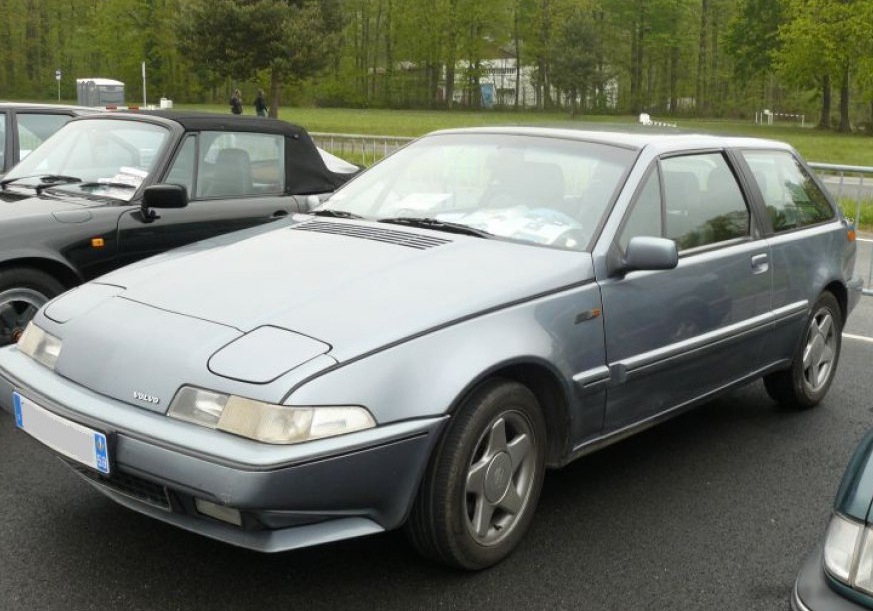
The Volvo 480 E 2.0, equipped with a 110 horsepower engine and automatic transmission, represents a unique chapter in Volvo’s history. Produced between 1992 and 1995, this variant of the 480 series was positioned as a comfortable, albeit not overtly sporty, option within the lineup. The 480, as a whole, was Volvo’s attempt to enter the compact coupe market, primarily aimed at European buyers seeking a stylish and practical vehicle. It was a departure from Volvo’s traditionally boxy designs, featuring a wedge-shaped profile and a focus on aerodynamic efficiency. The ‘E’ designation signified the fuel injection system, a key upgrade over earlier carburetor-equipped models. This particular 2.0-liter automatic configuration aimed to broaden the 480’s appeal to drivers prioritizing ease of use over outright performance.
Technical Specifications
| Brand | Volvo |
| Model | 480 E |
| Generation | 480 E |
| Type (Engine) | 2.0 (110 Hp) Automatic |
| Start of production | 1992 |
| End of production | 1995 |
| Powertrain Architecture | Internal Combustion engine |
| Body type | Coupe |
| Seats | 4 |
| Doors | 2 |
| Fuel consumption (urban) | 11.2 l/100 km (21 US mpg, 25.2 UK mpg, 8.9 km/l) |
| Fuel consumption (extra urban) | 6.7 l/100 km (35.1 US mpg, 42.2 UK mpg, 14.9 km/l) |
| Fuel consumption (combined) | 9.2 l/100 km (25.6 US mpg, 30.7 UK mpg, 10.9 km/l) |
| Fuel Type | Petrol (Gasoline) |
| Acceleration 0 – 100 km/h | 11.3 sec |
| Acceleration 0 – 62 mph | 11.3 sec |
| Acceleration 0 – 60 mph | 10.7 sec |
| Maximum speed | 190 km/h (118.06 mph) |
| Weight-to-power ratio | 9.5 kg/Hp, 104.8 Hp/tonne |
| Weight-to-torque ratio | 6.4 kg/Nm, 157.1 Nm/tonne |
| Power | 110 Hp @ 5500 rpm |
| Power per litre | 55.1 Hp/l |
| Torque | 165 Nm @ 3500 rpm (121.7 lb.-ft. @ 3500 rpm) |
| Engine layout | Front, Transverse |
| Engine Model/Code | B20F |
| Engine displacement | 1998 cm3 (121.93 cu. in.) |
| Number of cylinders | 4 |
| Engine configuration | Inline |
| Cylinder Bore | 82.7 mm (3.26 in.) |
| Piston Stroke | 93 mm (3.66 in.) |
| Compression ratio | 9.5:1 |
| Number of valves per cylinder | 2 |
| Fuel injection system | Multi-port manifold injection |
| Engine aspiration | Naturally aspirated engine |
| Valvetrain | OHC |
| Engine oil capacity | 5 l (5.28 US qt | 4.4 UK qt) |
| Coolant | 7 l (7.4 US qt | 6.16 UK qt) |
| Kerb Weight | 1050 kg (2314.85 lbs.) |
| Max. weight | 1450 kg (3196.7 lbs.) |
| Max load | 400 kg (881.85 lbs.) |
| Trunk (boot) space – minimum | 160 l (5.65 cu. ft.) |
| Trunk (boot) space – maximum | 660 l (23.31 cu. ft.) |
| Fuel tank capacity | 60 l (15.85 US gal | 13.2 UK gal) |
| Length | 4258 mm (167.64 in.) |
| Width | 1710 mm (67.32 in.) |
| Height | 1323 mm (52.09 in.) |
| Wheelbase | 2503 mm (98.54 in.) |
| Front track | 1416 mm (55.75 in.) |
| Rear (Back) track | 1426 mm (56.14 in.) |
| Drivetrain Architecture | The Internal combustion engine (ICE) drives the front wheels of the vehicle. |
| Drive wheel | Front wheel drive |
| Number of gears and type of gearbox | 4 gears, automatic transmission |
| Front suspension | Wishbone |
| Rear suspension | Coil spring |
| Front brakes | Disc |
| Rear brakes | Disc |
| Assisting systems | ABS (Anti-lock braking system) |
| Steering type | Steering rack and pinion |
| Power steering | Hydraulic Steering |
| Tires size | 185/65 R14 |
| Wheel rims size | 14 |
Powertrain & Engine Architecture
The heart of the 480 E 2.0 Automatic is the B20F engine, a 1998cc inline-four cylinder unit. This engine utilizes a multi-port fuel injection system, a significant improvement over the earlier carbureted versions, contributing to better fuel efficiency and smoother operation. The B20F features a single overhead camshaft (OHC) valvetrain, operating two valves per cylinder. This configuration, while not particularly advanced, proved to be reliable and relatively easy to maintain. The engine’s 9.5:1 compression ratio was a compromise between performance and the ability to run on readily available fuel grades. The four-speed automatic transmission, while providing convenience, was a conventional hydraulic unit, lacking the sophistication of more modern electronically controlled transmissions. It was designed to prioritize smooth shifts over rapid acceleration.
Driving Characteristics
The 480 E 2.0 Automatic offered a comfortable, rather than exhilarating, driving experience. With 110 horsepower and 121.7 lb.-ft. of torque, acceleration was adequate for everyday driving, with a 0-60 mph time of around 10.7 seconds. However, it lagged behind the performance of the manual transmission versions and the more powerful 480 Turbo. The automatic transmission’s gear ratios were geared towards fuel economy and relaxed cruising, resulting in a noticeable delay in response when needing to accelerate quickly. The front-wheel-drive layout provided predictable handling, but lacked the dynamic capabilities of rear-wheel-drive alternatives. Overall, the driving experience was best described as refined and easygoing, making it a suitable choice for drivers prioritizing comfort and convenience.
Equipment & Trim Levels
The 480 E 2.0 Automatic typically came equipped with a reasonable level of standard features for its time. These included power steering, central locking, and an AM/FM radio. Interior upholstery was typically cloth, with a relatively simple dashboard layout. Optional extras included a sunroof, alloy wheels, and upgraded audio systems. The trim level was generally considered mid-range within the 480 lineup, offering a step up in comfort and convenience compared to the base models, but lacking the sporty enhancements found on the Turbo variants.
Chassis & Braking
The 480 E 2.0 Automatic featured a front suspension utilizing wishbones, providing a comfortable ride quality. The rear suspension employed coil springs. Braking duties were handled by disc brakes on all four wheels, a relatively advanced feature for a car in this class during the early 1990s. An Anti-lock Braking System (ABS) was also included as standard, enhancing safety. The 480’s chassis was designed to balance comfort and handling, offering a stable and predictable driving experience. The relatively lightweight construction, with a curb weight of around 2315 lbs, helped to mitigate the performance limitations of the 110 horsepower engine.
Market Reception & Comparison
The Volvo 480 E 2.0 Automatic received mixed reviews from automotive critics. While praised for its stylish design and comfortable ride, it was often criticized for its lack of outright performance compared to rivals. The automatic transmission was seen as a compromise, detracting from the driving experience. Fuel economy was considered reasonable for the time, but not exceptional. Compared to the manual transmission versions of the 480, the automatic offered less engagement and slower acceleration. The 480 Turbo, with its significantly higher power output, was the preferred choice for drivers seeking a more dynamic driving experience. However, the 480 E 2.0 Automatic appealed to a different segment of the market, prioritizing comfort and ease of use.
Legacy
The Volvo 480, including the 2.0 Automatic variant, holds a unique place in Volvo’s history as a bold design departure. While not a commercial blockbuster, it demonstrated Volvo’s willingness to experiment with new styling and market segments. The B20F engine, in particular, proved to be a durable and reliable unit, and many examples are still on the road today. The 480 E 2.0 Automatic, while not the most sought-after version, remains a viable option for enthusiasts seeking a classic Volvo coupe. Its relative simplicity and ease of maintenance make it an attractive choice for those looking for a reliable and affordable classic car. The car has gained a cult following among Volvo enthusiasts, appreciated for its distinctive styling and understated charm.
