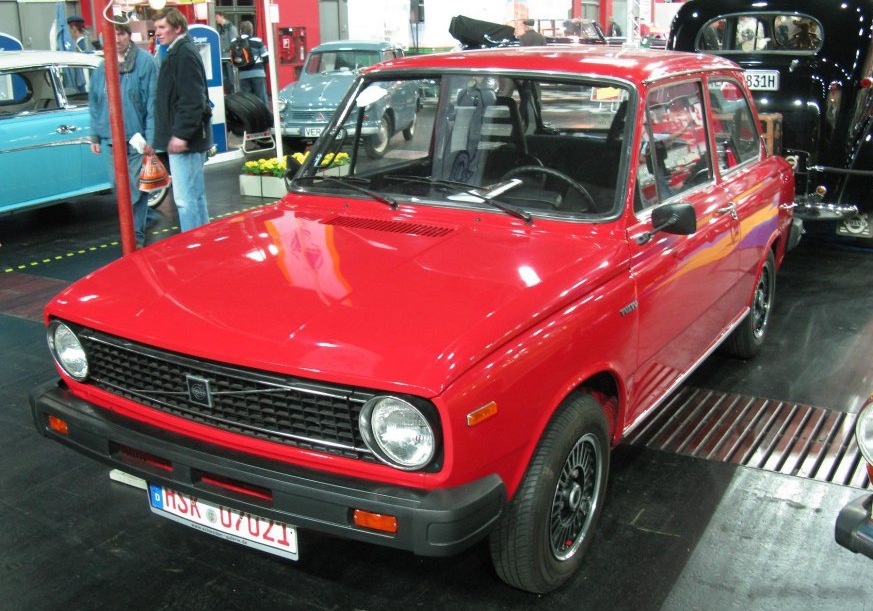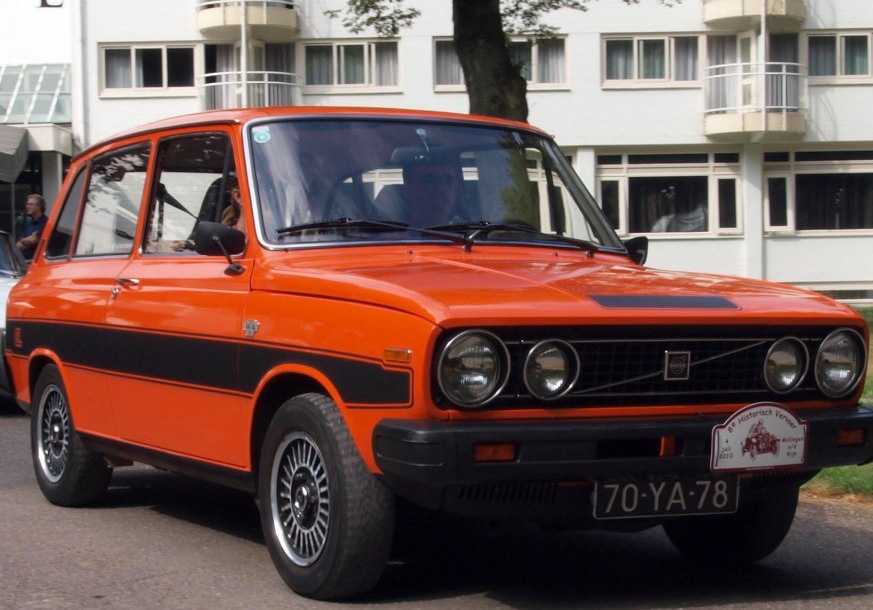
The Volvo 66 Combi DL 1.1, powered by a 47 horsepower engine and equipped with the unique Variornatic automatic transmission, represents a distinctive chapter in Volvo’s history. Produced between 1975 and 1979, this variant of the 66 series – a compact, rear-wheel-drive estate car – was primarily aimed at the European market as an affordable and practical family vehicle. It occupied the entry-level position within the 66 Combi range, offering a more accessible price point compared to the more powerful and often manually-equipped models. The 66 series, and particularly the Combi, was a significant departure for Volvo, known at the time for larger, more luxurious vehicles.
Technical Specifications
| Brand | Volvo |
| Model | 66 |
| Generation | 66 Combi |
| Type (Engine) | DL 1.1 (47 Hp) Variornatic |
| Start of production | 1975 |
| End of production | 1979 |
| Powertrain Architecture | Internal Combustion engine |
| Body type | Station wagon (estate) |
| Seats | 4 |
| Doors | 3 |
| Fuel Type | Petrol (Gasoline) |
| Weight-to-power ratio | 17.9 kg/Hp, 55.9 Hp/tonne |
| Weight-to-torque ratio | 11.2 kg/Nm, 89.2 Nm/tonne |
| Power | 47 Hp @ 5000 rpm |
| Power per litre | 42.4 Hp/l |
| Torque | 75 Nm @ 2700 rpm, 55.32 lb.-ft. @ 2700 rpm |
| Engine Model/Code | B110E |
| Engine displacement | 1108 cm3, 67.61 cu. in. |
| Number of cylinders | 4 |
| Cylinder Bore | 70 mm, 2.76 in. |
| Piston Stroke | 72 mm, 2.83 in. |
| Compression ratio | 8.5:1 |
| Engine aspiration | Naturally aspirated engine |
| Engine oil capacity | 3.3 l, 3.49 US qt | 2.9 UK qt |
| Coolant | 4.8 l, 5.07 US qt | 4.22 UK qt |
| Kerb Weight | 841 kg, 1854.09 lbs |
| Max. weight | 1200 kg, 2645.55 lbs |
| Max load | 359 kg, 791.46 lbs |
| Fuel tank capacity | 42 l, 11.1 US gal | 9.24 UK gal |
| Length | 3900 mm, 153.54 in |
| Width | 1540 mm, 60.63 in |
| Height | 1380 mm, 54.33 in |
| Wheelbase | 2250 mm, 88.58 in |
| Front track | 1310 mm, 51.57 in |
| Rear (Back) track | 1240 mm, 48.82 in |
| Minimum turning circle | 9.55 m, 31.33 ft |
| Drivetrain Architecture | The Internal combustion engine (ICE) drives the rear wheels of the vehicle. |
| Drive wheel | Rear wheel drive |
| Number of gears and type of gearbox | automatic transmission Variornatic |
| Rear suspension | Suspension De-Dion |
| Front brakes | Disc |
| Rear brakes | Drum |
| Wheel rims size | 4J x 14 |
Powertrain & Engine Architecture
The heart of the 66 Combi DL 1.1 is the B110E engine, a 1.1-liter inline-four cylinder petrol engine. This engine, while modest in output, was known for its durability and relative simplicity. It featured a single overhead camshaft (SOHC) valvetrain and a two-barrel carburetor for fuel delivery. The B110E produced 47 horsepower at 5000 rpm and 75 Nm (55.32 lb-ft) of torque at 2700 rpm. The engine’s 8.5:1 compression ratio was typical for the era, balancing performance and fuel efficiency. What truly set this variant apart was the Variornatic transmission. This was a continuously variable transmission (CVT) developed in-house by Volvo. Unlike traditional automatic transmissions with fixed gear ratios, the Variornatic used a belt and pulley system to provide a seamless and stepless change in gear ratios. This resulted in smooth acceleration and optimized engine operation, though it lacked the definitive shift points of a conventional automatic.
Driving Characteristics
The 66 Combi DL 1.1 Variornatic offered a unique driving experience. The Variornatic transmission, while smooth, didn’t provide the sporty feel of a manual gearbox. Acceleration was adequate for everyday driving, but the 47 horsepower engine meant it wasn’t particularly quick. The rear-wheel-drive layout provided predictable handling, and the De-Dion rear suspension contributed to a comfortable ride, especially when carrying a load. Compared to the more powerful 66 models, such as those equipped with the 1.6-liter engine, the DL 1.1 felt noticeably slower. Manual transmission versions of the 1.6 offered a more engaging driving experience, while the 1.1 Variornatic prioritized ease of use and fuel economy. The Variornatic’s tendency to “rubber band” – where engine speed would rise before matching vehicle speed – was a characteristic quirk of the system.
Equipment & Trim Levels
The DL trim level, even in its base 1.1 Variornatic form, offered a reasonable level of equipment for the mid-1970s. Standard features included cloth upholstery, basic instrumentation (speedometer, fuel gauge, temperature gauge), and a heater. The interior was functional and durable, reflecting Volvo’s reputation for practicality. Optional extras included a radio, upgraded upholstery, and a sunroof. The dashboard layout was simple and straightforward, prioritizing usability over aesthetics. The 66 Combi DL 1.1 was generally finished in solid paint colors, with a focus on durability rather than flashy styling.
Chassis & Braking
The Volvo 66 Combi DL 1.1 utilized a relatively simple chassis design. The front suspension consisted of independent coil springs and wishbones, while the rear suspension employed a De-Dion axle with coil springs. This setup provided a good balance of ride comfort and handling. The braking system featured disc brakes on the front wheels and drum brakes on the rear. While adequate for the vehicle’s weight and performance, the drum brakes on the rear were less effective than disc brakes, particularly in demanding situations. The 4J x 14 inch steel wheels were standard, and tire size was typically 165/80R14.
Market Reception & Comparison
The Volvo 66 Combi DL 1.1 Variornatic was generally well-received as an affordable and practical family car. Critics praised its fuel efficiency, comfortable ride, and the unique smoothness of the Variornatic transmission. However, the engine’s lack of power and the Variornatic’s unconventional driving characteristics were also noted. Compared to other small estates of the time, such as the Ford Cortina Estate or the Vauxhall Cavalier Estate, the Volvo 66 offered a more refined and durable package, albeit at a slightly higher price point. The Variornatic transmission, while innovative, was not universally appreciated, with some drivers preferring the more direct feel of a manual gearbox. Fuel economy was a strong point, typically achieving around 30-35 mpg in real-world driving.
Legacy
The Volvo 66 Combi DL 1.1 Variornatic, while not the most powerful or exciting variant of the 66 series, holds a unique place in Volvo’s history. The Variornatic transmission, though eventually discontinued, represented Volvo’s willingness to experiment with innovative technology. The B110E engine proved to be remarkably durable, and many examples are still on the road today. In the used car market, the 66 Combi DL 1.1 is appreciated by enthusiasts for its simplicity, reliability, and quirky charm. Parts availability can be a challenge, but the engine’s robust design and the availability of aftermarket support mean that these cars can be kept running with reasonable effort. The 66 Combi, in all its forms, is remembered as a practical and well-built estate car that offered a distinctive alternative to more mainstream competitors.