
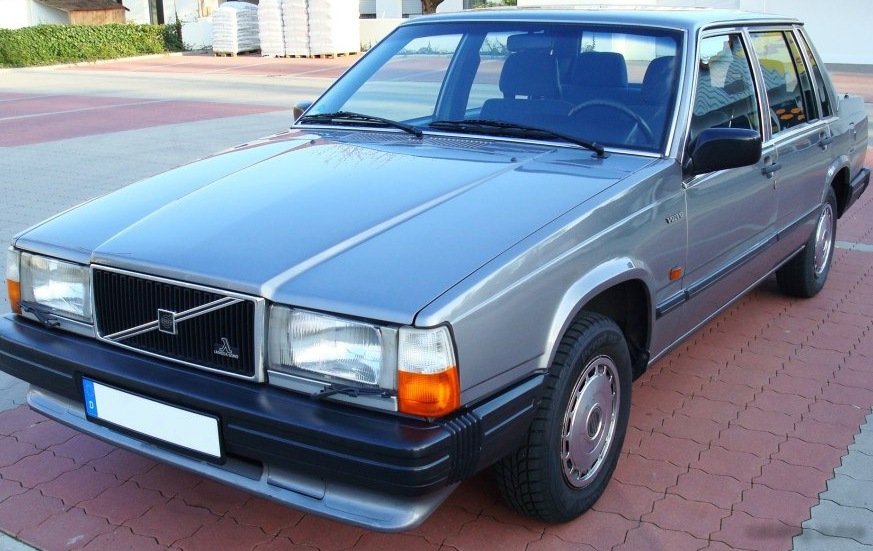
The Volvo 740 2.3, specifically the 744 variant produced between 1988 and 1990, represented a significant evolution in Volvo’s commitment to safety, durability, and comfortable family transportation. Positioned as a mid-range offering within the 740 series, this model aimed to balance performance with affordability, appealing to buyers who desired Volvo’s renowned build quality without the expense of the top-tier trims. It was built on the foundation of the 700/900 series, known for its boxy but functional design and robust engineering. The 740 series, and the 744 in particular, became a staple of the late 1980s and early 1990s automotive landscape, particularly in Europe and North America.
Technical Specifications
| Brand | Volvo |
| Model | 740 |
| Generation | 740 (744) |
| Type (Engine) | 2.3 (151 Hp) |
| Start of production | 1988 |
| End of production | 1990 |
| Powertrain Architecture | Internal Combustion engine |
| Body type | Sedan |
| Seats | 5 |
| Doors | 4 |
| Fuel Type | Petrol (Gasoline) |
| Power | 151 Hp |
| Engine Model/Code | B234F |
| Engine aspiration | Naturally aspirated engine |
| Engine oil capacity | 3.85 l / 4.07 US qt / 3.39 UK qt |
| Fuel tank capacity | 60 l / 15.85 US gal / 13.2 UK gal |
| Length | 4785 mm / 188.39 in. |
| Width | 1760 mm / 69.29 in. |
| Height | 1430 mm / 56.3 in. |
Powertrain & Engine Architecture
The heart of the 1988-1990 Volvo 740 2.3 was the B234F engine, a 2.3-liter inline-four cylinder powerplant. This engine was a continuation of Volvo’s “Redblock” family, known for its over-engineered robustness and longevity. The B234F featured a cast iron block and an aluminum cylinder head, contributing to its durability. Fuel delivery was managed by Bosch mechanical fuel injection – a system chosen for its reliability and relative simplicity compared to emerging electronic fuel injection systems of the time. The engine utilized a single overhead camshaft (SOHC) valvetrain, operating two valves per cylinder. While not a high-revving engine, the B234F produced a respectable 151 horsepower and approximately 155 lb-ft of torque. This power was delivered in a relatively flat curve, making it suitable for everyday driving and hauling passengers. The engine was typically paired with a four-speed automatic transmission, although a five-speed manual was also available. The automatic transmission, while providing convenience, was not known for its sporty performance and contributed to slightly slower acceleration times compared to the manual version.
Driving Characteristics
The 740 2.3 with the automatic transmission offered a comfortable and predictable driving experience. Acceleration was adequate for merging onto highways and passing slower traffic, but it wasn’t particularly brisk. The automatic transmission’s gear ratios were geared towards fuel efficiency and smooth cruising rather than outright performance. The engine’s torque characteristics meant that it felt stronger in the mid-range, making it well-suited for maintaining highway speeds. Compared to the manual transmission version, the automatic 740 felt noticeably slower, especially during initial acceleration. The 740’s steering was relatively heavy, providing a sense of solidity and control, but it lacked the responsiveness of more modern steering systems. The suspension, tuned for comfort, absorbed bumps and road imperfections well, contributing to a smooth ride. However, this also resulted in some body roll during cornering.
Equipment & Trim Levels
The 740 2.3 typically came with a fairly comprehensive list of standard features for its time. These included power steering, a basic audio system, cloth upholstery, and manually adjustable seats. Air conditioning was often included, but sometimes offered as an option. Higher trim levels, such as the GL, added features like power windows, power door locks, a sunroof, and upgraded interior trim. The dashboard layout was functional and straightforward, with clearly labeled controls. Optional extras included a trip computer, heated seats, and a more advanced audio system. The interior materials were durable and designed to withstand years of use, reflecting Volvo’s emphasis on practicality.
Chassis & Braking
The Volvo 740 2.3 utilized a robust chassis with a MacPherson strut front suspension and a solid rear axle with leaf springs. This suspension setup prioritized stability and load-carrying capacity over sporty handling. The braking system consisted of disc brakes on the front wheels and drum brakes on the rear wheels. While adequate for most driving situations, the rear drum brakes were a point of criticism, as they offered less stopping power and were more prone to fading under heavy use. The 740 featured a relatively large turning circle, which could make maneuvering in tight spaces challenging. A stabilizer bar was included on both the front and rear axles to reduce body roll during cornering.
Market Reception & Comparison
The Volvo 740 2.3 was generally well-received by automotive critics and consumers alike. It was praised for its safety, durability, and comfortable ride. However, the automatic transmission was often criticized for its sluggish performance. Compared to other trims in the 740 lineup, such as the turbocharged models, the 2.3 offered less power but better fuel economy. It was also more affordable than the higher-performance variants. Compared to competitors like the BMW 3 Series and Mercedes-Benz 190E, the 740 offered a more practical and spacious interior, but lacked the same level of sporting refinement. Fuel economy was respectable for the time, averaging around 20-25 mpg in mixed driving conditions.
Legacy
The Volvo 740 2.3, and the 740 series as a whole, has earned a reputation for exceptional reliability and longevity. Many examples are still on the road today, a testament to their robust engineering. The B234F engine is particularly well-regarded for its durability and ability to withstand high mileage. In the used car market, the 740 2.3 remains a popular choice for those seeking a reliable and affordable classic car. Parts availability is generally good, and the car’s simple mechanical design makes it relatively easy to maintain. The 740’s enduring popularity has also led to a thriving community of enthusiasts who are dedicated to preserving and restoring these iconic vehicles. It remains a symbol of Volvo’s commitment to building safe, durable, and practical automobiles.
