
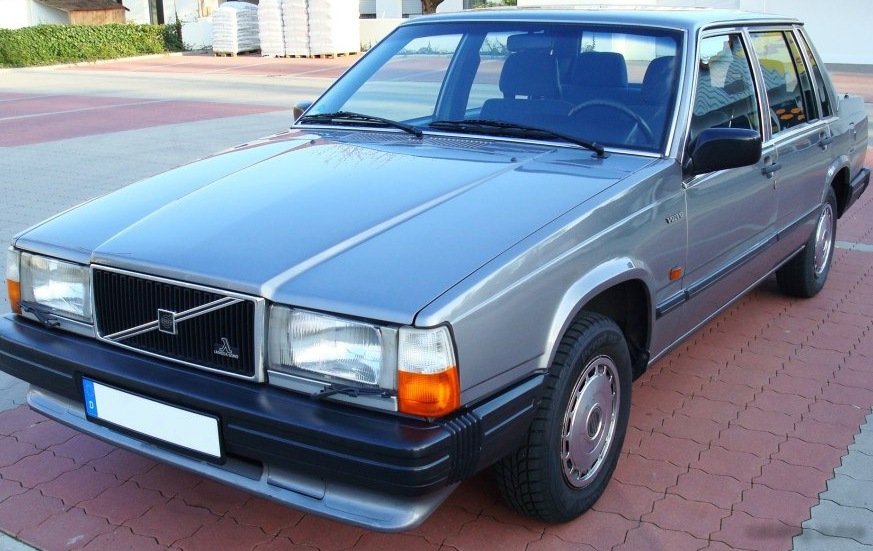
The Volvo 740 Turbo, specifically the 744 variant powered by the B230FT 2.3-liter turbocharged engine producing 165 horsepower, was a short-lived but significant offering in the Volvo lineup. Produced from 1989 to 1990, it represented a performance-oriented version of the already popular 740 series, known for its boxy styling and robust build quality. This model occupied a niche position, bridging the gap between the more economical naturally aspirated 740s and the later, more powerful 740 Turbos that followed. It was part of the first generation of the 740/760 series (1983-1992), a range that cemented Volvo’s reputation for safety and durability.
Technical Specifications
| Brand | Volvo |
| Model | 740 |
| Generation | 740 (744) |
| Type (Engine) | 2.3 Turbo (165 Hp) |
| Start of production | 1989 |
| End of production | 1990 |
| Powertrain Architecture | Internal Combustion engine |
| Body type | Sedan |
| Seats | 5 |
| Doors | 4 |
| Fuel Type | Petrol (Gasoline) |
| Power | 165 Hp |
| Engine Model/Code | B230FT |
| Engine aspiration | Turbocharger |
| Engine oil capacity | 4.5 l (4.76 US qt | 3.96 UK qt) |
| Coolant capacity | 9.3 l (9.83 US qt | 8.18 UK qt) |
| Fuel tank capacity | 60 l (15.85 US gal | 13.2 UK gal) |
| Length | 4785 mm (188.39 in) |
| Width | 1760 mm (69.29 in) |
| Height | 1430 mm (56.3 in) |
Powertrain & Engine Architecture
The heart of the 740 Turbo was the B230FT engine, a 2.3-liter inline-four cylinder powerplant. This engine was a development of Volvo’s well-regarded ‘Redblock’ family, known for its over-engineered robustness. The ‘FT’ designation indicated the factory turbocharger installation. The B230FT featured a Garrett T25 turbocharger, intercooled to reduce intake temperatures and improve efficiency. Fuel delivery was handled by Bosch mechanical fuel injection, a system known for its reliability but less sophisticated than later electronic systems. The engine utilized a cast iron block and an aluminum cylinder head, contributing to its durability. The valvetrain employed a single overhead camshaft (SOHC) design with two valves per cylinder. The transmission paired with the B230FT was a four-speed automatic, a common choice for American market Volvos prioritizing comfort and ease of use. This automatic transmission, while smooth, wasn’t known for its sporty performance or fuel efficiency.
Driving Characteristics
The 165 horsepower and 207 lb-ft of torque provided by the B230FT engine gave the 740 Turbo a noticeable performance boost over the naturally aspirated models. While not a sports car, it offered brisk acceleration and respectable highway cruising ability. The automatic transmission, however, muted some of the engine’s potential. Gear changes were relatively slow, and the transmission lacked the responsiveness of a manual gearbox. The 740 Turbo felt more like a comfortable grand tourer than a nimble sports sedan. The turbocharger did introduce a degree of turbo lag, meaning there was a slight delay between pressing the accelerator and feeling the full power delivery. However, once the turbo spooled up, the car provided a strong surge of acceleration. Compared to later, more powerful 740 Turbo models (which often featured intercoolers and higher boost pressures), the 165 hp version felt less urgent, but it was also more forgiving and easier to drive in everyday conditions.
Equipment & Trim Levels
The 740 Turbo, even in its relatively short production run, offered a good level of standard equipment. Typically, it included features like power steering, power brakes, and a basic audio system. Interior upholstery was usually cloth, though leather was available as an option. The dashboard layout was typical of Volvos of the era – functional and straightforward, prioritizing ergonomics over flashy design. Optional extras included a sunroof, upgraded audio systems, and heated seats. The 740 Turbo was positioned as a mid-range offering within the 740 lineup. It was more expensive than the base models but less costly than the fully-loaded 740 GLE or the later, higher-performance Turbo variants. It appealed to buyers who wanted a blend of comfort, practicality, and a reasonable amount of performance.
Chassis & Braking
The 740 Turbo utilized a MacPherson strut front suspension and a solid rear axle with coil springs. The suspension was tuned for comfort and stability, providing a relatively smooth ride even on rough roads. Braking was accomplished via disc brakes at the front and drum brakes at the rear. While adequate for most driving situations, the rear drum brakes were a point of criticism, as they lacked the stopping power and fade resistance of disc brakes. A stabilizer bar was fitted at both the front and rear to reduce body roll during cornering. The chassis was robust and well-built, contributing to the 740’s reputation for safety and durability.
Market Reception & Comparison
The 740 Turbo received generally positive reviews from automotive critics. It was praised for its comfortable ride, spacious interior, and robust build quality. The turbocharged engine was seen as a welcome addition, providing a noticeable performance boost. However, the automatic transmission was often criticized for its lack of responsiveness. Compared to other turbocharged sedans of the late 1980s and early 1990s, the 740 Turbo offered a unique combination of practicality, safety, and performance. Its fuel economy was reasonable for a turbocharged vehicle, but it wasn’t class-leading. Reliability was generally good, although the turbocharger and fuel injection system required regular maintenance. Compared to the naturally aspirated 740 models, the Turbo offered significantly more power, but it also came with a higher price tag and slightly increased maintenance costs.
Legacy
The 1989-1990 Volvo 740 Turbo (165 hp) represents a transitional point in Volvo’s history. It was one of the first 740 models to embrace turbocharging, paving the way for the more powerful and sophisticated Turbo variants that followed. The B230FT engine proved to be remarkably durable, and many examples are still on the road today. In the used car market, these 740 Turbos are sought after by Volvo enthusiasts and collectors. They are appreciated for their classic styling, robust build quality, and relatively simple mechanical design. While not the fastest or most technologically advanced car of its era, the 740 Turbo remains a testament to Volvo’s commitment to safety, durability, and understated performance. Finding one in good condition can be a challenge, but for those willing to put in the effort, it offers a unique and rewarding driving experience.
