
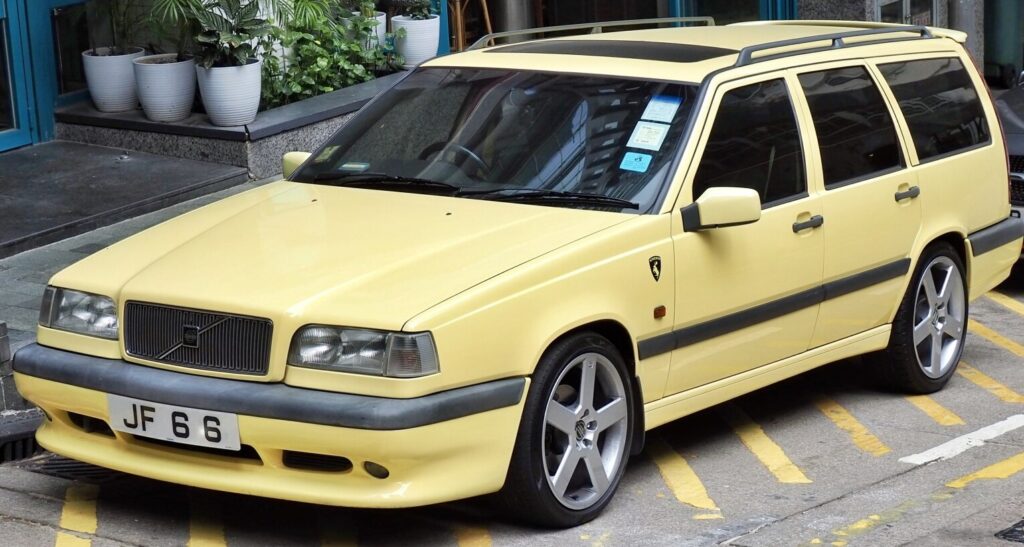
The Volvo 850 Combi 2.0 20V, produced between 1992 and 1996, represents a pivotal moment in Volvo’s history. This variant, part of the broader 850 series (internally designated LW for the Combi/estate body style), was a key player in establishing Volvo as a maker of practical, yet dynamically capable, family vehicles. It was built on Volvo’s new P80 platform, a significant departure from the rear-wheel-drive layouts that had defined the brand for decades. The 850 Combi, in particular, offered a compelling blend of space, safety, and performance, challenging the established norms of the European station wagon market. This specific 2.0-liter 20-valve engine configuration occupied a middle ground in the 850 lineup, offering a balance between affordability and driving enjoyment.
Technical Specifications
| Brand | Volvo |
| Model | 850 |
| Generation | 850 Combi (LW) |
| Type (Engine) | 2.0 20V (143 Hp) |
| Start of production | 1992 |
| End of production | 1996 |
| Powertrain Architecture | Internal Combustion engine |
| Body type | Station wagon (estate) |
| Seats | 5 |
| Doors | 5 |
| Fuel consumption (urban) | 10.5-13.5 l/100 km (22.4 – 17.4 US mpg, 26.9 – 20.9 UK mpg, 9.5 – 7.4 km/l) |
| Fuel consumption (extra urban) | 8 l/100 km (29.4 US mpg, 35.3 UK mpg, 12.5 km/l) |
| Fuel Type | Petrol (Gasoline) |
| Power | 143 Hp |
| Engine Model/Code | B5204S |
| Number of cylinders | 5 |
| Engine configuration | Inline |
| Number of valves per cylinder | 4 |
| Engine aspiration | Naturally aspirated engine |
| Engine oil capacity | 5.3 l (5.6 US qt, 4.66 UK qt) |
| Coolant capacity | 7.2 l (7.61 US qt, 6.34 UK qt) |
| Fuel tank capacity | 70 l (18.49 US gal, 15.4 UK gal) |
| Drivetrain Architecture | Front wheel drive, Internal Combustion Engine |
| Number of gears | 5 |
| Gearbox type | Manual transmission |
| Front brakes | Ventilated discs |
| Rear brakes | Disc |
| Assisting systems | ABS (Anti-lock braking system) |
Powertrain & Engine Architecture
The heart of the 850 Combi 2.0 20V is the B5204S engine, a naturally aspirated, inline-five cylinder gasoline engine. This engine displaced 1,984 cc (121.0 cu in) and featured a cast iron block with an aluminum cylinder head. The “20V” designation refers to the four valves per cylinder, a key element in achieving the engine’s respectable power output for its time. Fuel delivery was handled by Bosch Motronic 3.1 fuel injection, a sophisticated system for the early 1990s that optimized fuel efficiency and emissions. The engine utilized a single overhead camshaft (SOHC) design, simplifying the valvetrain and contributing to its reliability. The five-cylinder configuration, a Volvo hallmark, provided a unique engine note and a smoother power delivery compared to traditional four-cylinder engines. The 850 Combi 2.0 20V was exclusively offered with a 5-speed manual transmission, providing drivers with full control over the engine’s power. This transmission was known for its robust construction and precise shift feel.
Driving Characteristics
The 850 Combi 2.0 20V offered a surprisingly engaging driving experience for a family station wagon. While not as overtly sporty as the turbocharged variants (like the T5), the 143 horsepower and 132 lb-ft of torque provided ample power for everyday driving and even spirited excursions. The manual transmission allowed drivers to exploit the engine’s powerband effectively, with strong acceleration in the mid-range. The gear ratios were well-chosen, providing a balance between fuel economy and performance. Compared to the lower-powered 850 1.9 models, the 2.0 20V felt noticeably more responsive, particularly when fully loaded with passengers and cargo. However, it lacked the outright punch of the turbocharged models, which offered significantly higher horsepower and torque figures. The front-wheel-drive layout provided good traction in most conditions, although torque steer could be noticeable under hard acceleration.
Equipment & Trim Levels
The 850 Combi 2.0 20V typically came equipped with a reasonable level of standard features. Interior upholstery was generally cloth, with options for leather available. The dashboard layout was functional and ergonomically designed, with easy-to-read gauges and intuitive controls. Standard equipment included power windows, power door locks, and a basic audio system. Optional extras included a sunroof, upgraded audio systems, and climate control. Safety was a key focus for Volvo, and the 850 Combi 2.0 20V came standard with ABS anti-lock brakes and side impact protection systems (SIPS). Higher trim levels offered additional features such as alloy wheels, fog lights, and a more luxurious interior.
Chassis & Braking
The 850 Combi 2.0 20V utilized an independent suspension system at all four wheels, providing a comfortable ride and good handling characteristics. The front suspension featured MacPherson struts, while the rear suspension employed a multi-link design. Stabilizer bars were fitted to both the front and rear axles to reduce body roll during cornering. Braking duties were handled by ventilated discs at the front and solid discs at the rear. The ABS system helped to prevent wheel lockup during hard braking, enhancing safety and control. The chassis was designed to provide a good balance between rigidity and weight, contributing to the car’s overall stability and handling.
Market Reception & Comparison
The Volvo 850 Combi 2.0 20V was generally well-received by automotive critics. It was praised for its spacious interior, comfortable ride, and strong safety features. The 2.0-liter engine was considered a good compromise between performance and fuel economy. However, some critics noted that the car’s styling was somewhat unconventional for a station wagon. Compared to other station wagons in its class, such as the Ford Mondeo Estate and the Opel/Vauxhall Vectra Estate, the 850 Combi offered a more distinctive design and a more premium feel. Fuel economy was comparable to its rivals, averaging around 25-30 mpg in mixed driving. Reliability was generally good, although some owners reported issues with the electrical system.
Legacy
The Volvo 850 Combi 2.0 20V holds a significant place in Volvo’s history as a pioneering model that helped to redefine the brand’s image. The B5204S engine proved to be a durable and reliable powerplant, and many examples are still on the road today. In the used car market, the 850 Combi 2.0 20V is considered a good value for money, offering a practical and comfortable driving experience at an affordable price. Its unique styling and strong safety credentials continue to appeal to enthusiasts and families alike. The 850 series paved the way for Volvo’s subsequent generations of station wagons, solidifying the brand’s reputation as a leader in the segment. The 850’s innovative design and engineering continue to influence Volvo’s vehicles today.
