
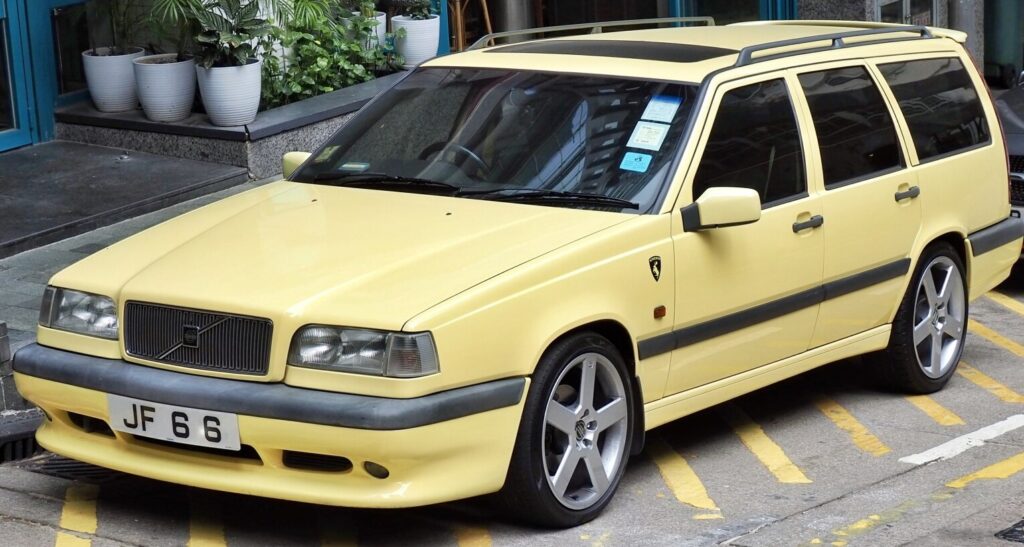
The Volvo 850 Combi 2.0 20V Turbo, produced between 1993 and 1997, represents a significant evolution in Volvo’s lineup, blending the practicality of a station wagon with the performance of a turbocharged engine. Part of the first generation 850 series (internally designated LW for the Combi/estate body style), this variant aimed to offer a compelling alternative to traditional, more conservatively styled wagons. It was a key model in Volvo’s attempt to attract a younger, more performance-oriented clientele while maintaining the brand’s reputation for safety and durability. The 850 series, and particularly the Combi, was a departure for Volvo, embracing a more aerodynamic and modern design language.
Technical Specifications
| Brand | Volvo |
| Model | 850 |
| Generation | 850 Combi (LW) |
| Type (Engine) | 2.0 20V Turbo (210 Hp) |
| Start of production | 1993 |
| End of production | 1997 |
| Powertrain Architecture | Internal Combustion engine |
| Body type | Station wagon (estate) |
| Fuel Type | Petrol (Gasoline) |
| Power | 210 Hp |
| Engine Model/Code | B5204T |
| Engine aspiration | Turbocharger |
| Engine oil capacity | 5.3 l (5.6 US qt | 4.66 UK qt) |
| Coolant capacity | 7.2 l (7.61 US qt | 6.34 UK qt) |
Powertrain & Engine Architecture
The heart of the 850 Combi 2.0 20V Turbo is the B5204T engine, a 1,984 cc (121 cubic inch) inline-four cylinder powerplant. This engine is characterized by its cast iron block and aluminum cylinder head, featuring a 20-valve configuration (five valves per cylinder – three intake, two exhaust). The key element, of course, is the Mitsubishi TD04HL-13C turbocharger with an intercooler, boosting power output to 210 horsepower and 221 lb-ft of torque. Fuel delivery is managed by Bosch Motronic 3.1 engine management system, utilizing sequential fuel injection. The engine’s valvetrain employs double overhead camshafts (DOHC) driven by a timing belt. Volvo’s commitment to reliability is evident in the robust construction of the B5204T, though timing belt replacement at recommended intervals is crucial to prevent catastrophic engine failure. The engine was paired with either a 5-speed manual or a 4-speed automatic transmission. The automatic transmission, while offering convenience, was sometimes criticized for slightly diminishing the engine’s performance potential.
Driving Characteristics
The 850 Combi 2.0 20V Turbo offered a surprisingly engaging driving experience for a wagon. The turbocharger provides a noticeable surge of power, particularly in the mid-range, making overtaking maneuvers effortless. While not a dedicated sports car, the 850 Combi felt considerably quicker than its naturally aspirated counterparts. The automatic transmission, while smooth, did introduce some power loss compared to the manual version. Gear ratios were tuned for a balance between acceleration and fuel economy. The suspension, a MacPherson strut front and multi-link rear setup, provided a comfortable ride without sacrificing handling. The car felt planted and stable, even when loaded with cargo. Compared to the base 850 models, the turbo variant offered a significantly more spirited driving experience, appealing to those who desired both practicality and performance.
Equipment & Trim Levels
The 850 Combi 2.0 20V Turbo typically came well-equipped, reflecting Volvo’s focus on safety and comfort. Standard features included power windows, power locks, a sunroof, and air conditioning. Interior upholstery was typically cloth, though leather options were available. The dashboard featured a straightforward layout with easy-to-read gauges. Optional extras included a premium sound system, heated front seats, and automatic climate control. Higher trim levels often included wood trim accents and upgraded interior materials. The 850 Combi was positioned as a mid-to-upper range offering within the 850 lineup, bridging the gap between the more affordable base models and the more luxurious S70 series that would eventually replace it.
Chassis & Braking
The 850 Combi featured a robust chassis designed to handle both the demands of carrying cargo and the increased power of the turbocharged engine. The front suspension utilized MacPherson struts with stabilizer bar, while the rear employed a multi-link independent suspension. Braking duties were handled by ventilated disc brakes on all four wheels, providing ample stopping power. Anti-lock Braking System (ABS) was standard equipment, enhancing safety in emergency braking situations. The rear suspension geometry was specifically tuned to maintain stability when the vehicle was loaded, a crucial consideration for a station wagon. The stabilizer bar thickness was increased compared to the base models to reduce body roll during cornering.
Market Reception & Comparison
The Volvo 850 Combi 2.0 20V Turbo was generally well-received by automotive critics. It was praised for its blend of practicality, performance, and safety. Critics noted the comfortable ride, spacious interior, and strong engine. However, some criticized the automatic transmission for its slightly sluggish response and the car’s relatively high price compared to some competitors. Compared to other turbocharged wagons of the era, such as the Audi 90 Quattro, the 850 Combi offered a more comfortable ride and a more user-friendly driving experience, though it lacked the Audi’s all-wheel-drive system. Fuel economy was reasonable for a turbocharged vehicle, averaging around 22-26 mpg in mixed driving. Reliability was generally good, though preventative maintenance, particularly regarding the timing belt, was essential.
Legacy
The Volvo 850 Combi 2.0 20V Turbo holds a significant place in Volvo’s history. It marked a turning point for the brand, demonstrating a willingness to embrace more modern design and performance-oriented engineering. The B5204T engine proved to be a durable and capable powerplant, and many examples are still on the road today. In the used car market, the 850 Combi 2.0 20V Turbo is sought after by enthusiasts who appreciate its unique blend of practicality, performance, and Scandinavian design. While maintenance costs can be higher than some contemporary vehicles, the 850 Combi’s robust construction and readily available parts supply ensure that it remains a viable and enjoyable classic car for years to come. The 850 series paved the way for Volvo’s subsequent successful wagon models, such as the V70 and V90.
