
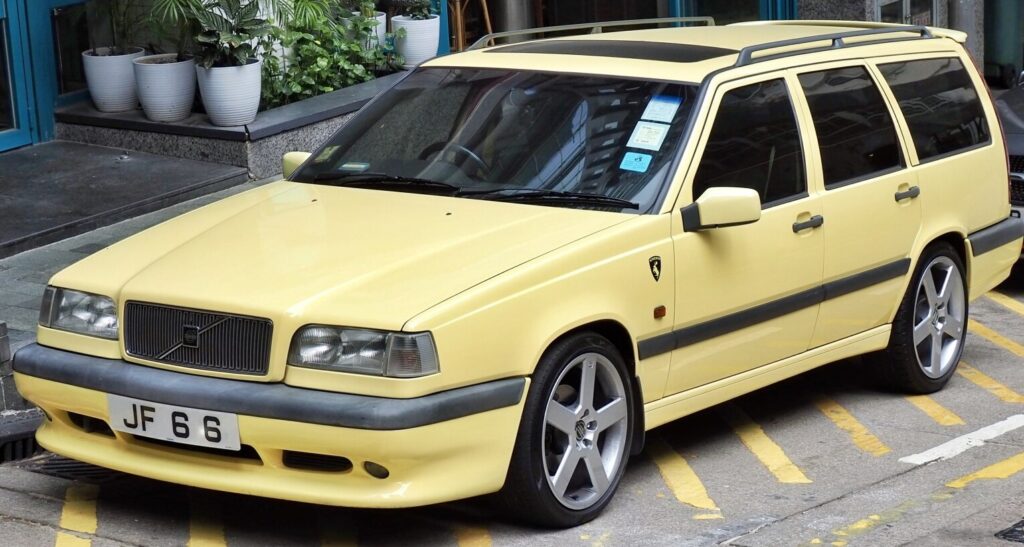
The Volvo 850 Combi 2.5 20V, produced between 1994 and 1996, represents a pivotal moment in Volvo’s history. This variant of the 850 series, built on the P80 platform (internally designated LW for the Combi/estate body style), successfully blended practicality with a surprisingly sporty driving experience. It was a key model in establishing Volvo’s reputation for safe, reliable, and versatile vehicles, particularly within the European market where station wagons held significant popularity. In the United States, the 850 Combi offered a unique alternative to the growing SUV segment, appealing to buyers seeking cargo space without sacrificing the driving dynamics of a car.
Technical Specifications
| Brand | Volvo |
| Model | 850 |
| Generation | 850 Combi (LW) |
| Type (Engine) | 2.5 20V (170 Hp) |
| Start of production | 1994 |
| End of production | 1996 |
| Powertrain Architecture | Internal Combustion engine |
| Body type | Station wagon (estate) |
| Seats | 5 |
| Doors | 5 |
| Fuel consumption (combined) | 9.2 l/100 km (25.6 US mpg, 30.7 UK mpg, 10.9 km/l) |
| Fuel Type | Petrol (Gasoline) |
| Acceleration 0 – 100 km/h | 9.5 sec |
| Acceleration 0 – 62 mph | 9.5 sec |
| Acceleration 0 – 60 mph | 9 sec |
| Maximum speed | 210 km/h (130.49 mph) |
| Weight-to-power ratio | 8.4 kg/Hp, 119.5 Hp/tonne |
| Weight-to-torque ratio | 6.5 kg/Nm, 154.6 Nm/tonne |
| Power | 170 Hp @ 6100 rpm |
| Power per litre | 69.8 Hp/l |
| Torque | 220 Nm @ 4700 rpm (162.26 lb.-ft. @ 4700 rpm) |
| Engine layout | Front, Transverse |
| Engine Model/Code | B5254S |
| Engine displacement | 2435 cm3 (148.59 cu. in.) |
| Number of cylinders | 5 |
| Engine configuration | Inline |
| Cylinder Bore | 83 mm (3.27 in.) |
| Piston Stroke | 90 mm (3.54 in.) |
| Compression ratio | 10.3:1 |
| Number of valves per cylinder | 4 |
| Fuel injection system | Multi-port manifold injection |
| Engine aspiration | Naturally aspirated engine |
| Valvetrain | DOHC |
| Engine oil capacity | 5.3 l (5.6 US qt | 4.66 UK qt) |
| Coolant | 7.2 l (7.61 US qt | 6.34 UK qt) |
| Kerb Weight | 1423 kg (3137.18 lbs.) |
| Max. weight | 1970 kg (4343.11 lbs.) |
| Max load | 547 kg (1205.93 lbs.) |
| Trunk (boot) space – minimum | 420 l (14.83 cu. ft.) |
| Trunk (boot) space – maximum | 1580 l (55.8 cu. ft.) |
| Fuel tank capacity | 73 l (19.28 US gal | 16.06 UK gal) |
| Length | 4709 mm (185.39 in.) |
| Width | 1761 mm (69.33 in.) |
| Height | 1415 mm (55.71 in.) |
| Wheelbase | 2670 mm (105.12 in.) |
| Front track | 1520 mm (59.84 in.) |
| Rear (Back) track | 1470 mm (57.87 in.) |
| Drivetrain Architecture | The Internal combustion engine (ICE) drives the front wheels of the vehicle. |
| Drive wheel | Front wheel drive |
| Number of gears and type of gearbox | 5 gears, manual transmission |
| Front suspension | Wishbone |
| Rear suspension | Coil spring |
| Front brakes | Ventilated discs |
| Rear brakes | Disc |
| Assisting systems | ABS (Anti-lock braking system) |
| Steering type | Steering rack and pinion |
| Power steering | Hydraulic Steering |
| Tires size | 195/60 R15 |
| Wheel rims size | 15 |
Powertrain & Engine Architecture
The heart of the 850 Combi 2.5 20V is the B5254S engine, a naturally aspirated, 2.5-liter inline five-cylinder gasoline engine. This engine was a hallmark of Volvo’s engineering during the 1990s, known for its smoothness and inherent balance due to the odd number of cylinders. The “20V” designation indicates the engine features four valves per cylinder, contributing to its improved breathing and power output. Fuel delivery is managed by a Bosch multi-port fuel injection system, providing precise fuel metering for optimal combustion. The engine utilizes a double overhead camshaft (DOHC) valvetrain, further enhancing its volumetric efficiency. The B5254S produces 170 horsepower at 6100 rpm and 220 Nm (162 lb-ft) of torque at 4700 rpm. This power is delivered to the front wheels through a robust 5-speed manual transmission, which was the standard offering for this trim level.
Driving Characteristics
The 850 Combi 2.5 20V offered a compelling blend of performance and practicality. While not a sports car, the 170 hp engine provided brisk acceleration, achieving 0-60 mph in around 9 seconds. The manual transmission allowed for engaging driver control, and the front-wheel-drive layout offered predictable handling. Compared to the base 850 models with smaller engines, the 2.5 20V provided a noticeable improvement in responsiveness, making it more suitable for highway cruising and carrying a full load. The gear ratios were well-chosen to balance acceleration and fuel economy, with fifth gear providing a comfortable cruising speed. The inline-five engine’s unique sound also contributed to the driving experience, offering a distinctive exhaust note.
Equipment & Trim Levels
The 850 Combi 2.5 20V typically came well-equipped, reflecting Volvo’s commitment to safety and comfort. Standard features included power windows and locks, central locking, a tilt and telescopic steering wheel, and a basic audio system. Interior upholstery was typically cloth, though leather options were available. Safety features were paramount, with standard ABS brakes and a driver’s side airbag. Optional extras included a sunroof, upgraded audio systems, and climate control. The trim level generally sat in the mid-range of the 850 lineup, offering a good balance of features and price.
Chassis & Braking
The 850 Combi featured a MacPherson strut front suspension and a coil spring rear suspension. This setup provided a comfortable ride while maintaining reasonable handling characteristics. The front brakes were ventilated discs, offering strong stopping power, while the rear brakes were solid discs. The chassis was reinforced to handle the increased weight and demands of the station wagon body style. The steering was a rack-and-pinion system with hydraulic power assistance, providing precise and responsive steering feel.
Market Reception & Comparison
The 850 Combi 2.5 20V was generally well-received by automotive critics. It was praised for its spacious interior, versatile cargo area, and comfortable ride. The engine was considered powerful enough for most driving situations, and the manual transmission was appreciated for its engaging feel. Compared to other station wagons of the time, the 850 Combi stood out for its distinctive styling and strong safety credentials. Fuel economy was respectable for a vehicle of its size and performance, averaging around 25.6 mpg in combined driving. Compared to the turbocharged 850 T-5, the 2.5 20V offered a more affordable entry point into the 850 range, albeit with less outright performance.
Legacy
The Volvo 850 Combi 2.5 20V has proven to be a durable and reliable vehicle. The B5254S engine is known for its longevity, and with proper maintenance, can easily exceed 200,000 miles. Today, the 850 Combi is gaining popularity among enthusiasts and collectors, appreciated for its unique character and practicality. Parts availability is generally good, and the relatively simple mechanical design makes it a relatively easy vehicle to maintain. The 850 Combi 2.5 20V represents a significant chapter in Volvo’s history, showcasing the brand’s commitment to building safe, reliable, and versatile vehicles.
