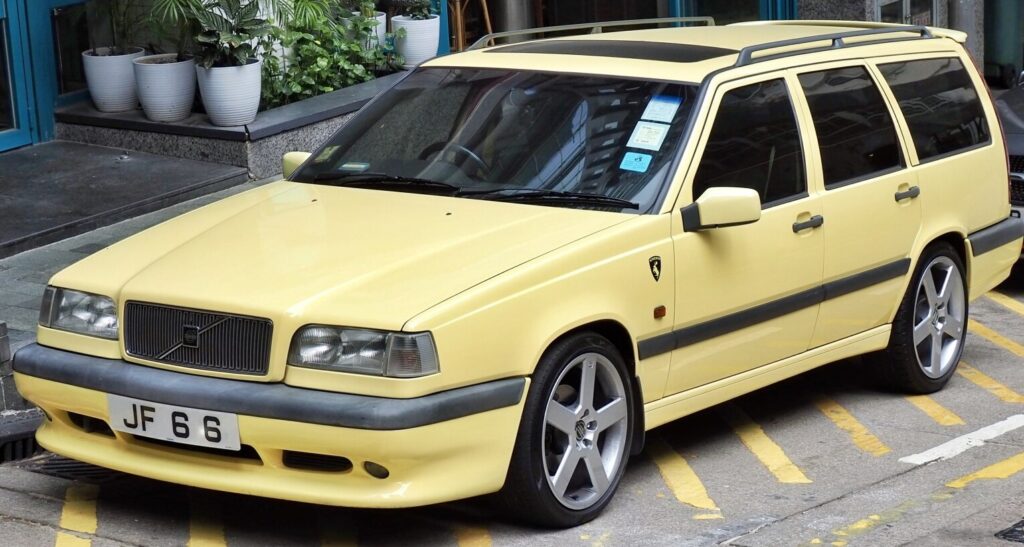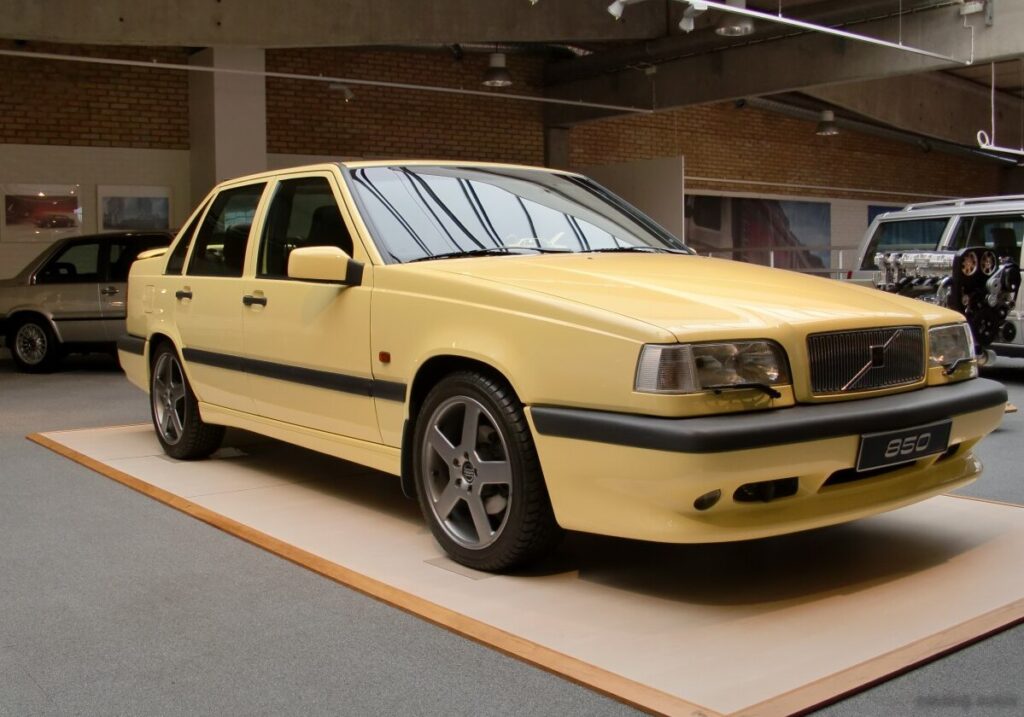
The Volvo 850 2.0 10V, producing 126 horsepower, was a key variant in the first generation of the 850 series, produced between 1993 and 1997. Representing a significant departure from Volvo’s traditionally conservative designs, the 850 aimed to attract a younger demographic while maintaining the brand’s reputation for safety and durability. This particular engine and transmission combination – the 2.0-liter inline-five with a five-speed manual gearbox – served as a popular entry point into the 850 range, offering a balance of affordability and Volvo’s characteristic refinement. It was built on the P80 platform, which would later underpin the S70 and V70 models.
Technical Specifications
| Brand | Volvo |
| Model | 850 |
| Generation | 850 (LS) |
| Type (Engine) | 2.0 10V (126 Hp) |
| Start of production | 1993 |
| End of production | 1997 |
| Powertrain Architecture | Internal Combustion engine |
| Body type | Sedan |
| Seats | 5 |
| Doors | 4 |
| Fuel consumption (combined) | 9.1 l/100 km |
| Fuel consumption (US mpg) | 25.8 US mpg |
| Fuel consumption (UK mpg) | 31 UK mpg |
| Fuel consumption (km/l) | 11 km/l |
| Fuel Type | Petrol (Gasoline) |
| Acceleration 0 – 100 km/h | 11.7 sec |
| Acceleration 0 – 62 mph | 11.7 sec |
| Acceleration 0 – 60 mph | 11.1 sec |
| Maximum speed | 195 km/h (121.17 mph) |
| Weight-to-power ratio | 10.8 kg/Hp |
| Hp/tonne | 92.3 Hp/tonne |
| Weight-to-torque ratio | 8 kg/Nm |
| Nm/tonne | 124.5 Nm/tonne |
| Power | 126 Hp @ 6250 rpm |
| Power per litre | 63.5 Hp/l |
| Torque | 170 Nm @ 4800 rpm (125.39 lb.-ft. @ 4800 rpm) |
| Engine layout | Front, Transverse |
| Engine Model/Code | B5202FS |
| Engine displacement | 1984 cm3 (121.07 cu. in.) |
| Number of cylinders | 5 |
| Engine configuration | Inline |
| Cylinder Bore | 81 mm (3.19 in.) |
| Piston Stroke | 77 mm (3.03 in.) |
| Compression ratio | 10:1 |
| Number of valves per cylinder | 2 |
| Fuel injection system | Multi-port manifold injection |
| Engine aspiration | Naturally aspirated engine |
| Valvetrain | DOHC |
| Engine oil capacity | 5.3 l (5.6 US qt | 4.66 UK qt) |
| Coolant capacity | 7.2 l (7.61 US qt | 6.34 UK qt) |
| Kerb Weight | 1365 kg (3009.31 lbs.) |
| Max. weight | 1840 kg (4056.51 lbs.) |
| Max load | 475 kg (1047.2 lbs.) |
| Trunk (boot) space – minimum | 445 l (15.72 cu. ft.) |
| Fuel tank capacity | 73 l (19.28 US gal | 16.06 UK gal) |
| Length | 4660 mm (183.46 in.) |
| Width | 1761 mm (69.33 in.) |
| Height | 1415 mm (55.71 in.) |
| Wheelbase | 2665 mm (104.92 in.) |
| Front track | 1520 mm (59.84 in.) |
| Rear track | 1470 mm (57.87 in.) |
| Drivetrain Architecture | The Internal combustion engine (ICE) drives the front wheels of the vehicle. |
| Drive wheel | Front wheel drive |
| Number of gears | 5 gears, manual transmission |
| Front suspension | Wishbone |
| Rear suspension | Coil spring |
| Front brakes | Ventilated discs |
| Rear brakes | Disc |
| Assisting systems | ABS (Anti-lock braking system) |
| Steering type | Steering rack and pinion |
| Power steering | Hydraulic Steering |
| Tires size | 185/65 R15 |
| Wheel rims size | 6J x 15 |
Powertrain & Engine Architecture
The heart of the 850 2.0 was the B5202FS engine, a naturally aspirated, inline-five cylinder powerplant. This engine was notable for its relatively smooth operation and distinctive sound, a characteristic of five-cylinder engines. The 10-valve configuration (two valves per cylinder) was a cost-effective design choice, contributing to the variant’s affordability. Fuel delivery was managed by a multi-port fuel injection system, providing precise fuel metering for improved efficiency and emissions control. The engine utilized a double overhead camshaft (DOHC) valvetrain, enhancing volumetric efficiency and contributing to the engine’s respectable power output for its displacement. The five-speed manual transmission offered precise shifts and allowed drivers to fully utilize the engine’s power band. This transmission was chosen for its durability and relatively low cost.
Driving Characteristics
The 850 2.0 10V, with its 126 horsepower and 170 Nm (125 lb-ft) of torque, provided adequate, though not exhilarating, performance. Acceleration from 0 to 60 mph took around 11.1 seconds, and top speed was approximately 121 mph. Compared to the higher-output 850 T5 (turbocharged) models, the 2.0 felt noticeably slower, particularly during overtaking maneuvers. However, the naturally aspirated engine offered a more linear power delivery, making it easier to modulate throttle response. The five-speed manual transmission provided a good spread of gears, allowing the driver to keep the engine in its optimal power range. While not a sports car, the 850 2.0 offered a comfortable and composed driving experience, typical of Volvo’s focus on ride quality and refinement.
Equipment & Trim Levels
The 850 2.0 10V typically came with a reasonable level of standard equipment. This included power steering, ABS brakes, central locking, and a basic audio system. Interior upholstery was typically cloth, with a functional and durable design. Optional extras included power windows, a sunroof, upgraded audio systems, and leather upholstery. The trim level, often referred to as the “LS” in some markets, represented a mid-range offering within the 850 lineup, positioned above the base model but below the more luxurious and performance-oriented T5 variants.
Chassis & Braking
The 850 2.0 featured a front-wheel-drive layout with independent wishbone suspension at the front and a coil spring rear suspension. This setup provided a comfortable ride and predictable handling. The braking system consisted of ventilated discs at the front and solid discs at the rear, providing adequate stopping power for the vehicle’s weight and performance. ABS was standard, enhancing braking safety, particularly in adverse conditions. The chassis was designed with safety in mind, incorporating reinforced body structures and crumple zones to protect occupants in the event of a collision.
Market Reception & Comparison
The Volvo 850 2.0 10V was generally well-received by critics as a practical and safe family sedan. It was praised for its comfortable ride, spacious interior, and Volvo’s renowned safety features. However, some reviewers noted that the engine lacked the punch of the turbocharged models. Fuel economy was considered reasonable for its class, averaging around 25.8 US mpg. Compared to other trims, the 2.0 offered a more affordable entry point into the 850 range, making it attractive to budget-conscious buyers. The 850 T5, with its turbocharger, offered significantly more performance but came at a higher price point. The 850 TDI, with its diesel engine, provided better fuel economy but lacked the refinement of the gasoline-powered 2.0.
Legacy
The Volvo 850 2.0 10V has proven to be a relatively reliable vehicle, with many examples still on the road today. The B5202FS engine is known for its durability, although regular maintenance is essential to prevent issues such as oil leaks and timing belt failure. In the used car market, the 850 2.0 represents a good value proposition, offering a comfortable and safe driving experience at an affordable price. While not a collector’s item like some of the more rare 850 variants, the 2.0 remains a popular choice for those seeking a classic Volvo with a reputation for dependability.