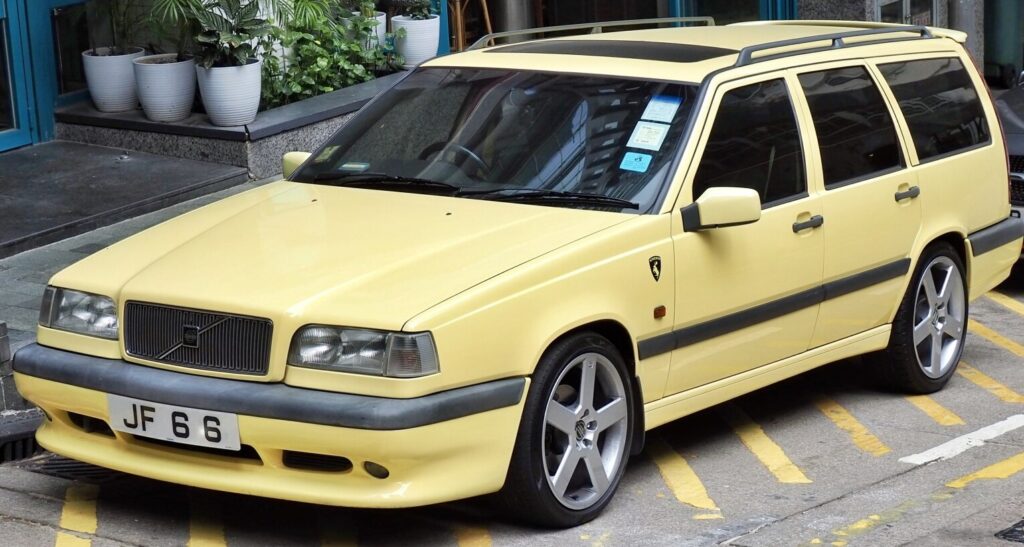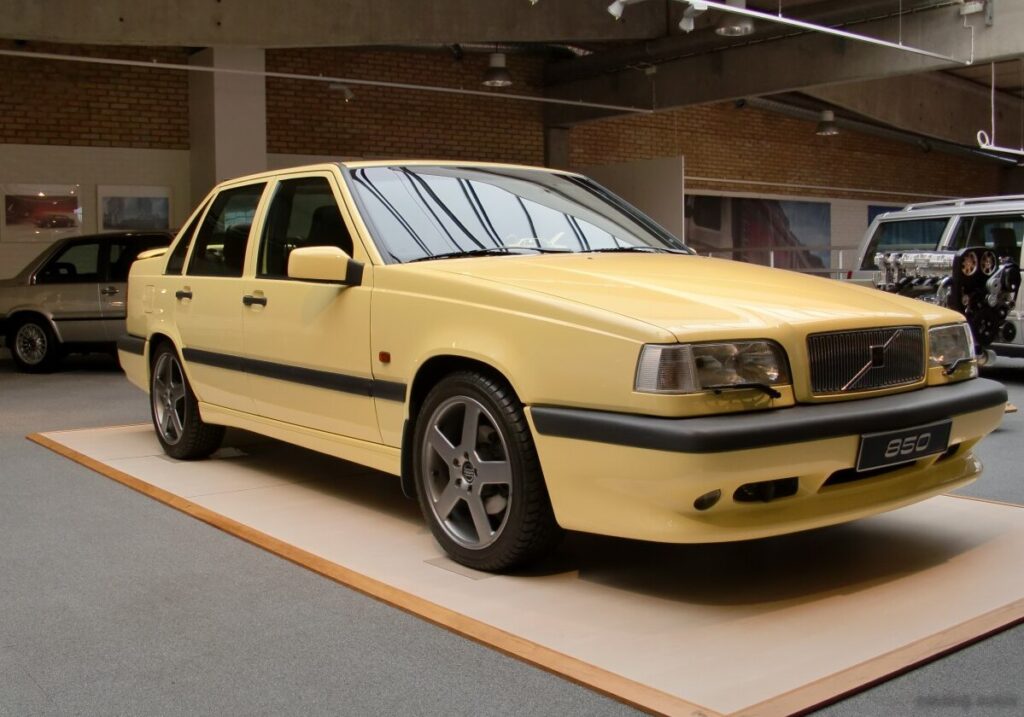
The Volvo 850 T-5, produced between 1993 and 1997, represented a significant departure for the traditionally conservative Swedish automaker. It was Volvo’s first front-wheel drive vehicle, and the introduction of the turbocharged 2.3-liter five-cylinder engine in the T-5 variant signaled a newfound focus on performance. Positioned as the sporty offering within the 850 range, the T-5 aimed to attract a younger demographic while retaining Volvo’s reputation for safety and durability. The 850 series, built on Volvo’s new P80 platform, was a watershed moment for the company, paving the way for future models like the S70 and V70. This article will focus specifically on the 850 2.3 T-5 variant with the five-speed manual transmission, examining its technical specifications, driving characteristics, and place in automotive history.
Technical Specifications
| Brand | Volvo |
| Model | 850 |
| Generation | 850 (LS) |
| Type (Engine) | 2.3 T5 (225 Hp) |
| Start of production | 1993 |
| End of production | 1997 |
| Powertrain Architecture | Internal Combustion engine |
| Body type | Sedan |
| Seats | 5 |
| Doors | 4 |
| Fuel consumption (combined) | 9.4 l/100 km (25 US mpg, 30.1 UK mpg, 10.6 km/l) |
| Fuel Type | Petrol (Gasoline) |
| Acceleration 0 – 100 km/h | 7.4 sec |
| Acceleration 0 – 62 mph | 7.4 sec |
| Acceleration 0 – 60 mph | 7 sec |
| Maximum speed | 240 km/h (149.13 mph) |
| Weight-to-power ratio | 6.2 kg/Hp, 160.8 Hp/tonne |
| Weight-to-torque ratio | 4.7 kg/Nm, 214.4 Nm/tonne |
| Power | 225 Hp @ 5280 rpm |
| Power per litre | 97 Hp/l |
| Torque | 300 Nm @ 2000 rpm (221.27 lb.-ft. @ 2000 rpm) |
| Engine layout | Front, Transverse |
| Engine Model/Code | B5234T |
| Engine displacement | 2319 cm3 (141.51 cu. in.) |
| Number of cylinders | 5 |
| Engine configuration | Inline |
| Cylinder Bore | 81 mm (3.19 in.) |
| Piston Stroke | 90 mm (3.54 in.) |
| Compression ratio | 8.5:1 |
| Number of valves per cylinder | 4 |
| Fuel injection system | Multi-port manifold injection |
| Engine aspiration | Turbocharger |
| Valvetrain | DOHC |
| Engine oil capacity | 5.3 l (5.6 US qt | 4.66 UK qt) |
| Coolant | 7 l (7.4 US qt | 6.16 UK qt) |
| Kerb Weight | 1399 kg (3084.27 lbs.) |
| Max. weight | 1870 kg (4122.64 lbs.) |
| Max load | 471 kg (1038.38 lbs.) |
| Trunk (boot) space – minimum | 445 l (15.72 cu. ft.) |
| Fuel tank capacity | 73 l (19.28 US gal | 16.06 UK gal) |
| Length | 4660 mm (183.46 in.) |
| Width | 1760 mm (69.29 in.) |
| Height | 1400 mm (55.12 in.) |
| Wheelbase | 2665 mm (104.92 in.) |
| Front track | 1520 mm (59.84 in.) |
| Rear (Back) track | 1470 mm (57.87 in.) |
| Drivetrain Architecture | The Internal combustion engine (ICE) drives the front wheels of the vehicle. |
| Drive wheel | Front wheel drive |
| Number of gears and type of gearbox | 5 gears, manual transmission |
| Front suspension | Wishbone |
| Rear suspension | Coil spring |
| Front brakes | Ventilated discs |
| Rear brakes | Disc |
| Assisting systems | ABS (Anti-lock braking system) |
| Steering type | Steering rack and pinion |
| Power steering | Hydraulic Steering |
| Tires size | 205/50 R16 |
| Wheel rims size | 16 |
Introduction
The Volvo 850 T-5, launched in 1993, was a pivotal model for the Swedish manufacturer. It represented a bold move away from the company’s traditional rear-wheel drive layout and a commitment to embracing forced induction for enhanced performance. The T-5 variant, powered by the 2.3-liter turbocharged five-cylinder engine, quickly became the enthusiast’s choice within the 850 lineup. It offered a compelling blend of practicality, safety, and surprisingly capable performance, challenging established European sports sedans. The 850 T-5 was available in sedan, wagon, and coupe body styles, with the sedan being the most common. The introduction of the T-5 engine significantly elevated the 850’s image, attracting a wider customer base and setting the stage for Volvo’s future performance models.
Powertrain & Engine Architecture
The heart of the 850 T-5 is the B5234T engine, a 2.3-liter inline-five cylinder powerplant. This engine is notable for its robust construction and over-engineered nature, a hallmark of Volvo engineering. The B5234T utilizes a Mitsubishi TD04HL-13C turbocharger with an intercooler, boosting power output to 225 horsepower and 221 lb-ft of torque. Fuel delivery is managed by Bosch multi-port fuel injection, and the engine features a double overhead camshaft (DOHC) valvetrain with four valves per cylinder. The engine’s relatively low 8.5:1 compression ratio helps to mitigate the effects of turbocharger boost. The five-speed manual transmission, a Getrag unit, was well-matched to the engine’s power characteristics, providing crisp shifts and a direct connection to the drivetrain. The engine code, B5234T, is crucial for identifying specific parts and maintenance requirements.
Driving Characteristics
The 850 T-5 with the five-speed manual transmission delivers a surprisingly engaging driving experience. While not a dedicated sports car, the turbocharger provides a noticeable surge of power in the mid-range, making overtaking and highway merging effortless. The front-wheel drive layout can exhibit some torque steer under hard acceleration, but this is generally manageable. The gear ratios are well-chosen, providing good acceleration in each gear. Compared to the non-turbocharged 850 models, the T-5 offers a significantly more responsive and dynamic driving experience. The manual transmission allows for greater driver control, while the automatic transmission versions, though more convenient, felt somewhat less engaging and slightly slower in acceleration. The suspension, tuned for comfort, provides a reasonably compliant ride, but body roll is noticeable during aggressive cornering.
Equipment & Trim Levels
The 850 T-5 typically came well-equipped, even by 1990s standards. Standard features included power windows, power locks, a sunroof, and air conditioning. Higher trim levels offered leather upholstery, heated front seats, and a premium sound system. Optional extras included automatic climate control, a CD changer, and alloy wheels. The interior design was typically Scandinavian – functional, minimalist, and focused on ergonomics. Safety features were, naturally, a priority, with standard ABS brakes and available side airbags. The dashboard layout was straightforward and easy to use, with clearly marked controls.
Chassis & Braking
The 850 T-5 utilizes a MacPherson strut front suspension and a multi-link rear suspension, providing a good balance of ride comfort and handling. The chassis is relatively stiff, contributing to the car’s overall stability. Braking duties are handled by ventilated discs at the front and solid discs at the rear, with ABS standard. The braking system is generally effective, providing adequate stopping power for the car’s weight and performance. Stabilizer bars are fitted front and rear to reduce body roll during cornering.
Market Reception & Comparison
The 850 T-5 was generally well-received by automotive critics. It was praised for its performance, safety, and practicality. However, some critics noted the front-wheel drive layout and the potential for torque steer. Compared to other turbocharged sedans of the era, such as the Saab 900 Turbo, the 850 T-5 offered a more refined and comfortable driving experience. Fuel economy was reasonable for a turbocharged vehicle, averaging around 25 mpg in mixed driving. Reliability was generally good, although the turbocharger and associated components required regular maintenance.
Legacy
The Volvo 850 T-5 holds a special place in automotive history as a pioneering model that helped to redefine Volvo’s image. Its robust powertrain and durable construction have ensured that many examples remain on the road today. The B5234T engine is known for its longevity and ability to withstand significant modifications. In the used car market, the 850 T-5 is a popular choice among enthusiasts seeking a classic Volvo with a performance edge. While maintenance costs can be higher than for some other vehicles of the same era, the 850 T-5’s unique character and driving experience make it a rewarding ownership proposition.