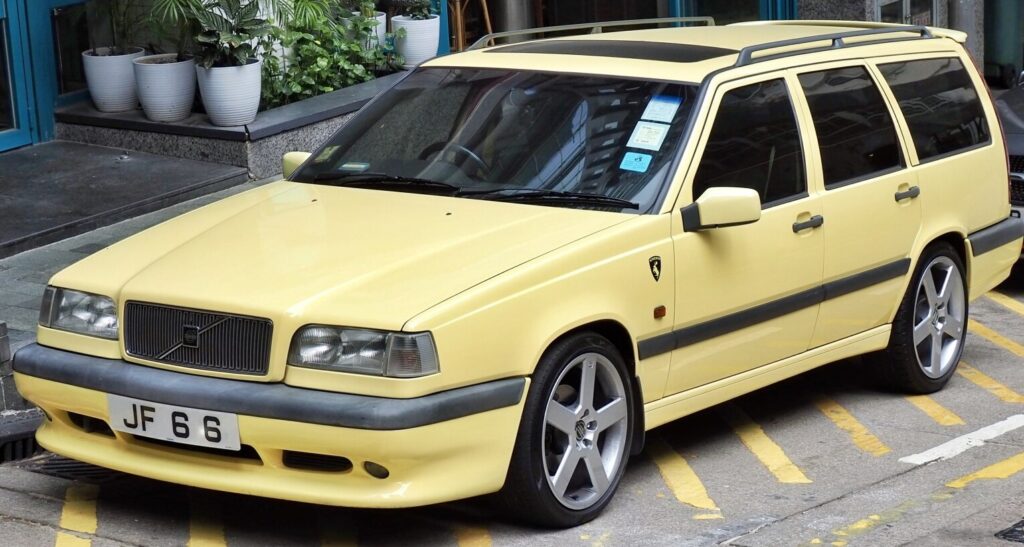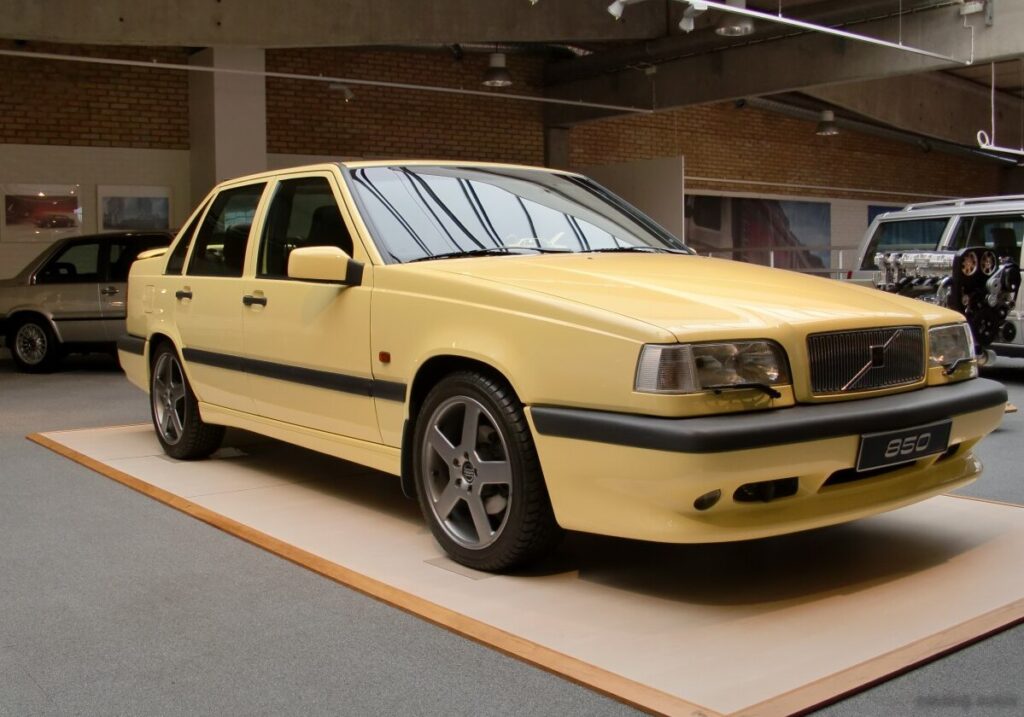
The Volvo 850 2.5 10V, producing 140 horsepower, represents a pivotal moment in Volvo’s history. Introduced in 1991 and continuing through 1994, this variant of the 850 series – part of the larger 850/C70 platform – was a key player in establishing Volvo as a maker of more dynamically engaging vehicles. It was offered primarily as a four-door sedan, though station wagon (estate) versions were also available. This particular engine and transmission combination occupied a middle ground in the 850 lineup, offering a balance between affordability, fuel economy, and acceptable performance for the average driver.
Technical Specifications
| Brand | Volvo |
| Model | 850 |
| Generation | 850 (LS) |
| Type (Engine) | 2.5 10V (140 Hp) |
| Start of production | 1991 |
| End of production | 1994 |
| Powertrain Architecture | Internal Combustion engine |
| Body type | Sedan |
| Seats | 5 |
| Doors | 4 |
| Fuel consumption (urban) | 11.7 l/100 km (20.1 US mpg) |
| Fuel consumption (extra urban) | 6.4 l/100 km (36.8 US mpg) |
| Fuel Type | Petrol (Gasoline) |
| Acceleration 0 – 100 km/h | 10.3 sec |
| Acceleration 0 – 62 mph | 10.3 sec |
| Acceleration 0 – 60 mph | 9.8 sec |
| Maximum speed | 202 km/h (125.52 mph) |
| Weight-to-power ratio | 9.5 kg/Hp |
| Weight-to-torque ratio | 6.5 kg/Nm |
| Power | 140 Hp @ 5400 rpm |
| Power per litre | 57.5 Hp/l |
| Torque | 206 Nm @ 3600 rpm (151.94 lb.-ft. @ 3600 rpm) |
| Engine layout | Front, Transverse |
| Engine Model/Code | B5252FS |
| Engine displacement | 2435 cm3 (148.59 cu. in.) |
| Number of cylinders | 5 |
| Engine configuration | Inline |
| Cylinder Bore | 83 mm (3.27 in.) |
| Piston Stroke | 90 mm (3.54 in.) |
| Compression ratio | 10.5:1 |
| Number of valves per cylinder | 4 |
| Fuel injection system | Multi-port manifold injection |
| Engine aspiration | Naturally aspirated engine |
| Valvetrain | DOHC |
| Engine oil capacity | 5.3 l (5.6 US qt | 4.66 UK qt) |
| Coolant | 7.2 l (7.61 US qt | 6.34 UK qt) |
| Kerb Weight | 1330 kg (2932.15 lbs.) |
| Max. weight | 1820 kg (4012.41 lbs.) |
| Max load | 490 kg (1080.27 lbs.) |
| Trunk (boot) space – minimum | 445 l (15.72 cu. ft.) |
| Fuel tank capacity | 73 l (19.28 US gal | 16.06 UK gal) |
| Length | 4660 mm (183.46 in.) |
| Width | 1761 mm (69.33 in.) |
| Height | 1415 mm (55.71 in.) |
| Wheelbase | 2665 mm (104.92 in.) |
| Front track | 1520 mm (59.84 in.) |
| Rear (Back) track | 1470 mm (57.87 in.) |
| Drivetrain Architecture | The Internal combustion engine (ICE) drives the front wheels of the vehicle. |
| Drive wheel | Front wheel drive |
| Number of gears and type of gearbox | 5 gears, manual transmission |
| Front suspension | Wishbone |
| Rear suspension | Coil spring |
| Front brakes | Ventilated discs |
| Rear brakes | Disc |
| Assisting systems | ABS (Anti-lock braking system) |
| Steering type | Steering rack and pinion |
| Power steering | Hydraulic Steering |
| Tires size | 195/60 R15 |
| Wheel rims size | 15 |
Powertrain & Engine Architecture
The heart of the 850 2.5 10V is the B5252FS engine, a naturally aspirated, 2.4-liter inline-five cylinder powerplant. This engine was a departure for Volvo, which had traditionally favored four-cylinder and V6 configurations. The five-cylinder design offered a unique blend of smoothness and power. The engine utilized a multi-port fuel injection system, delivering fuel directly into the intake ports, and a double overhead camshaft (DOHC) valvetrain, optimizing airflow for improved performance. The 10-valve configuration (two valves per cylinder) was a cost-effective solution, contributing to the variant’s more accessible price point. The engine was transversely mounted, driving the front wheels. The 850 2.5 10V was typically paired with a five-speed manual transmission, but a four-speed automatic transmission was also available, and is the focus of this article. The automatic transmission, while providing convenience, did impact acceleration and fuel economy compared to the manual version.
Driving Characteristics
The 140 horsepower and 152 lb-ft of torque offered by the 2.5-liter engine and automatic transmission provided adequate, but not exhilarating, performance. Acceleration from 0-60 mph took around 9.8 seconds, making it competitive with other family sedans of the era. The automatic transmission featured relatively conservative gear ratios, prioritizing fuel efficiency and smooth operation over outright speed. Compared to the higher-output 850 models, such as the turbocharged variants, the 2.5 10V automatic felt noticeably slower, particularly during overtaking maneuvers. However, the automatic transmission made it a more comfortable and user-friendly option for daily commuting and long-distance driving. The engine delivered a reasonably linear power curve, making it predictable and easy to control.
Equipment & Trim Levels
The 850 2.5 10V automatic typically came with a respectable level of standard equipment. This included power windows, power door locks, a basic audio system, and cloth upholstery. Air conditioning was often standard, but could be optional depending on the specific market. Higher trim levels, often denoted by the “LS” designation, added features such as alloy wheels, upgraded interior trim, and a sunroof. Optional extras included leather upholstery, a premium audio system, and heated front seats. The interior design was typically functional and Scandinavian in its simplicity, prioritizing ergonomics and practicality over lavish styling.
Chassis & Braking
The 850 series utilized a MacPherson strut front suspension and a coil-sprung rear suspension. The suspension was tuned for a comfortable ride, absorbing bumps and imperfections in the road effectively. The 2.5 10V models typically featured ventilated disc brakes at the front and solid disc brakes at the rear. Anti-lock braking system (ABS) was standard, enhancing safety and control during emergency braking situations. The chassis was robust and well-engineered, providing a stable and secure driving experience. Stabilizer bars were fitted to both the front and rear axles to reduce body roll during cornering.
Market Reception & Comparison
The Volvo 850 2.5 10V automatic was generally well-received by automotive critics. It was praised for its comfortable ride, spacious interior, and strong safety features. However, some critics noted that the engine lacked the punch of the turbocharged variants and that the automatic transmission could feel sluggish at times. Compared to the 850 Turbo, the 2.5 10V offered significantly lower performance but also a lower purchase price and potentially better fuel economy. The 850 TDI diesel variant offered superior fuel economy but lacked the refinement of the gasoline engine. The 2.5 10V automatic appealed to buyers who prioritized comfort, practicality, and safety over outright performance.
Legacy
The Volvo 850 2.5 10V powertrain has proven to be remarkably durable and reliable over the long term. With proper maintenance, these engines can easily exceed 200,000 miles. The inline-five engine, while somewhat unusual, is known for its inherent balance and longevity. In the used car market today, the 850 2.5 10V automatic represents an affordable and practical option for those seeking a classic Volvo with a reputation for reliability. Parts availability is generally good, and the relatively simple mechanical design makes it a relatively easy car to maintain for DIY enthusiasts. The 850 series, and this variant in particular, helped to redefine Volvo’s image, moving it away from a purely safety-focused brand to one that also offered a compelling driving experience.