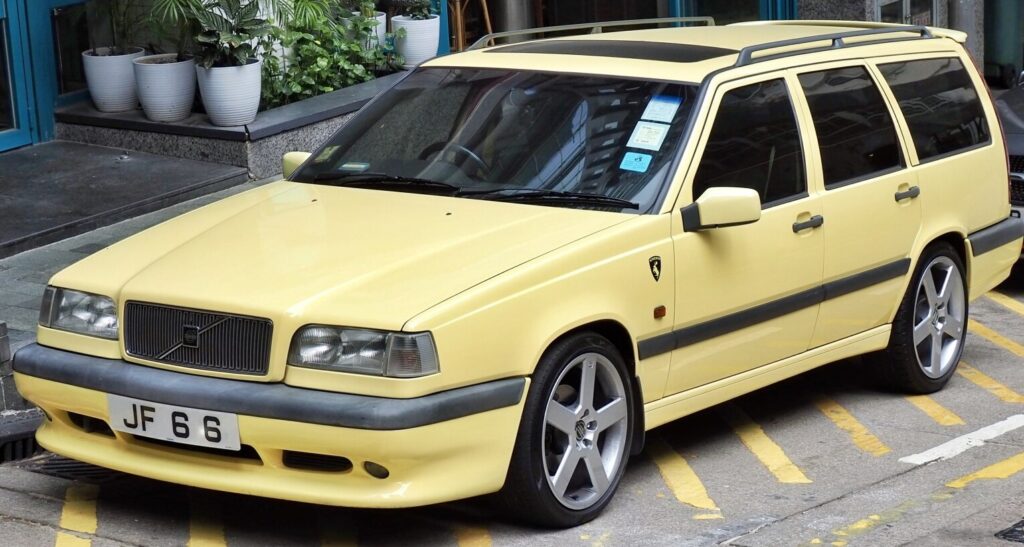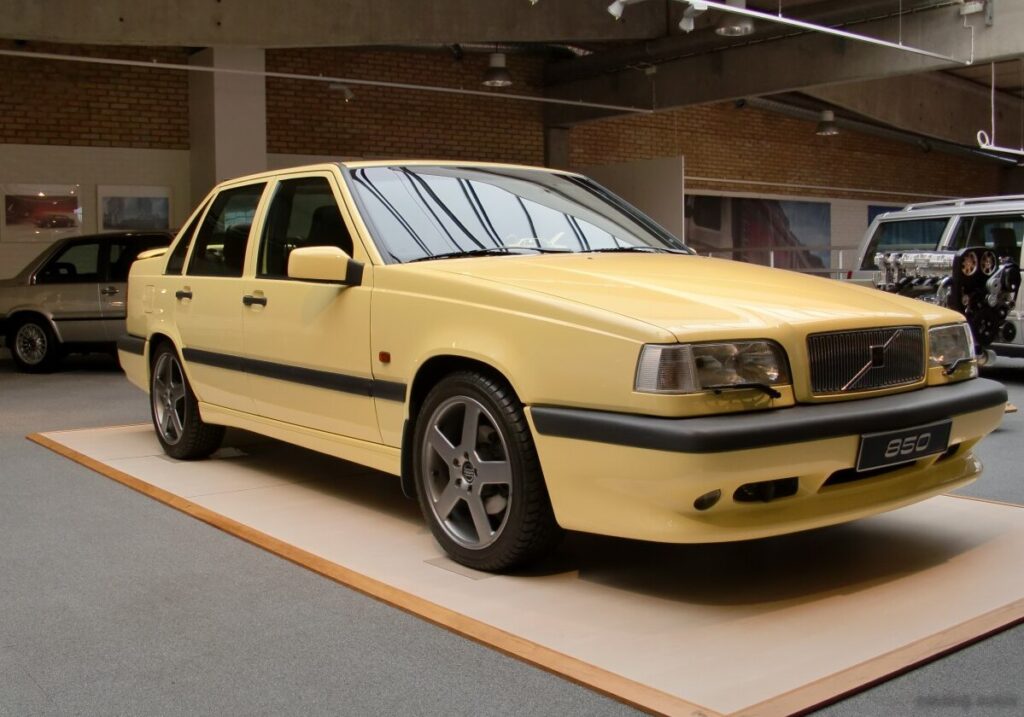
The Volvo 850 LS 2.5 10V, produced between 1994 and 1997, represented a significant departure for the traditionally conservative Swedish automaker. It was the first front-wheel drive vehicle offered by Volvo, and the 850 series as a whole aimed to broaden Volvo’s appeal beyond its established, safety-conscious customer base. The “LS” designation denoted a specific trim level, positioned as a mid-range offering within the 850 lineup. This variant, powered by the naturally aspirated 2.5-liter inline-five engine producing 144 horsepower, offered a balance between performance and affordability, making it a popular choice in both European and North American markets.
Technical Specifications
| Brand | Volvo |
| Model | 850 |
| Generation | 850 (LS) |
| Type (Engine) | 2.5 10V (144 Hp) |
| Start of production | 1994 |
| End of production | 1997 |
| Powertrain Architecture | Internal Combustion engine |
| Body type | Sedan |
| Seats | 5 |
| Doors | 4 |
| Fuel Type | Petrol (Gasoline) |
| Acceleration 0 – 100 km/h | 10 sec |
| Acceleration 0 – 62 mph | 10 sec |
| Acceleration 0 – 60 mph | 9.5 sec |
| Maximum speed | 205 km/h (127.38 mph) |
| Weight-to-power ratio | 9.5 kg/Hp, 105.5 Hp/tonne |
| Weight-to-torque ratio | 6.6 kg/Nm, 150.9 Nm/tonne |
| Power | 144 Hp @ 5400 rpm |
| Power per litre | 59.1 Hp/l |
| Torque | 206 Nm @ 3600 rpm (151.94 lb.-ft. @ 3600 rpm) |
| Engine layout | Front, Transverse |
| Engine Model/Code | B5252S |
| Engine displacement | 2435 cm3 (148.59 cu. in.) |
| Number of cylinders | 5 |
| Engine configuration | Inline |
| Cylinder Bore | 83 mm (3.27 in.) |
| Piston Stroke | 90 mm (3.54 in.) |
| Compression ratio | 10:1 |
| Number of valves per cylinder | 2 |
| Fuel injection system | Multi-port manifold injection |
| Engine aspiration | Naturally aspirated engine |
| Valvetrain | DOHC |
| Engine oil capacity | 5.3 l (5.6 US qt | 4.66 UK qt) |
| Coolant | 7.2 l (7.61 US qt | 6.34 UK qt) |
| Kerb Weight | 1365 kg (3009.31 lbs.) |
| Max. weight | 1840 kg (4056.51 lbs.) |
| Max load | 475 kg (1047.2 lbs.) |
| Trunk (boot) space – minimum | 455 l (16.07 cu. ft.) |
| Fuel tank capacity | 73 l (19.28 US gal | 16.06 UK gal) |
| Length | 4660 mm (183.46 in.) |
| Width | 1761 mm (69.33 in.) |
| Height | 1415 mm (55.71 in.) |
| Wheelbase | 2665 mm (104.92 in.) |
| Front track | 1520 mm (59.84 in.) |
| Rear (Back) track | 1470 mm (57.87 in.) |
| Drivetrain Architecture | The Internal combustion engine (ICE) drives the front wheels of the vehicle. |
| Drive wheel | Front wheel drive |
| Number of gears and type of gearbox | 5 gears, manual transmission |
| Front suspension | Wishbone |
| Rear suspension | Coil spring |
| Front brakes | Ventilated discs |
| Rear brakes | Disc |
| Assisting systems | ABS (Anti-lock braking system) |
| Steering type | Steering rack and pinion |
| Power steering | Hydraulic Steering |
| Tires size | 185/65 R15 |
| Wheel rims size | 15 |
Powertrain & Engine Architecture
The heart of the 850 LS was the B5252S engine, a 2.5-liter inline-five cylinder powerplant. This engine was notable for its relatively smooth operation and distinctive sound, a characteristic of five-cylinder engines. The engine featured a cast iron block and an aluminum cylinder head, employing a dual overhead camshaft (DOHC) valvetrain with two valves per cylinder. Fuel delivery was handled by a multi-port fuel injection system, providing precise fuel metering for improved efficiency and performance. The 10:1 compression ratio was a standard figure for the time, balancing power output with fuel economy. The engine was transversely mounted in the front of the vehicle, driving the front wheels. The five-speed manual transmission was the standard offering, providing drivers with full control over the engine’s power.
Driving Characteristics
The 850 LS 2.5 10V offered a comfortable and capable driving experience. With 144 horsepower and 152 lb-ft of torque, acceleration from 0-60 mph took approximately 9.5 seconds, which was competitive for its class in the mid-1990s. While not a sports car, the engine provided sufficient power for everyday driving and highway cruising. The five-speed manual transmission allowed for precise gear selection, and the front-wheel drive configuration offered good traction in most conditions. Compared to the higher-performance 850 T-5 (turbocharged), the LS felt less urgent in its acceleration, but it offered a more relaxed and fuel-efficient driving experience. The gear ratios were tuned for a balance between acceleration and fuel economy, with a relatively tall fifth gear for comfortable highway cruising.
Equipment & Trim Levels
The 850 LS trim level offered a good level of standard equipment. Interior features typically included cloth upholstery, power windows and locks, and a basic audio system. Air conditioning was usually standard, and options included a sunroof, upgraded audio systems, and leather upholstery. The dashboard layout was functional and straightforward, typical of Volvo’s design philosophy at the time. Safety features were, as always with Volvo, a priority, and the 850 LS came standard with ABS anti-lock brakes and a driver’s side airbag. Later models included a passenger airbag as standard equipment.
Chassis & Braking
The 850 LS utilized a MacPherson strut front suspension and a coil spring rear suspension. This setup provided a comfortable ride and predictable handling. The front suspension incorporated a stabilizer bar to reduce body roll during cornering. Braking duties were handled by ventilated discs at the front and solid discs at the rear. The ABS anti-lock braking system helped to maintain control during hard braking maneuvers. The chassis was designed to provide a good balance between rigidity and weight, contributing to the car’s overall stability.
Market Reception & Comparison
The Volvo 850 LS was generally well-received by automotive critics. It was praised for its comfortable ride, spacious interior, and strong safety features. However, some critics noted that the engine lacked the punch of the turbocharged models. Compared to other vehicles in its class, such as the Honda Accord and Toyota Camry, the 850 LS offered a more distinctive character and a stronger emphasis on safety. Fuel economy was respectable, averaging around 22-26 mpg in mixed driving. Reliability was generally good, although some owners reported issues with the electronic ignition system.
Legacy
The Volvo 850 LS, and the 850 series as a whole, played a pivotal role in Volvo’s evolution. It demonstrated Volvo’s willingness to embrace new technologies and expand its product range. The B5252S engine proved to be a durable and reliable powerplant, and many examples are still on the road today. In the used car market, the 850 LS represents a relatively affordable and practical option for those seeking a safe, comfortable, and distinctive vehicle. While not a collector’s item, well-maintained examples are appreciated by Volvo enthusiasts for their unique character and enduring quality. The 850 paved the way for future Volvo models, solidifying the brand’s reputation for safety and innovation.