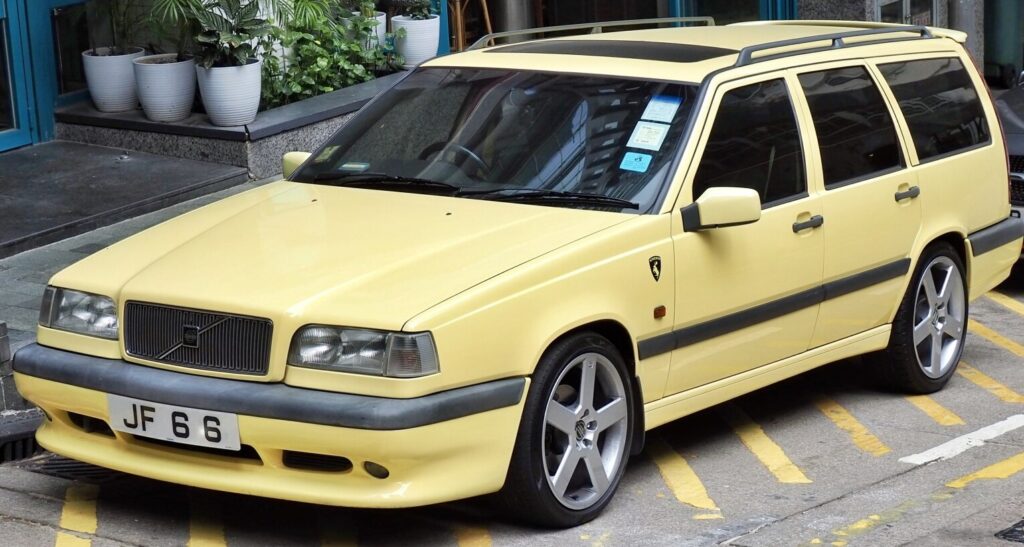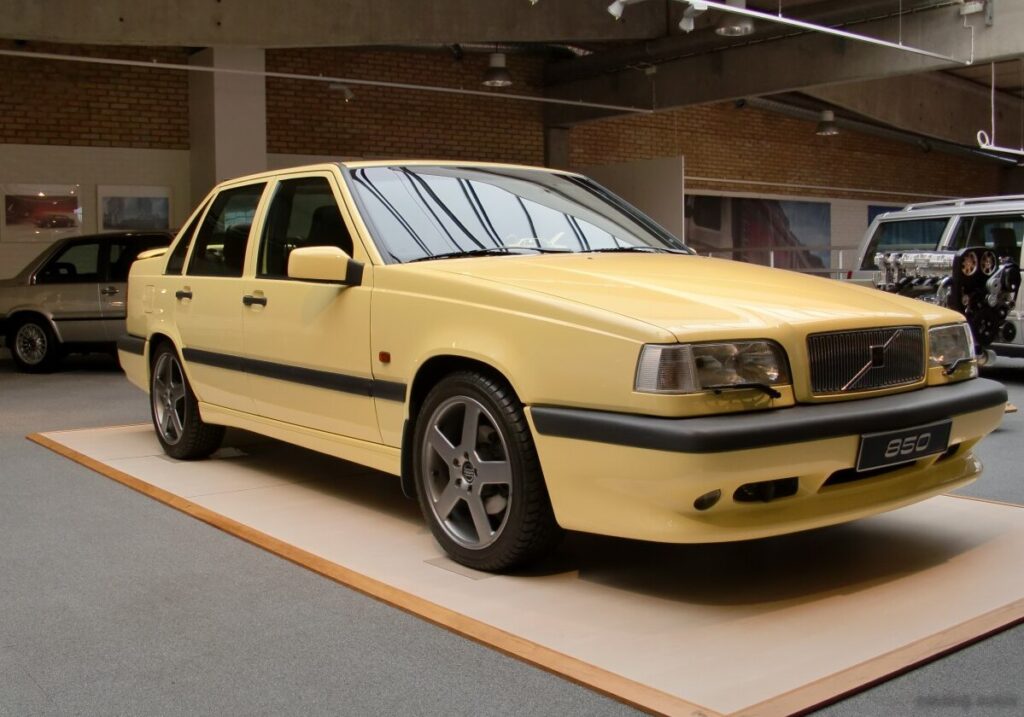
The Volvo 850 2.5 20V, produced between 1991 and 1997, represented a significant departure for the Swedish automaker. It was Volvo’s first front-wheel drive vehicle, a move that initially sparked debate among traditional Volvo enthusiasts but ultimately proved successful. The 850, built on the P80 platform, aimed to broaden Volvo’s appeal by offering a more modern and dynamic driving experience while retaining the brand’s renowned safety standards. The 2.5 20V variant, producing 170 horsepower, occupied a mid-range position within the 850 lineup, offering a balance between performance and affordability. It served as a popular choice for buyers seeking a comfortable and capable family sedan with a touch of sporting character.
Technical Specifications
| Brand | Volvo |
| Model | 850 |
| Generation | 850 (LS) |
| Type (Engine) | 2.5 20V (170 Hp) |
| Start of production | 1991 |
| End of production | 1997 |
| Powertrain Architecture | Internal Combustion engine |
| Body type | Sedan |
| Seats | 5 |
| Doors | 4 |
| Fuel consumption (urban) | 12 l/100 km (19.6 US mpg) |
| Fuel consumption (extra urban) | 7 l/100 km (33.6 US mpg) |
| Fuel consumption (combined) | 9 l/100 km (26.1 US mpg) |
| Fuel Type | Petrol (Gasoline) |
| Acceleration 0 – 100 km/h | 8.9 sec |
| Acceleration 0 – 62 mph | 8.9 sec |
| Acceleration 0 – 60 mph | 8.5 sec |
| Maximum speed | 215 km/h (133.59 mph) |
| Weight-to-power ratio | 8.1 kg/Hp |
| Weight-to-torque ratio | 6.3 kg/Nm |
| Power | 170 Hp @ 6100 rpm |
| Torque | 220 Nm @ 4700 rpm (162.26 lb.-ft. @ 4700 rpm) |
| Engine layout | Front, Transverse |
| Engine Model/Code | B5254S |
| Engine displacement | 2435 cm3 (148.59 cu. in.) |
| Number of cylinders | 5 |
| Engine configuration | Inline |
| Cylinder Bore | 83 mm (3.27 in.) |
| Piston Stroke | 90 mm (3.54 in.) |
| Compression ratio | 10.3:1 |
| Number of valves per cylinder | 4 |
| Fuel injection system | Multi-port manifold injection |
| Engine aspiration | Naturally aspirated engine |
| Valvetrain | DOHC |
| Engine oil capacity | 5.3 l (5.6 US qt | 4.66 UK qt) |
| Coolant capacity | 7.2 l (7.61 US qt | 6.34 UK qt) |
| Kerb Weight | 1375 kg (3031.36 lbs.) |
| Max. weight | 1840 kg (4056.51 lbs.) |
| Max load | 465 kg (1025.15 lbs.) |
| Trunk (boot) space – minimum | 445 l (15.72 cu. ft.) |
| Fuel tank capacity | 73 l (19.28 US gal | 16.06 UK gal) |
| Length | 4660 mm (183.46 in.) |
| Width | 1761 mm (69.33 in.) |
| Height | 1415 mm (55.71 in.) |
| Wheelbase | 2665 mm (104.92 in.) |
| Front track | 1520 mm (59.84 in.) |
| Rear track | 1470 mm (57.87 in.) |
| Drivetrain Architecture | Front wheel drive |
| Number of gears | 5 |
| Gearbox type | Manual transmission |
| Front suspension | Wishbone |
| Rear suspension | Coil spring |
| Front brakes | Ventilated discs |
| Rear brakes | Disc |
| Assisting systems | ABS (Anti-lock braking system) |
| Steering type | Steering rack and pinion |
| Power steering | Hydraulic Steering |
| Tires size | 195/60 R15 |
| Wheel rims size | 15 |
Powertrain & Engine Architecture
The heart of the 850 2.5 20V is the B5254S engine, a naturally aspirated, 2.435-liter inline-five cylinder powerplant. This engine was a key element in Volvo’s move towards more modern engine designs. The “20V” designation refers to the engine’s five cylinders each featuring four valves per cylinder (DOHC – Dual Overhead Camshafts), contributing to improved breathing and higher power output. Fuel delivery is managed by a multi-port fuel injection system, providing precise fuel metering for optimal combustion. The engine’s relatively high 10.3:1 compression ratio further enhances efficiency and performance. The 850 2.5 20V typically came equipped with a robust five-speed manual transmission, although a four-speed automatic was also available. The manual gearbox offered precise shifts and contributed to a more engaging driving experience, while the automatic provided convenience for everyday driving.
Driving Characteristics
The 170 horsepower and 162 lb-ft of torque produced by the B5254S engine provided the 850 2.5 20V with respectable performance. Acceleration from 0 to 60 mph took approximately 8.5 seconds, making it competitive with other mid-size sedans of the era. The inline-five engine delivered a unique exhaust note and a smooth power delivery, particularly in the mid-range. Compared to the higher-output turbocharged versions of the 850 (like the T5), the 2.5 20V offered a more relaxed and fuel-efficient driving experience. While not as quick, it provided ample power for everyday driving and highway cruising. The five-speed manual transmission allowed drivers to fully utilize the engine’s powerband, while the automatic, though less engaging, offered smooth and effortless gear changes.
Equipment & Trim Levels
The 850 2.5 20V was generally well-equipped, even in its base form. Standard features typically included power windows and locks, central locking, a basic audio system, and cloth upholstery. Higher trim levels, often designated as “LS” or “S,” added features such as leather upholstery, a sunroof, upgraded audio systems, and alloy wheels. Optional extras included automatic climate control, heated front seats, and a rear window wiper. The interior design was typically Scandinavian in its simplicity and functionality, prioritizing comfort and usability over flashy aesthetics.
Chassis & Braking
The 850 featured a MacPherson strut front suspension and a coil spring rear suspension. This setup provided a comfortable ride while maintaining reasonable handling characteristics. The 850 2.5 20V typically came equipped with ventilated disc brakes at the front and solid disc brakes at the rear, providing adequate stopping power. Anti-lock Braking System (ABS) was standard, enhancing safety by preventing wheel lockup during hard braking. The steering was rack-and-pinion with hydraulic power assistance, offering precise and responsive steering feel.
Market Reception & Comparison
The Volvo 850 2.5 20V was generally well-received by automotive critics. It was praised for its comfortable ride, spacious interior, and strong safety features. However, some critics noted that the styling was somewhat unconventional and that the performance, while adequate, wasn’t as exciting as some of its competitors. Compared to the turbocharged 850 T5, the 2.5 20V offered better fuel economy and lower maintenance costs. It also appealed to buyers who preferred a more understated and refined driving experience. The 1.9 TDI versions of competitor vehicles like the VW Passat offered comparable fuel economy, but the Volvo prioritized comfort and a more premium feel.
Legacy
The Volvo 850, and specifically the 2.5 20V variant, holds a significant place in Volvo’s history as the model that ushered in the era of front-wheel drive for the brand. The B5254S engine proved to be a reliable and durable powerplant, and many examples are still on the road today. While not as sought-after as the turbocharged T5 models, the 2.5 20V remains a popular choice for buyers seeking a comfortable, safe, and affordable classic Volvo. Its relatively simple mechanical design makes it easier and less expensive to maintain than more complex modern vehicles. In the used car market, well-maintained examples of the 850 2.5 20V can be found at reasonable prices, making it an attractive option for those looking for a classic European sedan.