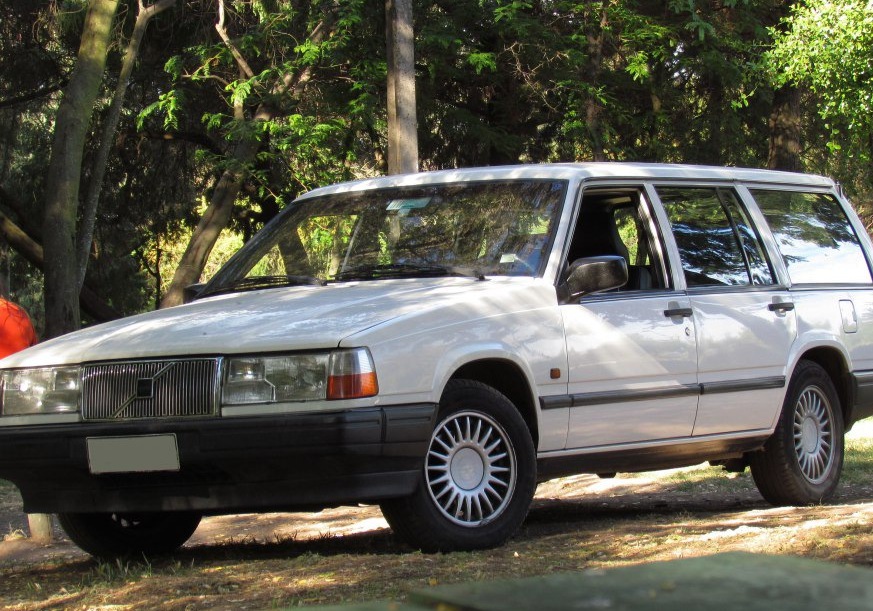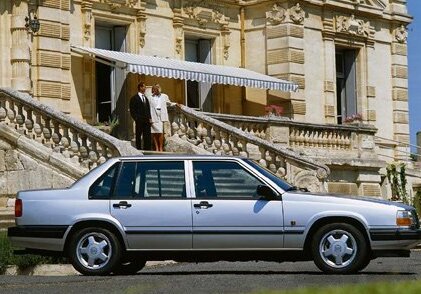
The Volvo 940 2.3i, produced between 1990 and 1998, represents the final iteration of Volvo’s highly successful 900 series. Positioned as a mid-range offering within the 940 lineup, the 2.3i (delivering 131 horsepower) provided a balance between performance and affordability. It served as a practical and durable family sedan, continuing Volvo’s reputation for safety and reliability. The 940, built on the P90 platform (internally designated 944 for the sedan), was a mainstay in Volvo’s portfolio during a period of significant automotive evolution, bridging the gap between traditional rear-wheel-drive layouts and the emerging front-wheel-drive dominance.
Technical Specifications
| Brand | Volvo |
| Model | 940 |
| Generation | 940 (944) |
| Type (Engine) | 2.3i (131 Hp) |
| Start of production | 1990 |
| End of production | 1998 |
| Powertrain Architecture | Internal Combustion engine |
| Body type | Sedan |
| Seats | 5 |
| Doors | 4 |
| Fuel consumption (urban) | 12.9 l/100 km (18.2 US mpg, 21.9 UK mpg, 7.8 km/l) |
| Fuel consumption (extra urban) | 7.1 l/100 km (33.1 US mpg, 39.8 UK mpg, 14.1 km/l) |
| Fuel consumption (combined) | 9.2 l/100 km (25.6 US mpg, 30.7 UK mpg, 10.9 km/l) |
| Fuel Type | Petrol (Gasoline) |
| Acceleration 0 – 100 km/h | 11.2 sec |
| Acceleration 0 – 62 mph | 11.2 sec |
| Acceleration 0 – 60 mph | 10.6 sec |
| Maximum speed | 190 km/h (118.06 mph) |
| Weight-to-power ratio | 10.4 kg/Hp, 96.3 Hp/tonne |
| Weight-to-torque ratio | 7.4 kg/Nm, 136 Nm/tonne |
| Power | 131 Hp @ 5500 rpm |
| Power per litre | 56.6 Hp/l |
| Torque | 185 Nm @ 2950 rpm (136.45 lb.-ft. @ 2950 rpm) |
| Engine layout | Front, Longitudinal |
| Engine Model/Code | B230FB |
| Engine displacement | 2316 cm3 (141.33 cu. in.) |
| Number of cylinders | 4 |
| Engine configuration | Inline |
| Cylinder Bore | 96 mm (3.78 in.) |
| Piston Stroke | 80 mm (3.15 in.) |
| Compression ratio | 9.3:1 |
| Number of valves per cylinder | 2 |
| Fuel injection system | Multi-port manifold injection |
| Engine aspiration | Naturally aspirated engine |
| Valvetrain | OHC |
| Engine oil capacity | 3.9 l (4.12 US qt | 3.43 UK qt) |
| Coolant | 9.3 l (9.83 US qt | 8.18 UK qt) |
| Kerb Weight | 1360 kg (2998.29 lbs.) |
| Max. weight | 1865 kg (4111.62 lbs.) |
| Max load | 505 kg (1113.33 lbs.) |
| Trunk (boot) space – minimum | 471 l (16.63 cu. ft.) |
| Fuel tank capacity | 75 l (19.81 US gal | 16.5 UK gal) |
| Length | 4871 mm (191.77 in.) |
| Width | 1750 mm (68.9 in.) |
| Height | 1425 mm (56.1 in.) |
| Wheelbase | 2770 mm (109.06 in.) |
| Front track | 1470 mm (57.87 in.) |
| Rear (Back) track | 1460 mm (57.48 in.) |
| Drivetrain Architecture | Rear wheel drive |
| Drive wheel | Rear wheel drive |
| Number of gears and type of gearbox | 5 gears, manual transmission |
| Front suspension | Wishbone |
| Rear suspension | Coil spring |
| Front brakes | Ventilated discs |
| Rear brakes | Disc |
| Assisting systems | ABS (Anti-lock braking system), Hydraulic Steering |
| Tires size | 185/65 R15 V |
| Wheel rims size | 15 |
Powertrain & Engine Architecture
The heart of the 940 2.3i is the B230FB engine, a 2.3-liter inline-four cylinder powerplant. This engine is a descendant of Volvo’s long-running “Redblock” family, known for its robustness and over-engineering. The ‘FB’ designation indicates a fuel-injected, Bosch-managed engine. It utilizes a multi-port fuel injection system, delivering fuel directly into the intake ports, improving efficiency and responsiveness compared to earlier carbureted versions. The engine features a single overhead camshaft (OHC) operating two valves per cylinder. The B230FB produces 131 horsepower at 5500 rpm and 185 Nm (136 lb-ft) of torque at 2950 rpm. The engine’s longitudinal mounting and rear-wheel-drive configuration were hallmarks of Volvo’s engineering philosophy for decades. The standard transmission for this variant was a five-speed manual, though a four-speed automatic transmission was also available, impacting performance and fuel economy.
Driving Characteristics
The 940 2.3i with the manual transmission offered a reasonably engaging driving experience. While not a sports car, the engine provided adequate power for everyday driving and highway cruising. The five-speed gearbox allowed for efficient use of the engine’s torque band. The automatic transmission, while offering convenience, noticeably dulled acceleration. Zero to sixty mph times hovered around 10.6 seconds, and top speed was approximately 118 mph. The rear-wheel-drive layout provided balanced handling, though it lacked the agility of more modern front-wheel-drive cars. The steering was relatively heavy, providing a connected feel to the road. Compared to the higher-output 940 Turbo models, the 2.3i felt less urgent, but it offered better fuel economy and a smoother, more predictable driving experience.
Equipment & Trim Levels
The 940 2.3i typically came equipped with a respectable level of standard features for its time. These included power steering, central locking, and a basic stereo system. Interior upholstery was typically cloth, with options for leather available. Dashboard configuration was functional and straightforward, prioritizing usability over flashy design. Optional extras included a sunroof, upgraded audio systems, and heated front seats. The 940 prioritized practicality and durability over luxury, focusing on providing a comfortable and reliable driving experience. Safety features, a Volvo hallmark, were also standard, including ABS brakes.
Chassis & Braking
The 940 2.3i utilized a robust chassis with a wishbone front suspension and a coil spring rear suspension. This setup provided a comfortable ride and predictable handling. Braking duties were handled by ventilated discs at the front and solid discs at the rear. ABS (Anti-lock Braking System) was standard, enhancing safety by preventing wheel lockup during hard braking. The car’s relatively heavy weight (approximately 2998 lbs) contributed to its stability but also impacted its acceleration and braking performance. Stabilizer bars were fitted front and rear to reduce body roll during cornering.
Market Reception & Comparison
The Volvo 940 2.3i was generally well-received by automotive critics as a practical and reliable family sedan. It was praised for its safety features, comfortable ride, and durable construction. However, some critics noted its relatively slow acceleration and somewhat dated interior design. Compared to other trims in the 940 lineup, such as the Turbo models, the 2.3i offered a more affordable entry point, sacrificing some performance for improved fuel economy and lower maintenance costs. Against competitors like the BMW 3 Series and Audi 80, the 940 offered a distinct Scandinavian aesthetic and a reputation for exceptional durability.
Legacy
The Volvo 940 2.3i has earned a strong reputation for long-term reliability. The B230FB engine is known to be exceptionally durable, capable of exceeding 300,000 miles with proper maintenance. Today, the 940 remains a popular choice among enthusiasts and those seeking a classic, reliable vehicle. Parts availability is generally good, and the car’s simple mechanical design makes it relatively easy to maintain. While not a collector’s item in the same vein as some other classic Volvos, the 940 2.3i represents a high point in Volvo’s engineering history and continues to provide dependable transportation for its owners.