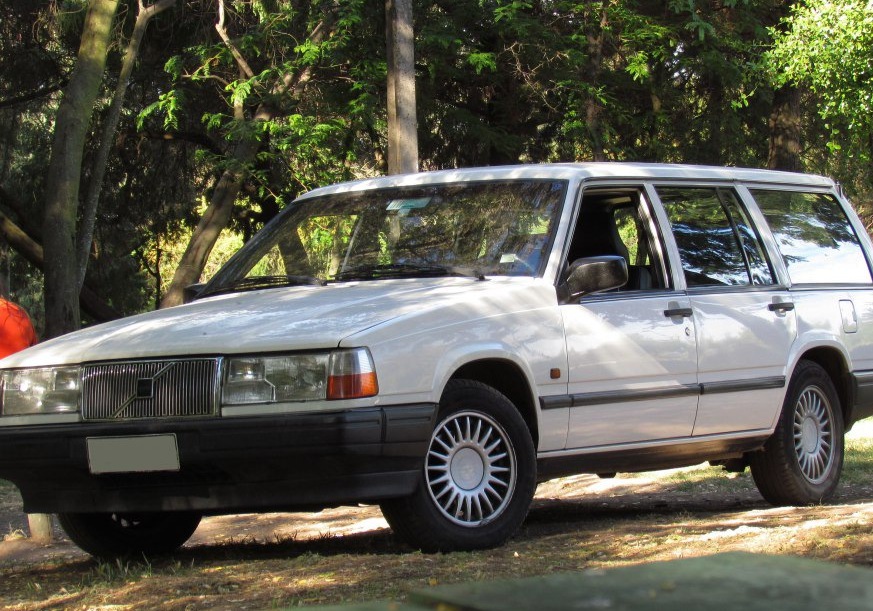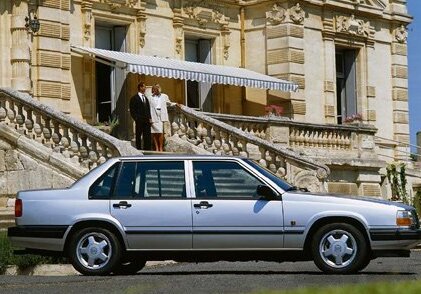
The Volvo 940 2.3i Turbo, produced between 1990 and 1998, represents the culmination of Volvo’s long-standing reputation for building robust, safe, and reliable automobiles. As part of the 940 series (internally designated 944), this variant occupied a performance-oriented niche within the lineup, offering a significant step up in power and driving experience compared to the naturally aspirated models. Built on the P24 platform, a further evolution of the 240 series, the 940 aimed to blend practicality with a more engaging driving dynamic, primarily targeting buyers who desired a comfortable yet capable vehicle for both daily commuting and longer journeys. The 2.3i Turbo was positioned as a premium offering, bridging the gap between the base models and the more expensive, luxury-focused Volvos of the era.
Technical Specifications
| Brand | Volvo |
| Model | 940 |
| Generation | 940 (944) |
| Type (Engine) | 2.3i Turbo (165 Hp) |
| Start of production | 1990 |
| End of production | 1998 |
| Powertrain Architecture | Internal Combustion engine |
| Body type | Sedan |
| Seats | 5 |
| Doors | 4 |
| Fuel consumption (combined) | 9.9 l/100 km |
| Fuel consumption (US mpg) | 23.8 US mpg |
| Fuel consumption (UK mpg) | 28.5 UK mpg |
| Fuel consumption (km/l) | 10.1 km/l |
| Fuel Type | Petrol (Gasoline) |
| Acceleration 0 – 100 km/h | 9.1 sec |
| Acceleration 0 – 62 mph | 9.1 sec |
| Acceleration 0 – 60 mph | 8.6 sec |
| Maximum speed | 210 km/h (130.49 mph) |
| Weight-to-power ratio | 8.4 kg/Hp |
| Weight-to-torque ratio | 5.2 kg/Nm |
| Power | 165 Hp @ 5500 rpm |
| Power per litre | 71.2 Hp/l |
| Torque | 264 Nm @ 3450 rpm (194.72 lb.-ft. @ 3450 rpm) |
| Engine layout | Front, Longitudinal |
| Engine Model/Code | B230FT |
| Engine displacement | 2316 cm3 (141.33 cu. in.) |
| Number of cylinders | 4 |
| Engine configuration | Inline |
| Cylinder Bore | 96 mm (3.78 in.) |
| Piston Stroke | 80 mm (3.15 in.) |
| Compression ratio | 8.7:1 |
| Number of valves per cylinder | 2 |
| Fuel injection system | Multi-port manifold injection |
| Engine aspiration | Turbocharger |
| Valvetrain | OHC |
| Engine oil capacity | 3.9 l (4.12 US qt | 3.43 UK qt) |
| Coolant capacity | 9.3 l (9.83 US qt | 8.18 UK qt) |
| Kerb Weight | 1385 kg (3053.4 lbs.) |
| Max. weight | 1905 kg (4199.81 lbs.) |
| Max load | 520 kg (1146.4 lbs.) |
| Trunk (boot) space – minimum | 471 l (16.63 cu. ft.) |
| Fuel tank capacity | 75 l (19.81 US gal | 16.5 UK gal) |
| Length | 4871 mm (191.77 in.) |
| Width | 1750 mm (68.9 in.) |
| Height | 1411 mm (55.55 in.) |
| Wheelbase | 2770 mm (109.06 in.) |
| Front track | 1470 mm (57.87 in.) |
| Rear track | 1460 mm (57.48 in.) |
| Drivetrain Architecture | Rear wheel drive |
| Number of gears | 5 |
| Gearbox type | Manual transmission |
| Front suspension | Wishbone |
| Rear suspension | Coil spring |
| Front brakes | Ventilated discs |
| Rear brakes | Disc |
| Assisting systems | ABS (Anti-lock braking system) |
| Power steering | Hydraulic Steering |
| Tires size | 195/65 R15 V |
| Wheel rims size | 15 |
Powertrain & Engine Architecture
The heart of the 940 2.3i Turbo is the B230FT engine, a 2.3-liter inline-four cylinder powerplant. This engine builds upon the well-established B230 series, incorporating a Garrett T25 turbocharger and intercooler to significantly boost power output. The B230FT utilizes a Bosch LH 2.4 fuel injection system, a sophisticated setup for its time, providing precise fuel delivery for optimal performance and emissions control. The engine features an overhead camshaft (OHC) valvetrain with two valves per cylinder. The turbocharger provides approximately 8 psi of boost, contributing to the engine’s 165 horsepower and 264 Nm (194.72 lb-ft) of torque. The five-speed manual transmission, a standard feature, was well-matched to the engine’s characteristics, offering smooth shifts and a responsive driving experience. While an automatic transmission was available, the manual was generally preferred by enthusiasts for its superior control and performance.
Driving Characteristics
The 940 2.3i Turbo offered a noticeable improvement in acceleration and overall performance compared to the naturally aspirated 940 models. The turbocharger provides a surge of power in the mid-range, making overtaking maneuvers and highway cruising considerably easier. Zero to sixty mph times were typically around 8.6 seconds, respectable for a vehicle of its size and era. The rear-wheel-drive configuration contributed to a balanced handling feel, although it wasn’t a particularly sporty car. The suspension, tuned for comfort, provided a relatively smooth ride, even on less-than-perfect road surfaces. The manual transmission’s gear ratios were well-chosen, allowing the driver to keep the engine in its optimal power band. Compared to the later 960 models with their inline-six engines, the 940 Turbo offered a more nimble feel, though it lacked the smoothness and refinement of the six-cylinder.
Equipment & Trim Levels
The 940 2.3i Turbo typically came well-equipped, reflecting its position as a premium variant. Standard features included power windows and locks, central locking, a sunroof, and a decent audio system. Interior upholstery was typically cloth, although leather options were available. The dashboard layout was functional and straightforward, prioritizing usability over flashy design. Optional extras included heated front seats, a rear window wiper, and upgraded audio systems. The 940 Turbo often featured sport seats with more bolstering than the base models, providing better support during spirited driving. The exterior trim was generally understated, with body-colored bumpers and side moldings.
Chassis & Braking
The 940 2.3i Turbo utilized a robust chassis with a semi-independent rear suspension featuring a coil spring and trailing arm setup. Front suspension consisted of wishbones with coil springs and anti-roll bar. Braking duties were handled by ventilated discs at the front and solid discs at the rear. ABS (Anti-lock Braking System) was standard, enhancing safety and control during emergency braking situations. The hydraulic power steering provided a reasonable level of assistance, making the car relatively easy to maneuver. The 940’s substantial weight (approximately 3053 lbs) meant that the braking system needed to work hard, but it generally proved capable of providing adequate stopping power.
Market Reception & Comparison
The Volvo 940 2.3i Turbo was generally well-received by automotive critics, who praised its performance, safety, and build quality. It was often compared favorably to other European sedans of the time, such as the BMW 3 Series and Audi 80. Fuel economy was reasonable for a turbocharged vehicle, averaging around 23.8 US mpg in combined driving. Reliability was a strong point, although turbocharger maintenance could be a concern for some owners. Compared to the naturally aspirated 940 models, the Turbo offered a significant performance upgrade, but it also came with a higher price tag. The 940 Turbo was a popular choice for buyers who wanted a practical, safe, and relatively fast sedan.
Legacy
The Volvo 940 2.3i Turbo has developed a loyal following among enthusiasts, who appreciate its robust construction, simple mechanics, and potential for modification. The B230FT engine is known for its durability and ability to handle increased boost levels. Today, well-maintained examples are becoming increasingly collectible. While not without its quirks, the 940 Turbo remains a testament to Volvo’s commitment to building long-lasting, dependable automobiles. The powertrain, while aging, is generally considered reliable if properly maintained, and parts availability remains relatively good. The 940 Turbo represents a sweet spot in Volvo’s history, combining classic Swedish design with a healthy dose of turbocharged performance.