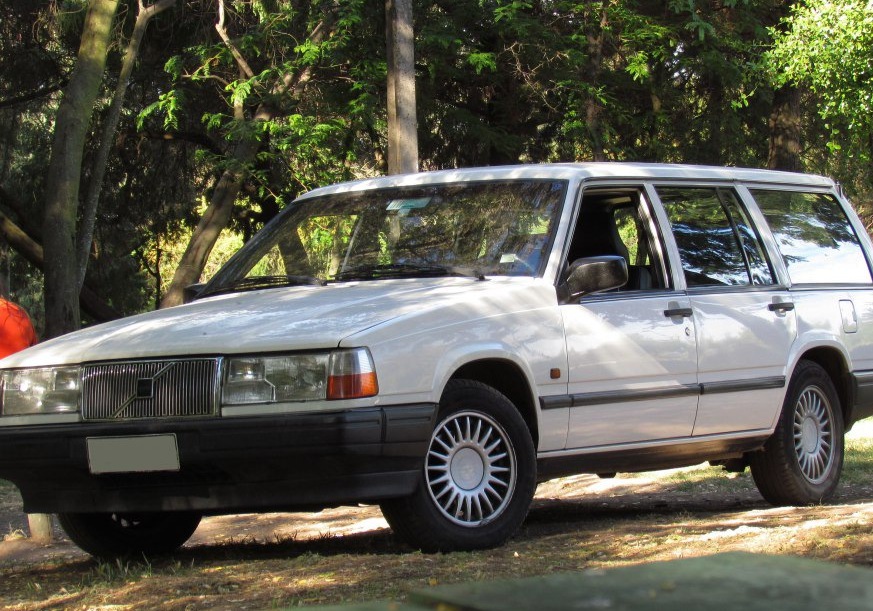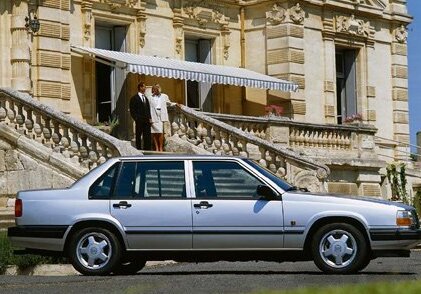
The Volvo 940 2.8i V6, produced between 1990 and 1992, represented a significant step in Volvo’s commitment to offering a more refined and powerful option within its popular 900 series. Positioned as a mid-range offering, it bridged the gap between the more economical four-cylinder models and the high-performance turbocharged variants. This variant, designated the 944 internally, was primarily aimed at buyers seeking a comfortable, spacious, and reliable sedan with a substantial increase in power compared to the base models. It was a key part of the second generation of the Volvo 900 series (1990-1998), known for its robust build quality and focus on safety.
Technical Specifications
| Brand | Volvo |
| Model | 940 |
| Generation | 940 (944) |
| Type (Engine) | 2.8 i V6 (147 Hp) |
| Start of production | 1990 |
| End of production | 1992 |
| Powertrain Architecture | Internal Combustion engine |
| Body type | Sedan |
| Seats | 5 |
| Doors | 4 |
| Fuel consumption (urban) | 13.9 l/100 km (16.9 US mpg, 20.3 UK mpg, 7.2 km/l) |
| Fuel consumption (extra urban) | 8.8 l/100 km (26.7 US mpg, 32.1 UK mpg, 11.4 km/l) |
| Fuel consumption (combined) | 11.3 l/100 km (20.8 US mpg, 25 UK mpg, 8.8 km/l) |
| Fuel Type | Petrol (Gasoline) |
| Acceleration 0 – 100 km/h | 9.6 sec |
| Acceleration 0 – 62 mph | 9.6 sec |
| Acceleration 0 – 60 mph | 9.1 sec |
| Maximum speed | 190 km/h (118.06 mph) |
| Weight-to-power ratio | 10 kg/Hp, 99.7 Hp/tonne |
| Weight-to-torque ratio | 6.3 kg/Nm, 159.3 Nm/tonne |
| Power | 147 Hp @ 5100 rpm |
| Power per litre | 51.6 Hp/l |
| Torque | 235 Nm @ 3750 rpm (173.33 lb.-ft. @ 3750 rpm) |
| Engine layout | Front, Longitudinal |
| Engine Model/Code | B280E |
| Engine displacement | 2849 cm3 (173.86 cu. in.) |
| Number of cylinders | 6 |
| Engine configuration | V-engine |
| Cylinder Bore | 91 mm (3.58 in.) |
| Piston Stroke | 73 mm (2.87 in.) |
| Compression ratio | 9.5:1 |
| Number of valves per cylinder | 2 |
| Fuel injection system | Multi-port manifold injection |
| Engine aspiration | Naturally aspirated engine |
| Valvetrain | DOHC |
| Engine oil capacity | 5.8 l (6.13 US qt | 5.1 UK qt) |
| Coolant capacity | 10 l (10.57 US qt | 8.8 UK qt) |
| Kerb Weight | 1475 kg (3251.82 lbs.) |
| Max. weight | 1820 kg (4012.41 lbs.) |
| Max load | 345 kg (760.59 lbs.) |
| Trunk (boot) space – minimum | 471 l (16.63 cu. ft.) |
| Fuel tank capacity | 75 l (19.81 US gal | 16.5 UK gal) |
| Length | 4871 mm (191.77 in.) |
| Width | 1750 mm (68.9 in.) |
| Height | 1411 mm (55.55 in.) |
| Wheelbase | 2770 mm (109.06 in.) |
| Front track | 1470 mm (57.87 in.) |
| Rear (Back) track | 1460 mm (57.48 in.) |
| Drivetrain Architecture | Rear wheel drive |
| Drive wheel | Rear wheel drive |
| Number of gears and type of gearbox | 3 gears, automatic transmission |
| Front suspension | Wishbone |
| Rear suspension | Coil spring |
| Front brakes | Ventilated discs |
| Rear brakes | Disc |
| Assisting systems | ABS (Anti-lock braking system), Hydraulic Steering |
| Tires size | 205/55 R16 |
| Wheel rims size | 16 |
Powertrain & Engine Architecture
The heart of the 940 2.8i V6 is the B280E engine, a 2.8-liter (2849 cc) naturally aspirated V6. This engine was a departure from Volvo’s traditional inline-four configurations and represented a move towards smoother power delivery and increased refinement. The B280E features a 90-degree V-angle, contributing to its balance and reduced vibrations. It utilizes a multi-port fuel injection system, delivering fuel directly to each intake port for improved combustion efficiency. The engine employs a dual overhead camshaft (DOHC) valvetrain, operating two valves per cylinder, enhancing breathing and overall performance. The three-speed automatic transmission, while not particularly advanced by modern standards, was chosen for its reliability and suitability for comfortable cruising. It was designed to provide smooth shifts and complement the V6’s torque characteristics.
Driving Characteristics
The 940 2.8i V6 Automatic offered a noticeably different driving experience compared to the four-cylinder 940 models. The V6 engine delivered a more substantial 147 horsepower and 173 lb-ft of torque, resulting in quicker acceleration – approximately 9.6 seconds to 62 mph. While not a sports car, the 940 V6 provided ample power for highway passing and confident merging. The automatic transmission, while smooth, did contribute to some power loss compared to the available manual transmission. The gear ratios were optimized for comfortable cruising rather than outright performance. The rear-wheel-drive configuration provided a balanced feel, although it lacked the all-weather capability of Volvo’s later all-wheel-drive systems.
Equipment & Trim Levels
The 940 2.8i V6 typically came well-equipped, reflecting its position as a mid-range offering. Standard features included power steering, ABS anti-lock brakes, and comfortable cloth upholstery. Optional extras included leather upholstery, a sunroof, and upgraded audio systems. The interior design was typical of Volvo in the early 1990s – functional, durable, and focused on ergonomics. The dashboard layout was straightforward, with clearly labeled controls. The 940 prioritized passenger comfort, offering a spacious cabin and a relatively quiet ride.
Chassis & Braking
The 940 2.8i V6 utilized a robust chassis with independent front suspension using wishbones and a coil-sprung rear axle. This suspension setup provided a comfortable ride while maintaining reasonable handling characteristics. The braking system consisted of ventilated discs at the front and solid discs at the rear, providing adequate stopping power for the vehicle’s weight. The ABS system enhanced braking performance, particularly on slippery surfaces. The 940’s build quality was renowned, with a focus on durability and crash safety.
Market Reception & Comparison
The 940 2.8i V6 was generally well-received by automotive critics. It was praised for its smooth engine, comfortable ride, and spacious interior. However, some reviewers noted that the automatic transmission could feel somewhat sluggish and that the car wasn’t particularly sporty. Compared to the four-cylinder 940 models, the V6 offered a significant performance upgrade, but at a higher price point. Compared to the turbocharged 940 variants, the V6 lacked the ultimate performance but offered greater reliability and lower running costs. Fuel economy was reasonable for the time, averaging around 20.8 US mpg in combined driving.
Legacy
The Volvo 940 2.8i V6 has developed a reputation for exceptional reliability and longevity. The B280E engine is known for its durability, and many examples are still on the road today. The car’s robust construction and simple mechanical design contribute to its long-term dependability. In the used car market, the 940 2.8i V6 is sought after by enthusiasts who appreciate its classic Volvo character and its ability to provide comfortable and reliable transportation. While parts availability can be a concern for some older models, the 940’s enduring popularity ensures that a reasonable supply of replacement parts remains available. It stands as a testament to Volvo’s commitment to building safe, durable, and well-engineered vehicles.