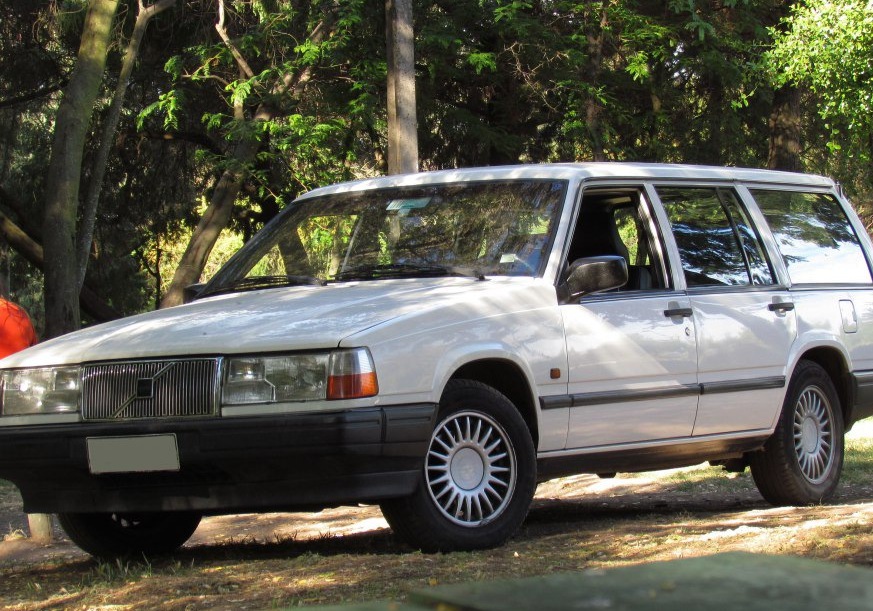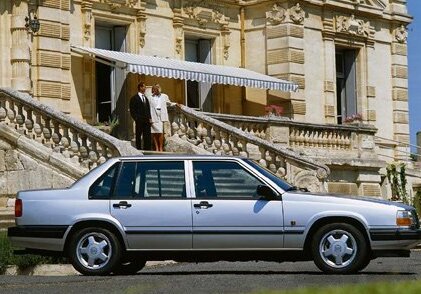
The Volvo 940 2.8i V6, produced between 1990 and 1994, represented a significant step forward for the Swedish automaker, offering a blend of luxury, performance, and renowned Volvo safety. This variant, designated the 944 internally, was positioned as a premium offering within the 940 series, slotting above the four-cylinder models and providing a more refined driving experience. It was primarily sold in Europe and North America, catering to buyers seeking a comfortable and capable family sedan with a distinctive character. The 940 series, built on the P80 platform, was the last of the traditionally styled, rear-wheel-drive Volvos before the company transitioned to front-wheel-drive platforms.
Technical Specifications
| Brand | Volvo |
| Model | 940 |
| Generation | 940 (944) |
| Type (Engine) | 2.8 i V6 (170 Hp) |
| Start of production | 1990 year |
| End of production | 1994 year |
| Powertrain Architecture | Internal Combustion engine |
| Body type | Sedan |
| Seats | 5 |
| Doors | 4 |
| Fuel consumption (economy) – urban | 13.9 l/100 km (16.9 US mpg, 20.3 UK mpg, 7.2 km/l) |
| Fuel consumption (economy) – extra urban | 8.8 l/100 km (26.7 US mpg, 32.1 UK mpg, 11.4 km/l) |
| Fuel consumption (economy) – combined | 11.3 l/100 km (20.8 US mpg, 25 UK mpg, 8.8 km/l) |
| Fuel Type | Petrol (Gasoline) |
| Acceleration 0 – 100 km/h | 9.6 sec |
| Acceleration 0 – 62 mph | 9.6 sec |
| Acceleration 0 – 60 mph | 9.1 sec |
| Maximum speed | 190 km/h (118.06 mph) |
| Weight-to-power ratio | 8.7 kg/Hp, 115.3 Hp/tonne |
| Weight-to-torque ratio | 6.1 kg/Nm, 162.7 Nm/tonne |
| Power | 170 Hp @ 5400 rpm |
| Power per litre | 59.7 Hp/l |
| Torque | 240 Nm @ 4500 rpm (177.01 lb.-ft. @ 4500 rpm) |
| Engine layout | Front, Longitudinal |
| Engine Model/Code | B280E |
| Engine displacement | 2849 cm3 (173.86 cu. in.) |
| Number of cylinders | 6 |
| Engine configuration | V-engine |
| Cylinder Bore | 91 mm (3.58 in.) |
| Piston Stroke | 73 mm (2.87 in.) |
| Compression ratio | 10:1 |
| Number of valves per cylinder | 2 |
| Fuel injection system | Multi-port manifold injection |
| Engine aspiration | Naturally aspirated engine |
| Valvetrain | DOHC |
| Engine oil capacity | 5.8 l (6.13 US qt | 5.1 UK qt) |
| Coolant | 10 l (10.57 US qt | 8.8 UK qt) |
| Kerb Weight | 1475 kg (3251.82 lbs.) |
| Max. weight | 1820 kg (4012.41 lbs.) |
| Max load | 345 kg (760.59 lbs.) |
| Trunk (boot) space – minimum | 471 l (16.63 cu. ft.) |
| Fuel tank capacity | 75 l (19.81 US gal | 16.5 UK gal) |
| Length | 4871 mm (191.77 in.) |
| Width | 1750 mm (68.9 in.) |
| Height | 1411 mm (55.55 in.) |
| Wheelbase | 2770 mm (109.06 in.) |
| Front track | 1470 mm (57.87 in.) |
| Rear (Back) track | 1460 mm (57.48 in.) |
| Drivetrain Architecture | The Internal combustion engine (ICE) drives the rear wheels of the vehicle. |
| Drive wheel | Rear wheel drive |
| Number of gears and type of gearbox | 3 gears, automatic transmission |
| Front suspension | Wishbone |
| Rear suspension | Coil spring |
| Front brakes | Ventilated discs |
| Rear brakes | Disc |
| Assisting systems | ABS (Anti-lock braking system) |
| Power steering | Hydraulic Steering |
| Tires size | 205/55 R16 |
| Wheel rims size | 16 |
Powertrain & Engine Architecture
The heart of the 940 2.8i V6 is the B280E engine, a 2.8-liter (2849 cc) naturally aspirated V6. This engine, a descendant of Volvo’s earlier V6 designs, featured a 60-degree V-angle and a cast iron block with an aluminum cylinder head. It utilized a multi-port fuel injection system, delivering fuel directly to each cylinder for improved efficiency and performance. The engine employed a dual overhead camshaft (DOHC) valvetrain, operating two valves per cylinder. The B280E produced 170 horsepower at 5400 rpm and 240 Nm (177 lb-ft) of torque at 4500 rpm. This engine was paired exclusively with a three-speed automatic transmission, designed for smooth and comfortable shifting. While not a performance-oriented gearbox, it suited the 940’s grand touring character.
Driving Characteristics
The 940 2.8i V6 Automatic offered a relaxed and refined driving experience. The V6 engine provided ample power for everyday driving and highway cruising, although it wasn’t particularly quick. Acceleration from 0 to 60 mph took around 9.1 seconds, and top speed was limited to 118 mph. The three-speed automatic transmission, while smooth, lacked the responsiveness of a manual gearbox. Gear ratios were optimized for fuel economy and comfortable cruising rather than outright performance. Compared to the turbocharged variants of the 940, the 2.8i V6 offered less dramatic acceleration, but it provided a more linear and predictable power delivery. The rear-wheel-drive configuration contributed to balanced handling, although the car’s weight and relatively soft suspension tuning meant it wasn’t a particularly sporty handler.
Equipment & Trim Levels
The 940 2.8i V6 typically came well-equipped, reflecting its position as a premium model. Standard features included power windows, power locks, central locking, and a basic audio system. Interior upholstery was typically cloth, although leather was available as an option. Dashboard configuration was relatively straightforward, with clearly marked gauges and easy-to-use controls. Optional extras included a sunroof, upgraded audio systems, and heated front seats. The 940 also benefited from Volvo’s reputation for safety, featuring standard anti-lock brakes (ABS) and a robust safety cage.
Chassis & Braking
The 940 2.8i V6 utilized a traditional body-on-frame construction, providing a solid and durable chassis. Front suspension consisted of a wishbone setup, while the rear employed a coil spring arrangement. Braking duties were handled by ventilated discs at the front and solid discs at the rear. The ABS system helped to maintain control during hard braking. Stabilizer bars were fitted to both the front and rear axles to reduce body roll. The 940’s suspension was tuned for comfort, prioritizing a smooth ride over sharp handling.
Market Reception & Comparison
The Volvo 940 2.8i V6 was generally well-received by critics, who praised its comfortable ride, spacious interior, and strong build quality. However, some reviewers noted the engine’s lack of outright performance and the automatic transmission’s somewhat sluggish response. Compared to the four-cylinder 940 models, the 2.8i V6 offered a more refined and powerful driving experience, but it came at a higher price. Compared to the turbocharged 940 variants, it offered less performance but better fuel economy and potentially lower maintenance costs. Fuel economy was rated at around 20.8 US mpg combined, which was respectable for a V6-powered sedan of its size.
Legacy
The Volvo 940 2.8i V6 has developed a loyal following among enthusiasts, appreciated for its durability, reliability, and classic Volvo character. The B280E engine is known for its longevity, and many examples are still on the road today. While parts availability can be a challenge, the 940’s relatively simple mechanical design makes it a relatively easy car to maintain. In the used car market, the 940 2.8i V6 commands a premium over the four-cylinder models, reflecting its rarity and desirable features. It remains a popular choice for those seeking a comfortable, safe, and reliable classic Volvo sedan.