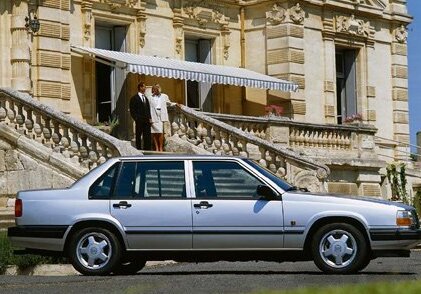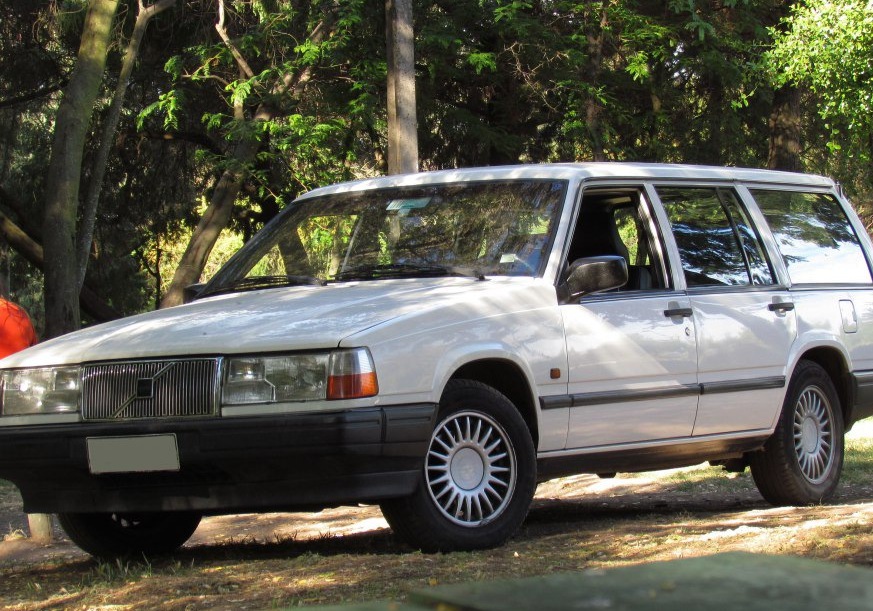
The Volvo 940 Combi (specifically the 945 variant) 2.0i 16V Turbo, produced between 1991 and 1994, represents a high-performance iteration of Volvo’s popular estate car. Positioned as a premium offering within the 940 range, it combined the practicality of a wagon with a potent turbocharged engine. This model was primarily sold in Europe, where the demand for versatile, yet capable, family vehicles was strong. The 940 series, built on Volvo’s P80 platform, was renowned for its robust construction and longevity, and the 945 2.0i 16V Turbo aimed to deliver an engaging driving experience alongside those qualities.
Technical Specifications
| Brand | Volvo |
| Model | 940 |
| Generation | 940 Combi (945) |
| Type (Engine) | 2.0 i 16V Turbo (190 Hp) |
| Start of production | 1991 |
| End of production | 1994 |
| Powertrain Architecture | Internal Combustion engine |
| Body type | Station wagon (estate) |
| Seats | 5 |
| Doors | 5 |
| Fuel consumption (urban) | 12.7 l/100 km (18.5 US mpg, 22.2 UK mpg, 7.9 km/l) |
| Fuel consumption (extra urban) | 7.5 l/100 km (31.4 US mpg, 37.7 UK mpg, 13.3 km/l) |
| Fuel consumption (combined) | 9.8 l/100 km (24 US mpg, 28.8 UK mpg, 10.2 km/l) |
| Fuel Type | Petrol (Gasoline) |
| Acceleration 0 – 100 km/h | 8.2 sec |
| Acceleration 0 – 62 mph | 8.2 sec |
| Acceleration 0 – 60 mph | 7.8 sec |
| Maximum speed | 216 km/h (134.22 mph) |
| Weight-to-power ratio | 7.5 kg/Hp, 132.9 Hp/tonne |
| Weight-to-torque ratio | 5.1 kg/Nm, 195.8 Nm/tonne |
| Power | 190 Hp @ 5300 rpm |
| Power per litre | 95.4 Hp/l |
| Torque | 280 Nm @ 2950 rpm (206.52 lb.-ft. @ 2950 rpm) |
| Engine layout | Front, Longitudinal |
| Engine Model/Code | B204FT |
| Engine displacement | 1991 cm3 (121.5 cu. in.) |
| Number of cylinders | 4 |
| Engine configuration | Inline |
| Cylinder Bore | 89 mm (3.5 in.) |
| Piston Stroke | 80 mm (3.15 in.) |
| Compression ratio | 8.2:1 |
| Number of valves per cylinder | 4 |
| Fuel injection system | Multi-port manifold injection |
| Engine aspiration | Turbocharger |
| Valvetrain | DOHC |
| Engine oil capacity | 3.9 l (4.12 US qt | 3.43 UK qt) |
| Coolant capacity | 9.5 l (10.04 US qt | 8.36 UK qt) |
| Kerb Weight | 1430 kg (3152.61 lbs.) |
| Max. weight | 1960 kg (4321.06 lbs.) |
| Max load | 530 kg (1168.45 lbs.) |
| Trunk (boot) space – minimum | 992 l (35.03 cu. ft.) |
| Trunk (boot) space – maximum | 2125 l (75.04 cu. ft.) |
| Fuel tank capacity | 75 l (19.81 US gal | 16.5 UK gal) |
| Length | 4810 mm (189.37 in.) |
| Width | 1750 mm (68.9 in.) |
| Height | 1435 mm (56.5 in.) |
| Wheelbase | 2770 mm (109.06 in.) |
| Front track | 1470 mm (57.87 in.) |
| Rear track | 1460 mm (57.48 in.) |
| Drivetrain Architecture | Rear wheel drive |
| Number of gears | 4 |
| Gearbox type | Manual transmission |
| Front suspension | Wishbone |
| Rear suspension | Coil spring |
| Front brakes | Ventilated discs |
| Rear brakes | Disc |
| Assisting systems | ABS (Anti-lock braking system), Hydraulic Power Steering |
| Tires size | 205/55 R16 |
| Wheel rims size | 16 |
Powertrain & Engine Architecture
The heart of the 945 2.0i 16V Turbo is the B204FT engine, a 1991cc inline-four cylinder unit. This engine is a development of Volvo’s ‘Redblock’ series, known for its durability and tunability. The ‘FT’ designation signifies the factory-fitted turbocharger and 16-valve cylinder head. The engine utilizes multi-port fuel injection, managed by a Bosch engine control unit, and a Garrett turbocharger to boost power output. The 16-valve DOHC (Dual Overhead Camshaft) configuration improves breathing and contributes to the engine’s higher power output compared to earlier 8-valve versions. The engine’s robust bottom end was crucial for handling the increased stresses from the turbocharger. The 945 2.0i 16V Turbo was exclusively offered with a 4-speed manual transmission, designed to cope with the engine’s 280 Nm (206.52 lb-ft) of torque. This transmission was known for its smooth operation and durability.
Driving Characteristics
The 945 2.0i 16V Turbo offered a noticeable performance upgrade over the naturally aspirated 940 models. Acceleration to 60 mph was achieved in around 7.8 seconds, and the car could reach a top speed of 134.22 mph. The turbocharger provided a surge of power in the mid-range, making overtaking maneuvers effortless. While not a sports car, the 945 Turbo offered a satisfyingly brisk driving experience for a family estate. The rear-wheel-drive layout contributed to a balanced feel, although it could also lead to oversteer if pushed hard. The 4-speed manual transmission, while not offering the close ratios of a modern gearbox, was well-suited to the engine’s torque characteristics. Compared to the later 960 models with their inline-six engines, the 945 Turbo felt more nimble and responsive, though it lacked the smoothness of the six-cylinder units.
Equipment & Trim Levels
The 945 2.0i 16V Turbo was typically well-equipped, reflecting its position as a premium trim level. Standard features included power windows, central locking, and a basic stereo system. Upholstery was typically cloth, although leather was available as an option. The dashboard featured a comprehensive instrument cluster with gauges for engine temperature, fuel level, and turbo boost pressure. Optional extras included a sunroof, heated seats, and upgraded audio systems. The 945 also benefited from Volvo’s reputation for safety, with ABS (Anti-lock Braking System) being a standard feature.
Chassis & Braking
The 945 featured a robust chassis with independent front suspension using a wishbone setup and a coil-sprung rear axle. The suspension was tuned for a balance between comfort and handling. Braking was provided by ventilated discs at the front and solid discs at the rear. The ABS system helped to maintain control during hard braking. The car’s relatively heavy weight (1430 kg / 3152.61 lbs) meant that the brakes needed to work hard, but they were generally considered to be effective.
Market Reception & Comparison
The 945 2.0i 16V Turbo was generally well-received by automotive critics. It was praised for its performance, practicality, and safety features. However, some reviewers noted that the fuel economy was relatively poor, especially considering the car’s size and engine displacement. Compared to other turbocharged estates of the time, such as the Ford Sierra Cosworth, the 945 Turbo offered a more refined and comfortable driving experience, but lacked the outright performance of the Cosworth. Against naturally aspirated 940 models, the Turbo offered a significant performance boost, but at a higher price point.
Legacy
The B204FT engine has proven to be remarkably durable, and many 945 2.0i 16V Turbos are still on the road today. The engine is known for its ability to withstand high mileage and its potential for tuning. However, like all older cars, they are susceptible to age-related issues such as rust and wear and tear on suspension components. In the used car market, the 945 2.0i 16V Turbo is sought after by enthusiasts who appreciate its classic Volvo styling, robust construction, and engaging driving experience. Its relative rarity compared to other 940 models also contributes to its collectibility.