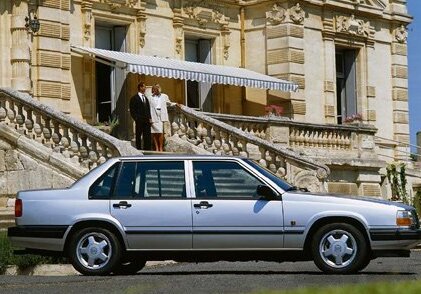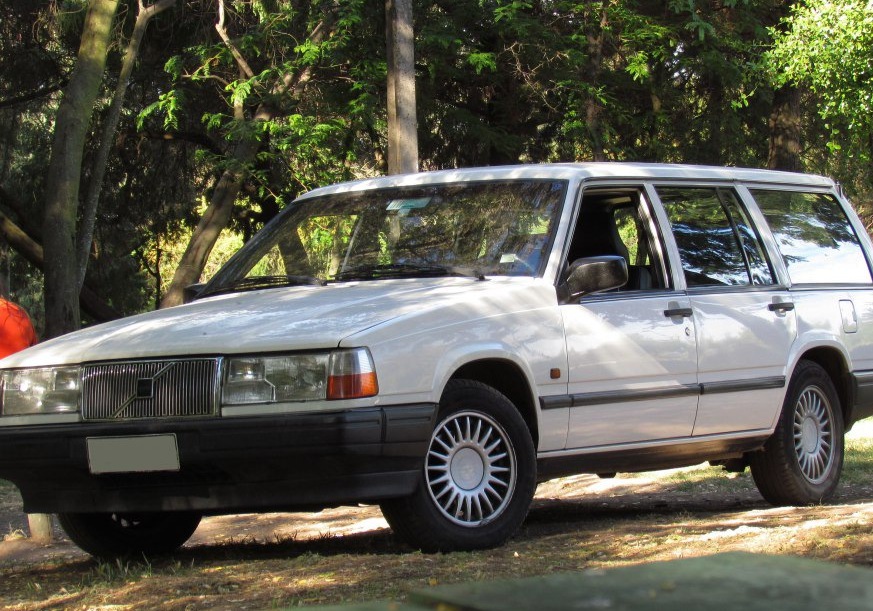
The Volvo 940 Combi (specifically the 945 variant) 2.0i, produced between 1992 and 1994, represented a continuation of Volvo’s long-standing reputation for building safe, durable, and practical family vehicles. Positioned as a mid-range offering within the 940 series, this model combined a 2.0-liter inline-four engine with a five-speed manual transmission, offering a balance between affordability and usability. The 940 series, built on the P80 platform, was the successor to the popular 740 series and served as a bridge to the more modern 850 models. The “Combi” designation signified the station wagon (estate) body style, a particularly popular configuration in the European market where the 940 found its largest customer base.
Technical Specifications
| Brand | Volvo |
| Model | 940 |
| Generation | 940 Combi (945) |
| Type (Engine) | 2.0i (111 Hp) |
| Start of production | 1992 |
| End of production | 1994 |
| Powertrain Architecture | Internal Combustion engine |
| Body type | Station wagon (estate) |
| Seats | 5 |
| Doors | 5 |
| Fuel consumption (urban) | 13.4 l/100 km (17.6 US mpg, 21.1 UK mpg, 7.5 km/l) |
| Fuel consumption (extra urban) | 7.3 l/100 km (32.2 US mpg, 38.7 UK mpg, 13.7 km/l) |
| Fuel consumption (combined) | 9.7 l/100 km (24.2 US mpg, 29.1 UK mpg, 10.3 km/l) |
| Fuel Type | Petrol (Gasoline) |
| Acceleration 0 – 100 km/h | 12.5 sec |
| Acceleration 0 – 62 mph | 12.5 sec |
| Acceleration 0 – 60 mph | 11.9 sec |
| Maximum speed | 173 km/h (107.5 mph) |
| Weight-to-power ratio | 12.5 kg/Hp, 80.1 Hp/tonne |
| Weight-to-torque ratio | 8.8 kg/Nm, 114.1 Nm/tonne |
| Power | 111 Hp @ 5700 rpm |
| Power per litre | 55.9 Hp/l |
| Torque | 158 Nm @ 2800 rpm (116.53 lb.-ft. @ 2800 rpm) |
| Engine layout | Front, Longitudinal |
| Engine Model/Code | B200F |
| Engine displacement | 1986 cm3 (121.19 cu. in.) |
| Number of cylinders | 4 |
| Engine configuration | Inline |
| Cylinder Bore | 88.9 mm (3.5 in.) |
| Piston Stroke | 80 mm (3.15 in.) |
| Compression ratio | 10:1 |
| Number of valves per cylinder | 2 |
| Fuel injection system | Multi-port manifold injection |
| Engine aspiration | Naturally aspirated engine |
| Valvetrain | OHC |
| Engine oil capacity | 3.9 l (4.12 US qt | 3.43 UK qt) |
| Coolant | 8.5 l (8.98 US qt | 7.48 UK qt) |
| Kerb Weight | 1385 kg (3053.4 lbs.) |
| Max. weight | 1950 kg (4299.01 lbs.) |
| Max load | 565 kg (1245.61 lbs.) |
| Trunk (boot) space – minimum | 992 l (35.03 cu. ft.) |
| Trunk (boot) space – maximum | 2125 l (75.04 cu. ft.) |
| Fuel tank capacity | 75 l (19.81 US gal | 16.5 UK gal) |
| Length | 4840 mm (190.55 in.) |
| Width | 1750 mm (68.9 in.) |
| Height | 1435 mm (56.5 in.) |
| Wheelbase | 2770 mm (109.06 in.) |
| Front track | 1470 mm (57.87 in.) |
| Rear (Back) track | 1460 mm (57.48 in.) |
| Minimum turning circle | 9.9 m (32.48 ft.) |
| Drivetrain Architecture | Rear wheel drive |
| Drive wheel | Rear wheel drive |
| Number of gears and type of gearbox | 5 gears, manual transmission |
| Front suspension | Wishbone |
| Rear suspension | Coil spring |
| Front brakes | Ventilated discs |
| Rear brakes | Disc |
| Assisting systems | ABS (Anti-lock braking system) |
| Power steering | Hydraulic Steering |
| Tires size | 195/65 R15 |
| Wheel rims size | 15 |
Powertrain & Engine Architecture
The 940 2.0i utilized the Volvo B200F engine, a 1.986-liter (121.19 cubic inches) inline-four cylinder powerplant. This engine was a descendant of Volvo’s long-running “Redblock” family of engines, known for their robustness and relatively simple design. The B200F featured a cast iron block and an aluminum cylinder head, employing a single overhead camshaft (OHC) design operating two valves per cylinder. Fuel delivery was handled by Bosch mechanical fuel injection, a system that, while not as sophisticated as later electronic systems, proved reliable and provided adequate performance for the intended application. The engine produced 111 horsepower at 5700 rpm and 158 Nm (116.53 lb-ft) of torque at 2800 rpm. The five-speed manual transmission offered precise shifts and was well-matched to the engine’s characteristics.
Driving Characteristics
The 940 2.0i with the manual transmission offered a reasonably engaging driving experience, though it wasn’t designed for outright speed. Acceleration from 0-60 mph took around 11.9 seconds, and top speed was approximately 107.5 mph. The engine provided adequate power for everyday driving and highway cruising, but it did require downshifting for quicker overtaking maneuvers. The rear-wheel-drive layout contributed to a balanced feel, and the suspension provided a comfortable ride, even on less-than-perfect road surfaces. Compared to the more powerful 940 Turbo models, the 2.0i felt noticeably slower, but it offered better fuel economy and a simpler mechanical setup. The gear ratios were spaced to prioritize fuel efficiency and smooth cruising rather than aggressive acceleration.
Equipment & Trim Levels
The 940 2.0i typically came equipped with a respectable level of standard features for its time. These included power steering, ABS anti-lock brakes, and a basic stereo system. Interior upholstery was typically cloth, with a durable and practical design. Optional extras included a sunroof, upgraded stereo systems, and leather upholstery. The dashboard layout was functional and straightforward, prioritizing ease of use over flashy aesthetics. The 945 designation indicated the wagon body style, offering a significantly larger cargo capacity than the sedan version.
Chassis & Braking
The 940 Combi featured a robust chassis with independent front suspension utilizing wishbones and a coil-sprung solid rear axle. This setup provided a good balance between ride comfort and handling stability. Braking duties were handled by ventilated discs at the front and solid discs at the rear, providing adequate stopping power for the vehicle’s weight. The hydraulic power steering system offered a good level of assistance without feeling overly light or disconnected.
Market Reception & Comparison
The Volvo 940 2.0i was generally well-received by automotive critics as a practical and reliable family vehicle. It was praised for its safety features, spacious interior, and durable construction. However, some critics noted that the engine lacked the punch of the turbocharged models and that the interior design was somewhat dated. Compared to other station wagons in its class, such as the Ford Mondeo or Opel Vectra, the 940 offered a more robust and arguably safer package, but at a slightly higher price point. Fuel economy was respectable for the time, averaging around 24.2 US mpg in combined driving.
Legacy
The Volvo 940 series, and the 2.0i variant in particular, has earned a reputation for exceptional long-term reliability. Many examples are still on the road today, a testament to the quality of their construction. The B200F engine is known for its durability and relatively simple maintenance requirements. In the used car market, the 940 2.0i represents a good value for buyers seeking a safe, practical, and reliable classic vehicle. While not a performance car, its robust build quality and spacious interior make it a popular choice for those who prioritize durability and functionality.