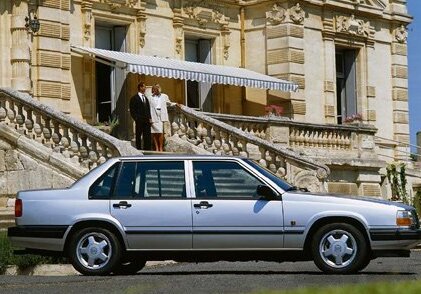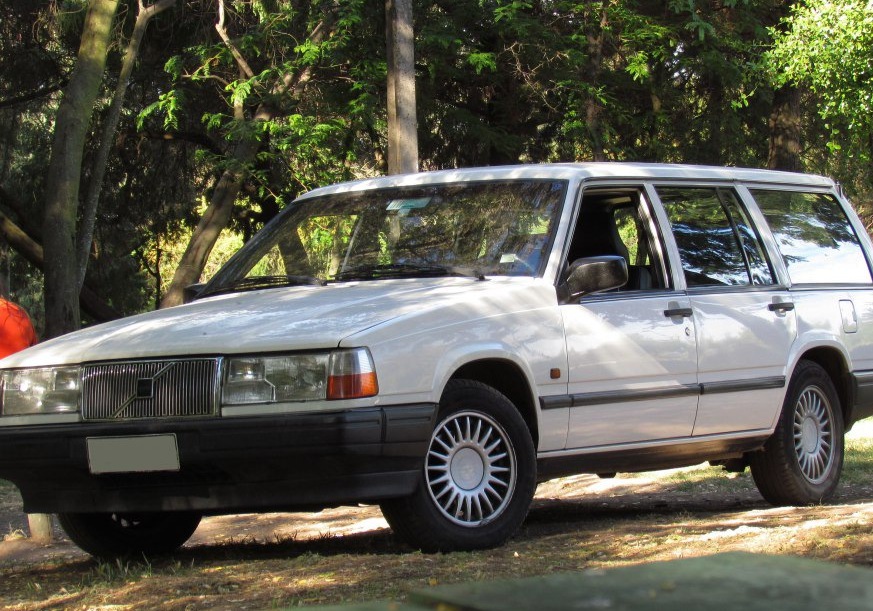
The Volvo 940 Combi (specifically the 945 variant) 2.3i, produced from 1991 to 1998, represents the culmination of Volvo’s long-standing reputation for building safe, durable, and practical family vehicles. Positioned as a mid-range offering within the 940 series, it bridged the gap between the more economical base models and the higher-performance turbocharged variants. The 940 series, and particularly the Combi (estate/wagon) body style, was immensely popular in Europe as a versatile vehicle for families and those requiring substantial cargo space. In the United States, while Volvo wagons enjoyed a dedicated following, the 940 Combi was less common than the sedan, but still appreciated for its robust build quality and practicality. This particular 2.3i model, with its naturally aspirated engine and automatic transmission, aimed to provide a comfortable and reliable driving experience, prioritizing ease of use over outright performance.
Technical Specifications
| Brand | Volvo |
| Model | 940 |
| Generation | 940 Combi (945) |
| Type (Engine) | 2.3i (131 Hp) |
| Start of production | 1991 |
| End of production | 1998 |
| Powertrain Architecture | Internal Combustion engine |
| Body type | Station wagon (estate) |
| Seats | 5 |
| Doors | 5 |
| Fuel consumption (combined) | 9.9 l/100 km |
| Fuel consumption (US mpg) | 23.8 US mpg |
| Fuel consumption (UK mpg) | 28.5 UK mpg |
| Fuel consumption (km/l) | 10.1 km/l |
| Fuel Type | Petrol (Gasoline) |
| Acceleration 0 – 100 km/h | 11.2 sec |
| Acceleration 0 – 62 mph | 11.2 sec |
| Acceleration 0 – 60 mph | 10.6 sec |
| Maximum speed | 185 km/h (114.95 mph) |
| Weight-to-power ratio | 10.6 kg/Hp |
| Weight-to-torque ratio | 7.5 kg/Nm |
| Power | 131 Hp @ 5500 rpm |
| Power per litre | 56.6 Hp/l |
| Torque | 185 Nm @ 2950 rpm (136.45 lb.-ft. @ 2950 rpm) |
| Engine layout | Front, Longitudinal |
| Engine Model/Code | B230FB |
| Engine displacement | 2316 cm3 (141.33 cu. in.) |
| Number of cylinders | 4 |
| Engine configuration | Inline |
| Cylinder Bore | 96 mm (3.78 in.) |
| Piston Stroke | 80 mm (3.15 in.) |
| Compression ratio | 9.3:1 |
| Number of valves per cylinder | 2 |
| Fuel injection system | Multi-port manifold injection |
| Engine aspiration | Naturally aspirated |
| Valvetrain | OHC |
| Engine oil capacity | 3.9 l (4.12 US qt | 3.43 UK qt) |
| Coolant capacity | 9.3 l (9.83 US qt | 8.18 UK qt) |
| Kerb Weight | 1385 kg (3053.4 lbs.) |
| Max. weight | 1950 kg (4299.01 lbs.) |
| Max load | 565 kg (1245.61 lbs.) |
| Trunk (boot) space – minimum | 992 l (35.03 cu. ft.) |
| Trunk (boot) space – maximum | 2125 l (75.04 cu. ft.) |
| Fuel tank capacity | 75 l (19.81 US gal | 16.5 UK gal) |
| Length | 4810 mm (189.37 in.) |
| Width | 1750 mm (68.9 in.) |
| Height | 1435 mm (56.5 in.) |
| Wheelbase | 2770 mm (109.06 in.) |
| Front track | 1470 mm (57.87 in.) |
| Rear track | 1460 mm (57.48 in.) |
| Drivetrain Architecture | Rear wheel drive |
| Number of gears | 5 |
| Gearbox type | Automatic transmission |
| Front suspension | Wishbone |
| Rear suspension | Coil spring |
| Front brakes | Ventilated discs |
| Rear brakes | Disc |
| Assisting systems | ABS (Anti-lock braking system) |
| Power steering | Hydraulic |
| Tires size | 195/65 R15 V |
| Wheel rims size | 15 |
Powertrain & Engine Architecture
The heart of the 940 2.3i is the Volvo B230FB engine, a 2.3-liter inline-four cylinder powerplant. This engine is a descendant of Volvo’s “Redblock” family, known for its over-engineered robustness and longevity. The ‘FB’ designation indicates a fuel-injected, Bosch-managed engine. It utilizes multi-port fuel injection, delivering fuel directly to each intake port for improved efficiency and responsiveness compared to earlier carbureted versions. The engine features a single overhead camshaft (OHC) operating two valves per cylinder. The B230FB produces 131 horsepower at 5500 rpm and 185 Nm (136 lb-ft) of torque at 2950 rpm. Paired with this engine is a four-speed automatic transmission, providing smooth and convenient gear changes. This transmission was designed for comfortable cruising rather than sporty acceleration, with gear ratios optimized for fuel economy and relaxed driving.
Driving Characteristics
The 940 2.3i Automatic offers a comfortable and predictable driving experience. Acceleration is adequate for everyday driving, with a 0-60 mph time of around 10.6 seconds. However, it’s noticeably slower than the manual transmission versions or the turbocharged models. The automatic transmission contributes to a smoother ride, but it also diminishes the engine’s responsiveness. The gear ratios are spaced to prioritize fuel efficiency and minimize engine strain. The rear-wheel-drive configuration provides a balanced feel, although it lacks the all-weather capability of Volvo’s later all-wheel-drive systems. The steering is relatively light and precise, making it easy to maneuver in urban environments. Overall, the driving experience is geared towards practicality and comfort rather than performance.
Equipment & Trim Levels
The 940 2.3i Automatic typically came equipped with a reasonable level of standard features. Interior upholstery was usually cloth, with options for leather available. Standard equipment included power windows, central locking, and a basic stereo system. Optional extras included a sunroof, cruise control, heated front seats, and upgraded audio systems. The dashboard layout is functional and straightforward, with clearly labeled controls. The 945 Combi’s defining feature, of course, is its spacious cargo area, which can be expanded by folding down the rear seats. Safety features, a Volvo hallmark, were also standard, including ABS anti-lock brakes and a robust safety cage construction.
Chassis & Braking
The 940 Combi utilizes a traditional body-on-frame construction, contributing to its substantial weight and durability. The front suspension features independent wishbones, while the rear suspension employs a coil-sprung solid axle. This setup provides a comfortable ride, but it’s not particularly sporty. Braking duties are handled by ventilated discs at the front and solid discs at the rear. ABS anti-lock brakes were standard, enhancing safety by preventing wheel lockup during hard braking. The steering system is hydraulic power-assisted, providing light and easy steering effort.
Market Reception & Comparison
The 940 2.3i Automatic was generally well-received by critics as a practical and reliable family vehicle. However, its performance was often criticized as being underwhelming, particularly when compared to the more powerful turbocharged models or the manual transmission versions. Fuel economy was respectable for its time, averaging around 23.8 US mpg. Compared to the 940 Turbo, the 2.3i offered significantly lower running costs and a simpler mechanical layout, making it a more appealing option for budget-conscious buyers. The 940 TDI diesel variant, popular in Europe, offered even better fuel economy but lacked the refinement of the gasoline engine.
Legacy
The Volvo 940 series, and the 2.3i Automatic variant in particular, has earned a reputation for exceptional durability and longevity. Many examples are still on the road today, a testament to Volvo’s engineering prowess. The B230 engine is known for its ability to withstand high mileage with proper maintenance. In the used car market, the 940 Combi 2.3i Automatic remains a popular choice for those seeking a reliable and practical classic wagon. While not a performance icon, it represents a high point in Volvo’s history, embodying the brand’s commitment to safety, durability, and practicality.