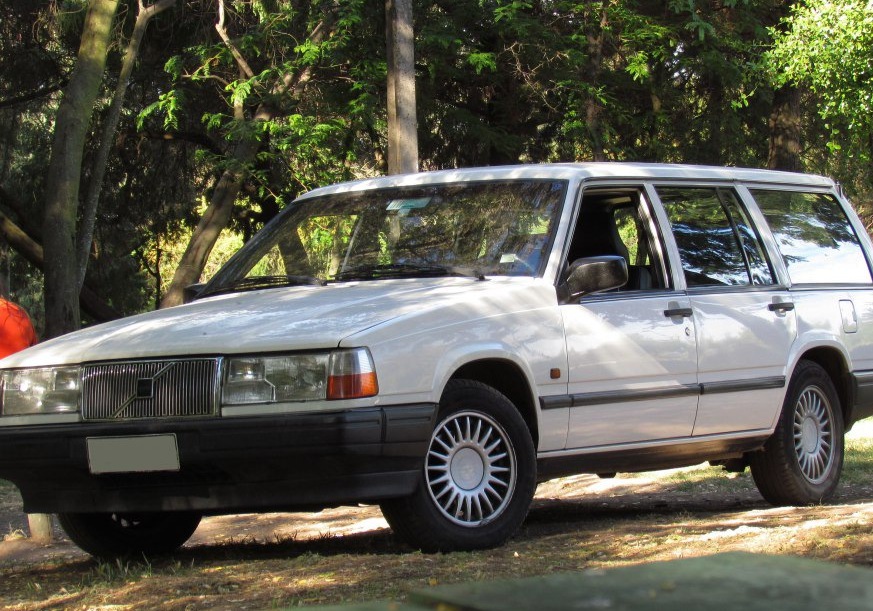
The Volvo 940 Combi (specifically the 945 variant) 2.3i 16V, produced between 1991 and 1996, represents the culmination of Volvo’s long-standing reputation for building safe, durable, and practical vehicles. Positioned as a premium offering within the 940 series, this station wagon combined a relatively high-performance engine with the versatility expected of a family vehicle. It was a key model in Volvo’s lineup during a period where the brand was solidifying its image as a maker of thoughtfully engineered cars, particularly popular in Europe as a robust and spacious alternative to more mainstream offerings. The 940 series, built on the P80 platform, was the last of the traditionally styled, rear-wheel-drive Volvos before the company transitioned to front-wheel-drive platforms.
Technical Specifications
| Brand | Volvo |
| Model | 940 |
| Generation | 940 Combi (945) |
| Type (Engine) | 2.3i 16V (155 Hp) |
| Start of production | 1991 |
| End of production | 1996 |
| Powertrain Architecture | Internal Combustion engine |
| Body type | Station wagon (estate) |
| Seats | 5 |
| Doors | 5 |
| Fuel consumption (urban) | 13.4 l/100 km (17.6 US mpg, 21.1 UK mpg, 7.5 km/l) |
| Fuel consumption (extra urban) | 7.3 l/100 km (32.2 US mpg, 38.7 UK mpg, 13.7 km/l) |
| Fuel consumption (combined) | 9.7 l/100 km (24.2 US mpg, 29.1 UK mpg, 10.3 km/l) |
| Fuel Type | Petrol (Gasoline) |
| Acceleration 0 – 100 km/h | 10.2 sec |
| Acceleration 0 – 62 mph | 10.2 sec |
| Acceleration 0 – 60 mph | 9.7 sec |
| Maximum speed | 200 km/h (124.27 mph) |
| Weight-to-power ratio | 9.1 kg/Hp, 109.5 Hp/tonne |
| Weight-to-torque ratio | 7 kg/Nm, 143.5 Nm/tonne |
| Power | 155 Hp @ 5700 rpm |
| Power per litre | 66.9 Hp/l |
| Torque | 203 Nm @ 4450 rpm (149.73 lb.-ft. @ 4450 rpm) |
| Engine layout | Front, Longitudinal |
| Engine Model/Code | B234F |
| Engine displacement | 2316 cm3 (141.33 cu. in.) |
| Number of cylinders | 4 |
| Engine configuration | Inline |
| Cylinder Bore | 96 mm (3.78 in.) |
| Piston Stroke | 80 mm (3.15 in.) |
| Compression ratio | 10:1 |
| Number of valves per cylinder | 4 |
| Fuel injection system | Multi-port manifold injection |
| Engine aspiration | Naturally aspirated engine |
| Valvetrain | DOHC |
| Engine oil capacity | 3.9 l (4.12 US qt | 3.43 UK qt) |
| Coolant capacity | 9.3 l (9.83 US qt | 8.18 UK qt) |
| Kerb Weight | 1415 kg (3119.54 lbs.) |
| Max. weight | 1975 kg (4354.13 lbs.) |
| Max load | 560 kg (1234.59 lbs.) |
| Trunk (boot) space – minimum | 992 l (35.03 cu. ft.) |
| Trunk (boot) space – maximum | 2125 l (75.04 cu. ft.) |
| Fuel tank capacity | 75 l (19.81 US gal | 16.5 UK gal) |
| Length | 4810 mm (189.37 in.) |
| Width | 1750 mm (68.9 in.) |
| Height | 1435 mm (56.5 in.) |
| Wheelbase | 2770 mm (109.06 in.) |
| Front track | 1470 mm (57.87 in.) |
| Rear track | 1460 mm (57.48 in.) |
| Drivetrain Architecture | Rear wheel drive |
| Number of gears | 4 |
| Gearbox type | Manual transmission |
| Front suspension | Wishbone |
| Rear suspension | Coil spring |
| Front brakes | Ventilated discs |
| Rear brakes | Disc |
| Assisting systems | ABS (Anti-lock braking system), Hydraulic Steering |
| Tires size | 195/60 R15 |
| Wheel rims size | 15 |
INTRODUCTION
The Volvo 940 Combi 2.3i 16V, produced from 1991-1996, was a significant iteration of Volvo’s popular 940 series. Building upon the foundation laid by the earlier 940 models, the 2.3i 16V offered a noticeable performance upgrade thanks to its multi-valve cylinder head. The “Combi” designation signified the station wagon body style, known as the 945, which was highly valued for its practicality and spaciousness. This variant occupied a middle ground in the 940 lineup, offering a balance between affordability and performance, appealing to families and individuals who needed a versatile vehicle without sacrificing driving enjoyment. It was a common sight on European roads, prized for its reliability and ability to handle challenging weather conditions.
Powertrain & Engine Architecture
At the heart of the 940 Combi 2.3i 16V lies the B234F engine, a 2.3-liter inline-four cylinder powerplant. This engine is characterized by its cast iron block and aluminum cylinder head, a robust combination designed for longevity. The “16V” designation refers to the four valves per cylinder (dual overhead camshafts – DOHC), which significantly improved breathing and allowed for increased power output compared to the earlier 8-valve versions. Fuel delivery is managed by a Bosch multi-port fuel injection system, providing precise fuel metering for optimal combustion. The engine produces 155 horsepower at 5700 rpm and 203 Nm (149.73 lb-ft) of torque at 4450 rpm. The 940 Combi 2.3i 16V was typically paired with a 4-speed automatic transmission, although a 5-speed manual was also available. The automatic transmission, while providing convenience, was known for its relatively conservative gear ratios, prioritizing fuel economy and smooth operation over outright acceleration.
Driving Characteristics
The driving experience in the 940 Combi 2.3i 16V with the automatic transmission is best described as comfortable and composed. While the 155 hp engine provides adequate power for everyday driving and even some spirited acceleration, it doesn’t offer the same level of performance as the turbocharged variants or the manual transmission models. The automatic transmission’s shift points are geared towards efficiency, meaning the engine doesn’t always reside in its peak power band. However, the engine’s strong low-end torque makes it capable of handling highway cruising and moderate towing duties. The rear-wheel-drive layout contributes to a balanced feel, although it lacks the agility of more modern front-wheel-drive cars. Steering is relatively heavy but provides good feedback, and the suspension offers a comfortable ride without excessive body roll.
Equipment & Trim Levels
The 940 Combi 2.3i 16V typically came well-equipped for its time. Standard features included power windows, power door locks, central locking, and a basic audio system. Interior upholstery was typically cloth, although leather options were available. The dashboard layout is functional and straightforward, prioritizing usability over flashy design. Optional extras included a sunroof, upgraded audio systems, heated front seats, and cruise control. The 945 trim level generally signified a higher level of equipment compared to the base 940 models.
Chassis & Braking
The 940 Combi 2.3i 16V utilizes a robust chassis with a wishbone front suspension and a coil spring rear suspension. This setup provides a good balance between ride comfort and handling stability. Braking duties are handled by ventilated discs at the front and solid discs at the rear. Anti-lock braking system (ABS) was standard, enhancing safety by preventing wheel lockup during hard braking. The steering is hydraulic, providing assisted steering effort. The 940’s relatively heavy weight (1415 kg / 3119.54 lbs) contributes to its stable feel but also impacts its agility.
Market Reception & Comparison
The 940 Combi 2.3i 16V was generally well-received by automotive critics. It was praised for its practicality, safety, and durability. However, some reviewers noted that the automatic transmission could feel sluggish compared to the manual version, and the fuel economy wasn’t particularly impressive. Compared to the turbocharged 940 models, the 2.3i 16V offered less outright performance but was more affordable and potentially more reliable. Compared to the diesel-powered 940s, it provided a smoother and quieter driving experience but lacked the diesel’s fuel efficiency. The 940 Combi, in general, was seen as a sensible and well-engineered alternative to other station wagons of the era.
Legacy
The Volvo 940 Combi 2.3i 16V has earned a reputation as a remarkably durable and reliable vehicle. Many examples are still on the road today, a testament to Volvo’s engineering prowess. The B234F engine is known for its longevity, and the 940’s simple mechanical design makes it relatively easy to maintain. In the used car market, these Volvos are often sought after by enthusiasts and those looking for a practical and dependable vehicle. While parts availability can be a concern for some older models, a dedicated community of Volvo owners ensures that many parts remain accessible. The 940 Combi 2.3i 16V represents a high point in Volvo’s history, embodying the brand’s commitment to safety, durability, and practicality.