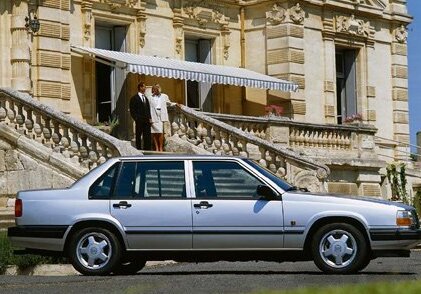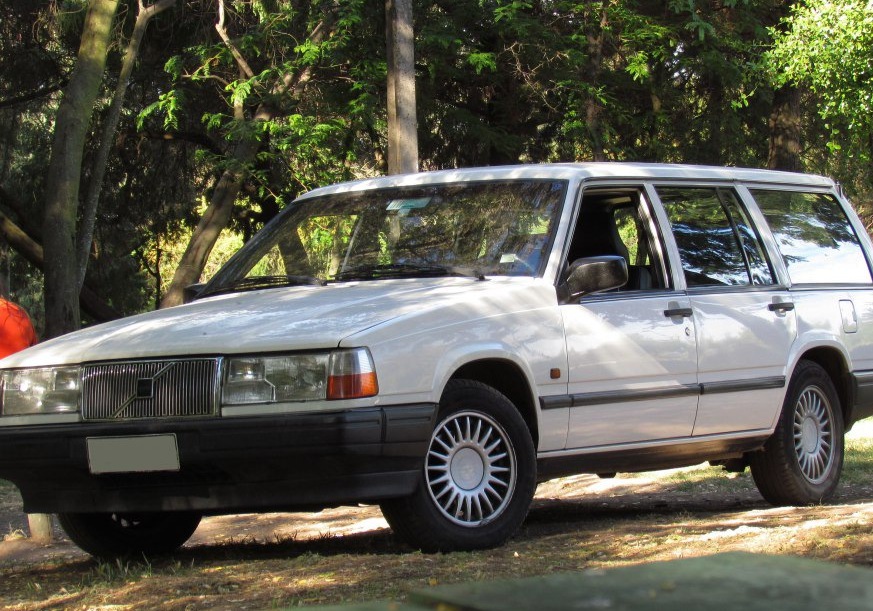
The Volvo 940 Combi (specifically the 945 variant) 2.4 TD, produced from 1991 to 1998, represents a robust and practical offering from Volvo’s renowned 900 series. Positioned as a workhorse within the lineup, the 2.4 TD was aimed at buyers needing a spacious, durable wagon capable of handling significant loads, whether for family use, outdoor pursuits, or commercial applications. It served as a diesel-powered alternative to the gasoline-fueled 940 models, offering improved fuel economy and torque, albeit with a trade-off in outright performance. The 940 series, and particularly the Combi, were the last of the traditionally styled, boxy Volvos, celebrated for their safety and longevity. This variant, with its turbocharged diesel engine, found a niche among those prioritizing practicality and reliability over sporty driving dynamics.
Technical Specifications
| Brand | Volvo |
| Model | 940 |
| Generation | 940 Combi (945) |
| Type (Engine) | 2.4 TD (122 Hp) |
| Start of production | 1991 |
| End of production | 1998 |
| Powertrain Architecture | Internal Combustion engine |
| Body type | Station wagon (estate) |
| Seats | 5 |
| Doors | 5 |
| Fuel consumption (combined) | 7.8 l/100 km |
| Fuel consumption (US mpg) | 30.2 |
| Fuel consumption (UK mpg) | 36.2 |
| Fuel consumption (km/l) | 12.8 |
| Fuel Type | Diesel |
| Acceleration 0 – 100 km/h | 12.1 sec |
| Acceleration 0 – 62 mph | 12.1 sec |
| Acceleration 0 – 60 mph | 11.5 sec |
| Maximum speed | 185 km/h (114.95 mph) |
| Weight-to-power ratio | 11.8 kg/Hp |
| Weight-to-torque ratio | 6 kg/Nm |
| Power | 122 Hp @ 4600 rpm |
| Power per litre | 51.2 Hp/l |
| Torque | 240 Nm @ 2500 rpm (177.01 lb.-ft. @ 2500 rpm) |
| Engine layout | Front, Longitudinal |
| Engine Model/Code | D24TIC |
| Engine displacement | 2383 cm3 (145.42 cu. in.) |
| Number of cylinders | 6 |
| Engine configuration | Inline |
| Cylinder Bore | 76.5 mm (3.01 in.) |
| Piston Stroke | 86.4 mm (3.4 in.) |
| Compression ratio | 23:1 |
| Number of valves per cylinder | 2 |
| Fuel injection system | Precombustion chamber injection |
| Engine aspiration | Turbocharger |
| Valvetrain | OHC |
| Engine oil capacity | 6 l (6.34 US qt | 5.28 UK qt) |
| Coolant capacity | 9.5 l (10.04 US qt | 8.36 UK qt) |
| Kerb Weight | 1440 kg (3174.66 lbs.) |
| Max. weight | 1945 kg (4287.99 lbs.) |
| Max load | 505 kg (1113.33 lbs.) |
| Trunk (boot) space – minimum | 992 l (35.03 cu. ft.) |
| Trunk (boot) space – maximum | 2125 l (75.04 cu. ft.) |
| Fuel tank capacity | 75 l (19.81 US gal | 16.5 UK gal) |
| Length | 4871 mm (191.77 in.) |
| Width | 1750 mm (68.9 in.) |
| Height | 1411 mm (55.55 in.) |
| Wheelbase | 2770 mm (109.06 in.) |
| Front track | 1470 mm (57.87 in.) |
| Rear track | 1460 mm (57.48 in.) |
| Drivetrain Architecture | Rear wheel drive |
| Number of gears | 5 |
| Gearbox type | Manual transmission |
| Front suspension | Wishbone |
| Rear suspension | Coil spring |
| Front brakes | Ventilated discs |
| Rear brakes | Disc |
| Assisting systems | ABS (Anti-lock braking system) |
| Power steering | Hydraulic |
| Tires size | 185/65 R15 V |
| Wheel rims size | 15 |
INTRODUCTION
The Volvo 940 Combi 2.4 TD, produced between 1991 and 1998, was a key variant within the 940 series, itself a continuation of Volvo’s long-standing tradition of building safe, durable, and practical vehicles. The 940 series (chassis code 940/950/960/970/980) represented a significant update to the earlier 700 series, retaining the core values but with improved styling and technology. The “Combi” designation signified the station wagon body style, known as the 945, offering a substantial cargo capacity. The 2.4 TD model specifically addressed the demand for a fuel-efficient and torquey option, particularly in European markets where diesel engines were favored for long-distance driving and towing. It occupied a middle ground in the 940 lineup, offering a balance between performance and economy, positioned below the more powerful gasoline engines and above the base-level models.
Powertrain & Engine Architecture
The heart of the 940 2.4 TD is the D24TIC engine, a 2.4-liter inline-six cylinder diesel. This engine utilizes a precombustion chamber injection system, a common design for diesel engines of the era. This system involves injecting fuel into a small precombustion chamber connected to the main cylinder, where it ignites and then ignites the main fuel charge. This design aids in smoother combustion and reduced engine noise. The engine is turbocharged, boosting power output to 122 horsepower and 240 Nm (177 lb-ft) of torque. The turbocharger significantly enhances low-end torque, making the vehicle more tractable for hauling loads or driving in hilly terrain. The engine features an overhead camshaft (OHC) valvetrain with two valves per cylinder. The 940 2.4 TD was typically paired with a robust 5-speed manual transmission, designed to handle the engine’s torque output. While an automatic transmission was available, it was less common with this engine due to concerns about durability and efficiency.
Driving Characteristics
The driving experience in a 940 2.4 TD is characterized by its relaxed and composed nature. Acceleration is not its strong suit, with a 0-60 mph time of around 11.5 to 12.1 seconds, but the engine delivers a strong surge of torque from low RPMs. This makes it well-suited for everyday driving and towing. The manual transmission offers precise shifts, and the gearing is optimized for fuel efficiency and effortless cruising. Compared to the gasoline-powered 940s, the 2.4 TD feels less eager to rev, but it provides a more relaxed and economical driving experience. The rear-wheel-drive layout contributes to a balanced feel, although it can require careful throttle control in slippery conditions. The suspension is tuned for comfort, providing a smooth ride even on rough roads.
Equipment & Trim Levels
The 940 2.4 TD typically came with a reasonable level of standard equipment, reflecting Volvo’s commitment to safety and comfort. Standard features included power steering, ABS anti-lock brakes, and comfortable cloth upholstery. Higher trim levels offered options such as leather upholstery, sunroof, electric windows, and upgraded audio systems. The interior design is functional and durable, with a focus on ergonomics. The dashboard layout is straightforward and easy to use, with clearly labeled controls. The 945 Combi’s defining feature is its spacious interior and enormous cargo area, making it ideal for families or those needing to transport large items.
Chassis & Braking
The 940 2.4 TD utilizes a robust chassis with a wishbone front suspension and a coil spring rear suspension. This setup provides a good balance between ride comfort and handling. The front brakes are ventilated discs, offering excellent stopping power, while the rear brakes are discs. The ABS anti-lock braking system enhances safety by preventing wheel lockup during hard braking. The steering is hydraulic power-assisted, providing light and precise control. The 940’s relatively heavy weight contributes to its stability, but it also means that the suspension and brakes are working hard to control the vehicle.
Market Reception & Comparison
The Volvo 940 2.4 TD was generally well-received by critics and buyers alike. It was praised for its fuel efficiency, durability, and spaciousness. However, some critics noted its relatively slow acceleration and somewhat agricultural engine noise. Compared to the gasoline-powered 940s, the 2.4 TD offered significantly better fuel economy, making it a popular choice for high-mileage drivers. Compared to other diesel wagons of the era, the 940 2.4 TD stood out for its refinement and build quality. Its reliability was also a major selling point, with many examples still on the road today.
Legacy
The Volvo 940 2.4 TD has earned a reputation as a remarkably durable and reliable vehicle. The D24TIC engine is known for its longevity, and many examples have exceeded 300,000 miles with proper maintenance. In the used car market, the 940 2.4 TD remains a popular choice for those seeking a practical, affordable, and dependable wagon. Its simple mechanical design makes it relatively easy to maintain and repair. While it may not offer the performance or features of more modern vehicles, its enduring qualities and classic Volvo charm continue to appeal to a dedicated following. The 940 series, and the 2.4 TD variant in particular, represents a high point in Volvo’s history, embodying the brand’s commitment to safety, durability, and practicality.