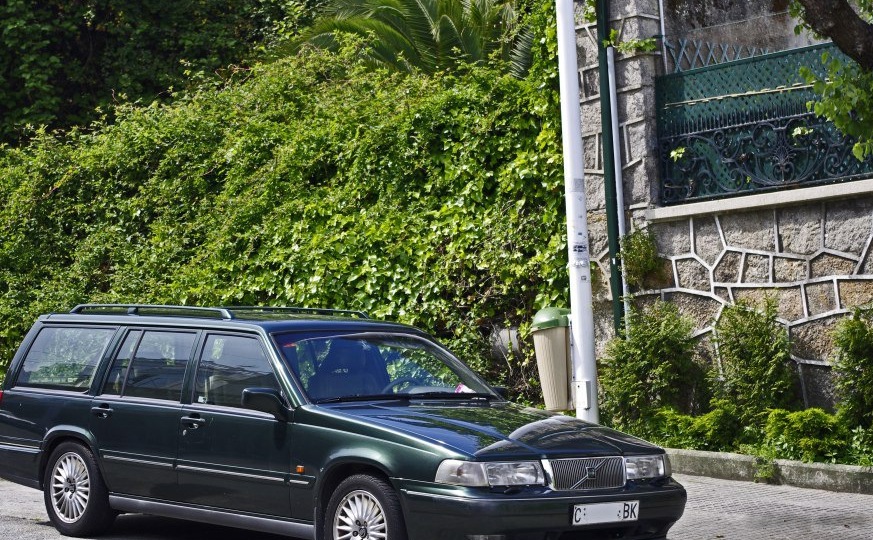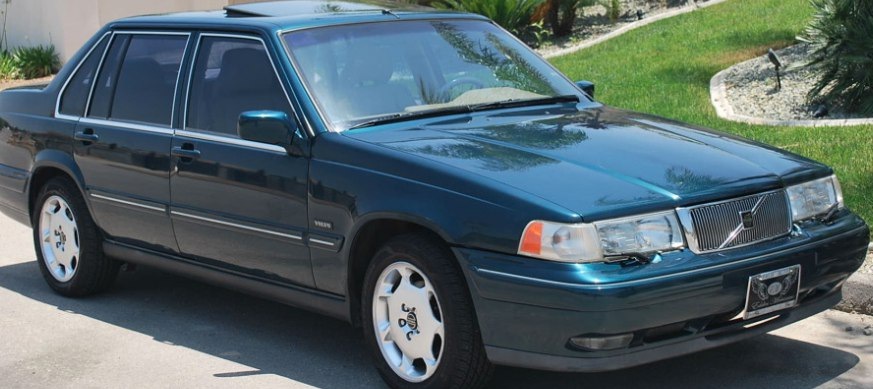
The Volvo 960 2.4 TD Automatic, produced from 1990 to 1991, represented a unique offering within the 960/964 model range. Positioned as a fuel-efficient alternative to the gasoline-powered variants, it catered to European drivers seeking a comfortable, spacious sedan with the benefits of diesel torque and economy. This variant utilized Volvo’s D24T turbocharged diesel engine paired with a three-speed automatic transmission, offering a distinct driving experience compared to the more common manual transmission options and the higher-performance gasoline engines available in the 960 lineup.
Technical Specifications
| Brand | Volvo |
| Model | 960 |
| Generation | 960 (964) |
| Type (Engine) | 2.4 TD (115 Hp) Automatic |
| Start of production | 1990 |
| End of production | 1991 |
| Powertrain Architecture | Internal Combustion engine |
| Body type | Sedan |
| Seats | 5 |
| Doors | 4 |
| Fuel consumption (urban) | 11 l/100 km (21.4 US mpg) |
| Fuel consumption (extra urban) | 7 l/100 km (33.6 US mpg) |
| Fuel Type | Diesel |
| Maximum speed | 180 km/h (111.85 mph) |
| Weight-to-power ratio | 13.9 kg/Hp |
| Weight-to-torque ratio | 7.1 kg/Nm |
| Power | 115 Hp @ 4800 rpm |
| Power per litre | 48.3 Hp/l |
| Torque | 225 Nm @ 2400 rpm (165.95 lb.-ft. @ 2400 rpm) |
| Engine layout | Front, Longitudinal |
| Engine Model/Code | D24T |
| Engine displacement | 2383 cm3 (145.42 cu. in.) |
| Number of cylinders | 6 |
| Engine configuration | Inline |
| Cylinder Bore | 76.5 mm (3.01 in.) |
| Piston Stroke | 86.4 mm (3.4 in.) |
| Compression ratio | 23:1 |
| Number of valves per cylinder | 2 |
| Fuel injection system | Precombustion chamber injection |
| Engine aspiration | Turbocharger |
| Engine oil capacity | 6 l (6.34 US qt | 5.28 UK qt) |
| Coolant | 9.5 l (10.04 US qt | 8.36 UK qt) |
| Kerb Weight | 1600 kg (3527.4 lbs.) |
| Max. weight | 2060 kg (4541.52 lbs.) |
| Max load | 460 kg (1014.13 lbs.) |
| Trunk (boot) space – minimum | 491 l (17.34 cu. ft.) |
| Fuel tank capacity | 80 l (21.13 US gal | 17.6 UK gal) |
| Length | 4871 mm (191.77 in.) |
| Width | 1750 mm (68.9 in.) |
| Height | 1411 mm (55.55 in.) |
| Wheelbase | 2770 mm (109.06 in.) |
| Front track | 1502 mm (59.13 in.) |
| Rear (Back) track | 1502 mm (59.13 in.) |
| Drivetrain Architecture | Rear wheel drive |
| Drive wheel | Rear wheel drive |
| Number of gears and type of gearbox | 3 gears, automatic transmission |
| Front suspension | Wishbone |
| Rear suspension | Coil spring |
| Front brakes | Ventilated discs |
| Rear brakes | Disc |
| Assisting systems | ABS (Anti-lock braking system) |
| Power steering | Hydraulic Steering |
| Tires size | 195/65 R15 V |
| Wheel rims size | 15 |
Introduction
The Volvo 960 2.4 TD Automatic was a late addition to the 960 series, which itself was a successor to the popular 760. Introduced in 1990 and continuing through 1991, this variant aimed to broaden the 960’s appeal, particularly in European markets where diesel engines were gaining popularity. Built on the 964 platform, the 960 represented Volvo’s commitment to safety, comfort, and durability. The 2.4 TD Automatic offered a more economical and relaxed driving experience compared to the gasoline-powered models, making it a practical choice for long-distance travel.
Powertrain & Engine Architecture
At the heart of the 960 2.4 TD Automatic lies Volvo’s D24T six-cylinder, inline diesel engine. This engine, a staple of Volvo’s diesel offerings, featured precombustion chamber injection, a system known for its relatively quiet operation and good combustion efficiency. The D24T benefited from a turbocharger, boosting power output to 115 horsepower at 4800 rpm and 225 Nm (165.95 lb.-ft.) of torque at 2400 rpm. The engine’s robust construction and relatively simple design contributed to its longevity. The three-speed automatic transmission, while not known for its sportiness, provided smooth and effortless gear changes, perfectly complementing the diesel engine’s torque characteristics. This transmission was chosen for its reliability and suitability for comfortable cruising.
Driving Characteristics
The 960 2.4 TD Automatic offered a distinctly different driving experience compared to its gasoline counterparts. While lacking the outright acceleration of the 2.0 or 2.8-liter petrol engines, the diesel provided ample torque for relaxed highway cruising and effortless overtaking. The three-speed automatic transmission, while not offering the responsiveness of a manual or more modern automatic, was well-suited to the engine’s powerband. Gear ratios were optimized for fuel efficiency and comfortable cruising, rather than sporty performance. The rear-wheel-drive configuration provided a balanced feel, although it wasn’t particularly engaging for enthusiastic drivers. Overall, the driving experience was characterized by smoothness, quietness, and a focus on comfort.
Equipment & Trim Levels
The 960 2.4 TD Automatic typically came with a respectable level of standard equipment, reflecting Volvo’s emphasis on comfort and safety. Standard features included power steering, ABS anti-lock brakes, and comfortable cloth upholstery. Depending on the market and optional packages selected, features like power windows, central locking, and a sunroof could be added. Interior trim was generally understated and functional, with a focus on durability and ergonomics. The dashboard layout was typical of Volvo designs of the era, prioritizing clear instrumentation and ease of use.
Chassis & Braking
The 960 2.4 TD Automatic utilized a robust chassis with independent front suspension using wishbones and a coil-sprung rear suspension. This setup provided a comfortable ride, absorbing bumps and irregularities in the road surface effectively. The braking system featured ventilated discs at the front and solid discs at the rear, providing adequate stopping power for the vehicle’s weight. The hydraulic power steering offered light and precise steering control, making the car easy to maneuver in urban environments.
Market Reception & Comparison
The 960 2.4 TD Automatic was generally well-received by critics and buyers seeking a comfortable, fuel-efficient, and reliable sedan. It offered a compelling alternative to the gasoline-powered 960 models, particularly for drivers who covered long distances. Compared to the 2.0 and 2.8-liter gasoline variants, the diesel offered significantly better fuel economy, albeit with slightly reduced performance. The automatic transmission was seen as a positive feature for those prioritizing convenience and ease of driving. However, some critics noted the lack of sporty handling and the relatively slow acceleration compared to the gasoline engines.
Legacy
The Volvo 960 2.4 TD Automatic, while not a high-volume seller, has gained a reputation for its durability and reliability. The D24T engine is known for its longevity, and well-maintained examples can still be found on the road today. In the used car market, these models are appreciated by enthusiasts who value their simplicity, robustness, and fuel efficiency. While parts availability can be a concern for older vehicles, the D24T engine’s widespread use in other Volvo models means that many components are still readily available. The 960 2.4 TD Automatic represents a unique chapter in Volvo’s history, showcasing the brand’s commitment to innovation and its ability to cater to diverse customer needs.