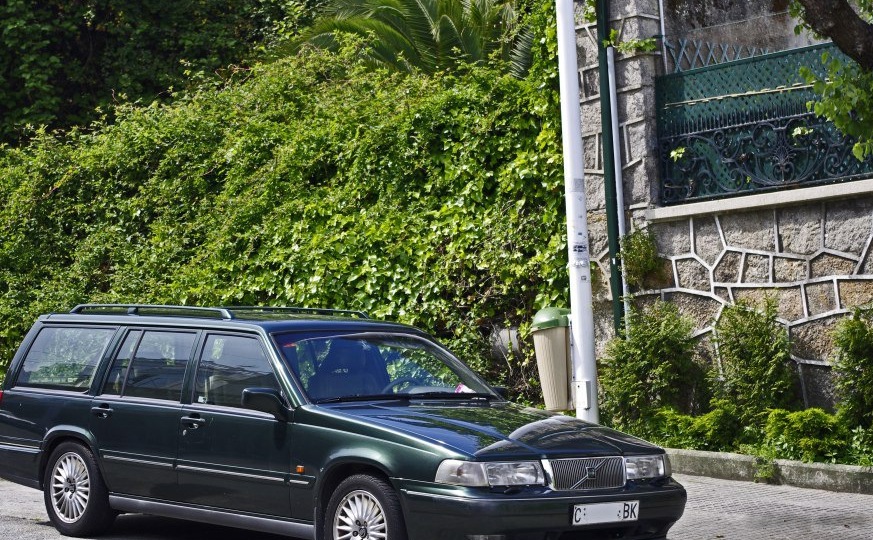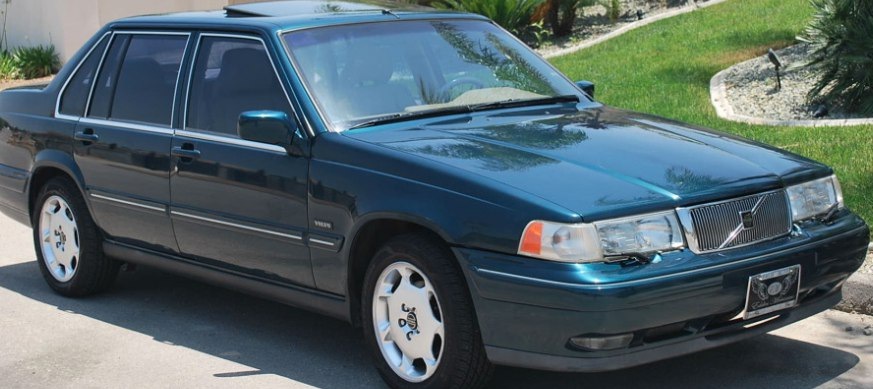
The Volvo 960 2.5i 24V Automatic, produced between September 1994 and December 1996, represented a refined iteration of Volvo’s flagship sedan. Falling within the 960 (964) generation, this variant occupied a middle ground in the lineup, offering a balance between performance and comfort. It was positioned above the base 2.0L models and below the more powerful, though less common, turbocharged variants. The 960 series, built on Volvo’s P90 platform, aimed to provide a luxurious and safe driving experience, continuing Volvo’s long-standing reputation for durability and passenger protection. This particular 2.5L, 24-valve, automatic configuration was aimed at buyers prioritizing a smooth, effortless driving experience over outright sportiness.
Technical Specifications
| Brand | Volvo |
| Model | 960 |
| Generation | 960 (964) |
| Type (Engine) | 2.5 i 24V (170 Hp) Automatic |
| Start of production | September, 1994 |
| End of production | December, 1996 |
| Powertrain Architecture | Internal Combustion engine |
| Body type | Sedan |
| Seats | 5 |
| Doors | 4 |
| Fuel consumption (combined) | 10.5 l/100 km |
| Fuel consumption (US mpg) | 22.4 US mpg |
| Fuel consumption (UK mpg) | 26.9 UK mpg |
| Fuel consumption (km/l) | 9.5 km/l |
| Fuel Type | Petrol (Gasoline) |
| Acceleration 0 – 100 km/h | 9.7 sec |
| Acceleration 0 – 62 mph | 9.7 sec |
| Acceleration 0 – 60 mph | 9.2 sec |
| Maximum speed | 210 km/h (130.49 mph) |
| Weight-to-power ratio | 9.4 kg/Hp |
| Weight-to-torque ratio | 7 kg/Nm |
| Power | 170 Hp @ 5700 rpm |
| Power per litre | 68.7 Hp/l |
| Torque | 230 Nm @ 4400 rpm (169.64 lb.-ft. @ 4400 rpm) |
| Engine layout | Front, Longitudinal |
| Engine Model/Code | B6254S |
| Engine displacement | 2473 cm3 (150.91 cu. in.) |
| Number of cylinders | 6 |
| Engine configuration | Inline |
| Cylinder Bore | 81 mm (3.19 in.) |
| Piston Stroke | 80 mm (3.15 in.) |
| Compression ratio | 10.5:1 |
| Number of valves per cylinder | 4 |
| Fuel injection system | Multi-port manifold injection |
| Engine aspiration | Naturally aspirated |
| Valvetrain | DOHC |
| Engine oil capacity | 5.8 l (6.13 US qt | 5.1 UK qt) |
| Coolant capacity | 10.7 l (11.31 US qt | 9.41 UK qt) |
| Kerb Weight | 1600 kg (3527.4 lbs.) |
| Max. weight | 1960 kg (4321.06 lbs.) |
| Max load | 360 kg (793.66 lbs.) |
| Trunk (boot) space – minimum | 491 l (17.34 cu. ft.) |
| Fuel tank capacity | 80 l (21.13 US gal | 17.6 UK gal) |
| Length | 4871 mm (191.77 in.) |
| Width | 1750 mm (68.9 in.) |
| Height | 1411 mm (55.55 in.) |
| Wheelbase | 2770 mm (109.06 in.) |
| Front track | 1502 mm (59.13 in.) |
| Rear track | 1502 mm (59.13 in.) |
| Drivetrain Architecture | Rear wheel drive |
| Number of gears | 4 |
| Gearbox type | Automatic transmission |
| Front suspension | Wishbone |
| Rear suspension | Coil spring |
| Front brakes | Ventilated discs |
| Rear brakes | Disc |
| Assisting systems | ABS (Anti-lock braking system) |
| Power steering | Hydraulic |
| Tires size | 195/65 R15 V |
| Wheel rims size | 15 |
Powertrain & Engine Architecture
The heart of the 960 2.5i was the B6254S engine, a naturally aspirated, 2.5-liter inline-six cylinder powerplant. This engine was a descendant of Volvo’s long-running red-block series, known for its robustness and smooth operation. The “24V” designation refers to the four valves per cylinder, contributing to improved breathing and power output. Fuel delivery was handled by a Bosch multi-port fuel injection system, optimizing fuel atomization and combustion efficiency. The engine featured a double overhead camshaft (DOHC) valvetrain, further enhancing its volumetric efficiency. Paired with this engine was a four-speed automatic transmission, designed for smooth and comfortable shifts. This transmission, while not offering the performance of a manual, was well-suited to the 960’s grand touring character.
Driving Characteristics
The 960 2.5i Automatic delivered a comfortable and refined driving experience. With 170 horsepower and 230 Nm (169.64 lb-ft) of torque, acceleration was adequate, reaching 0-60 mph in approximately 9.2 seconds. However, it wasn’t designed for rapid acceleration. The automatic transmission, while smooth, did contribute to some power loss compared to the available manual transmission. Gear ratios were optimized for cruising, making it a capable highway car. The rear-wheel-drive configuration provided balanced handling, though it lacked the all-weather capability of Volvo’s later all-wheel-drive systems. Compared to the turbocharged 960 models, the 2.5i Automatic offered a more relaxed and predictable power delivery, prioritizing ease of use over outright performance.
Equipment & Trim Levels
The 960 2.5i Automatic typically came well-equipped, reflecting Volvo’s commitment to safety and comfort. Standard features included power windows, power locks, a sunroof, and air conditioning. Interior upholstery was typically cloth, though leather was available as an option. The dashboard featured a straightforward layout with easy-to-read gauges. Optional extras included a premium sound system, heated front seats, and automatic climate control. The trim level was generally considered mid-range within the 960 lineup, offering a good balance of features and affordability.
Chassis & Braking
The 960 2.5i utilized a robust chassis with independent front suspension employing wishbones and a coil-spring rear suspension. This setup provided a comfortable ride while maintaining reasonable handling characteristics. Braking duties were handled by ventilated discs at the front and solid discs at the rear. An Anti-lock Braking System (ABS) was standard, enhancing safety by preventing wheel lockup during hard braking. Hydraulic power steering provided light and precise steering feel. The suspension was tuned for comfort, prioritizing a smooth ride over aggressive cornering.
Market Reception & Comparison
The Volvo 960 2.5i Automatic was generally well-received by critics as a comfortable, safe, and reliable family sedan. It was praised for its smooth engine, comfortable ride, and spacious interior. However, some critics noted its relatively modest performance compared to competitors. Fuel economy, at around 22.4 US mpg, was typical for a vehicle of its size and class in the mid-1990s. Compared to the turbocharged 960 models, the 2.5i Automatic offered better fuel economy and lower maintenance costs, but at the expense of performance. Compared to the 2.0L models, the 2.5i offered a noticeable power increase.
Legacy
The Volvo 960 2.5i Automatic has proven to be a durable and reliable vehicle, with many examples still on the road today. The B6254S engine is known for its longevity, and the automatic transmission, while not particularly advanced, is generally reliable if properly maintained. In the used car market, these vehicles are often sought after by enthusiasts who appreciate their classic Volvo styling, comfortable ride, and robust construction. Parts availability is generally good, though some specific trim pieces may be difficult to find. The 960 2.5i Automatic represents a significant chapter in Volvo’s history, embodying the brand’s commitment to safety, durability, and understated elegance.