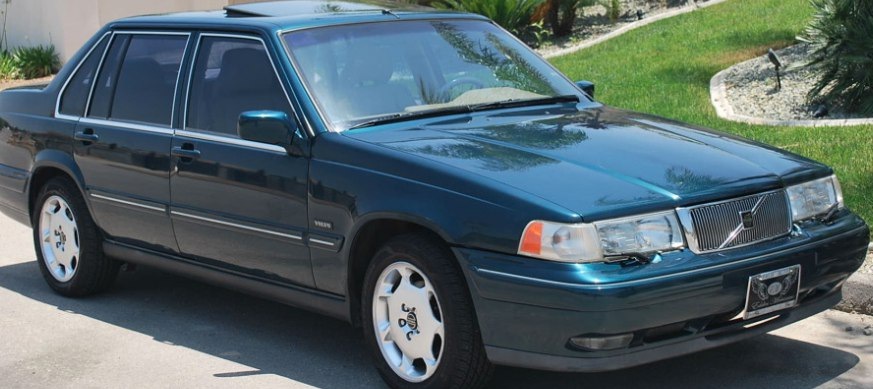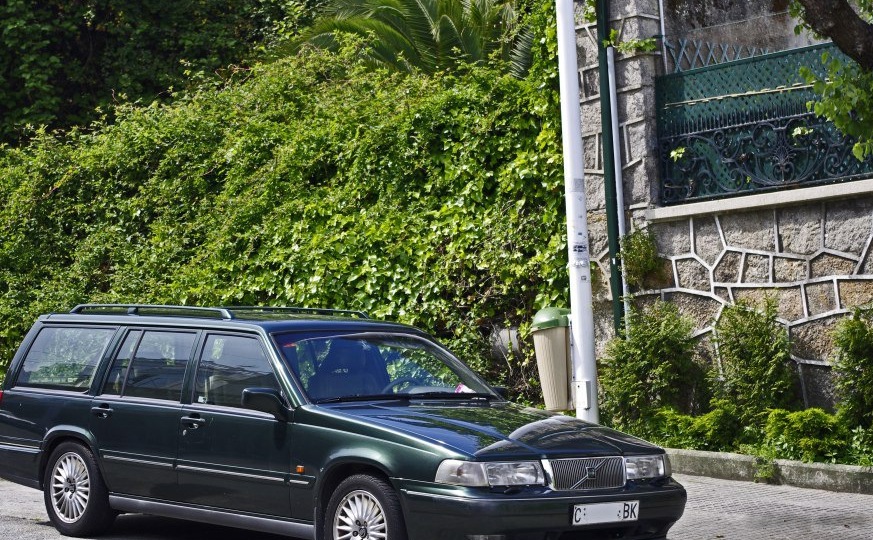
The Volvo 960 Kombi (specifically the 965 designation for the estate/wagon version) with the 2.4-liter turbocharged diesel engine producing 122 horsepower and paired with an automatic transmission was a relatively uncommon, yet significant, variant of Volvo’s flagship sedan and wagon produced between 1990 and 1994. Positioned as a more economical and long-distance-oriented option within the 960 range, it offered a blend of practicality, comfort, and fuel efficiency that appealed to a specific segment of the market, particularly in Europe where diesel engines were more prevalent. This model represented Volvo’s continued commitment to safety and durability, packaged in a versatile wagon body style.
Technical Specifications
| Brand | Volvo |
| Model | 960 |
| Generation | 960 Kombi (965) |
| Type (Engine) | 2.4 TD (122 Hp) Automatic |
| Start of production | 1990 |
| End of production | 1994 |
| Powertrain Architecture | Internal Combustion engine |
| Body type | Station wagon (estate) |
| Seats | 5 |
| Doors | 5 |
| Fuel consumption (urban) | 11 l/100 km (21.4 US mpg) |
| Fuel consumption (extra urban) | 7 l/100 km (33.6 US mpg) |
| Fuel Type | Diesel |
| Maximum speed | 180 km/h (111.85 mph) |
| Weight-to-power ratio | 12.7 kg/Hp |
| Weight-to-torque ratio | 6.6 kg/Nm |
| Power | 122 Hp @ 4800 rpm |
| Power per litre | 51.2 Hp/l |
| Torque | 235 Nm @ 2400 rpm (173.33 lb.-ft. @ 2400 rpm) |
| Engine layout | Front, Longitudinal |
| Engine Model/Code | D24TIC |
| Engine displacement | 2383 cm3 (145.42 cu. in.) |
| Number of cylinders | 6 |
| Engine configuration | Inline |
| Cylinder Bore | 76.5 mm (3.01 in.) |
| Piston Stroke | 86.4 mm (3.4 in.) |
| Compression ratio | 23:1 |
| Number of valves per cylinder | 2 |
| Fuel injection system | Precombustion chamber injection |
| Engine aspiration | Turbocharger, Intercooler |
| Engine oil capacity | 6 l (6.34 US qt | 5.28 UK qt) |
| Coolant | 9.5 l (10.04 US qt | 8.36 UK qt) |
| Kerb Weight | 1550 kg (3417.17 lbs.) |
| Max. weight | 2065 kg (4552.55 lbs.) |
| Max load | 515 kg (1135.38 lbs.) |
| Trunk (boot) space – minimum | 992 l (35.03 cu. ft.) |
| Trunk (boot) space – maximum | 2125 l (75.04 cu. ft.) |
| Fuel tank capacity | 60 l (15.85 US gal | 13.2 UK gal) |
| Length | 4850 mm (190.94 in.) |
| Width | 1750 mm (68.9 in.) |
| Height | 1434 mm (56.46 in.) |
| Wheelbase | 2770 mm (109.06 in.) |
| Front track | 1470 mm (57.87 in.) |
| Rear (Back) track | 1460 mm (57.48 in.) |
| Minimum turning circle | 9.9 m (32.48 ft.) |
| Drivetrain Architecture | Rear wheel drive |
| Number of gears and type of gearbox | 4 gears, automatic transmission |
| Front suspension | Wishbone |
| Rear suspension | Coil spring |
| Front brakes | Ventilated discs |
| Rear brakes | Disc |
| Assisting systems | ABS (Anti-lock braking system) |
| Steering type | Steering rack and pinion |
| Power steering | Hydraulic Steering |
| Tires size | 195/65 R15 V |
| Wheel rims size | 15 |
Powertrain & Engine Architecture
The heart of this 960 variant was the Volvo D24TIC engine, a 2.4-liter inline-six cylinder diesel. This engine was a further development of Volvo’s well-regarded D24 series, known for its robustness and longevity. The ‘TIC’ designation indicated the presence of a turbocharger and intercooler, significantly boosting power output compared to naturally aspirated versions. The D24TIC utilized a precombustion chamber injection system, a common diesel technology of the era, where fuel was injected into a small pre-chamber before entering the main combustion chamber. This aided in more complete combustion and reduced engine noise. The automatic transmission was a four-speed unit, designed to provide smooth shifts and ease of driving, particularly appealing for long journeys. While not a performance-oriented setup, the turbocharger provided a noticeable increase in torque, making it suitable for hauling loads and maintaining comfortable cruising speeds.
Driving Characteristics
The 960 Kombi 2.4 TD Automatic offered a distinctly different driving experience compared to its gasoline-powered siblings or even the manual diesel versions. The automatic transmission prioritized comfort and ease of use over outright performance. Acceleration was adequate, but not brisk, with the engine needing to be revved to access its peak torque. The four-speed automatic, while smooth, lacked the responsiveness of more modern transmissions. The gear ratios were geared towards fuel efficiency and relaxed cruising, making it a comfortable highway companion. Compared to the 960 with the 2.8L inline-six gasoline engine, the diesel offered significantly better fuel economy but lacked the gasoline engine’s responsiveness and higher power output. The manual diesel versions provided more driver engagement and slightly better fuel economy, but at the expense of convenience.
Equipment & Trim Levels
The 960 Kombi 2.4 TD Automatic typically came with a reasonable level of standard equipment, reflecting its position as a premium wagon. Standard features generally included power windows, central locking, a basic stereo system, and comfortable cloth upholstery. Safety features, a Volvo hallmark, were also standard, including ABS anti-lock brakes and reinforced body structure. Optional extras included leather upholstery, a sunroof, upgraded audio systems, and climate control. The interior design was typically Scandinavian – functional, well-built, and focused on practicality. Trim levels were relatively limited, with most variations stemming from the addition of optional packages.
Chassis & Braking
The 960 Kombi utilized a robust chassis with independent front suspension (wishbone) and a coil-sprung rear axle. The suspension was tuned for comfort, providing a relatively smooth ride, even when fully loaded. Braking was handled by ventilated discs at the front and solid discs at the rear, providing adequate stopping power for the vehicle’s weight. The ABS system further enhanced safety by preventing wheel lockup during hard braking. Stabilizer bars were fitted to both the front and rear axles to reduce body roll during cornering. The steering was a rack-and-pinion system with hydraulic power assistance, providing a reasonably light and precise steering feel.
Market Reception & Comparison
The 960 Kombi 2.4 TD Automatic received mixed reviews. Critics praised its fuel efficiency, spacious interior, and comfortable ride, but noted its relatively slow acceleration and the somewhat dated feel of the automatic transmission. Compared to other wagons in its class, such as the Mercedes-Benz E-Class Estate or the BMW 5 Series Touring, the Volvo offered a more practical and affordable alternative, albeit with a less prestigious image. Fuel economy was a key selling point, particularly in Europe, where diesel fuel was cheaper than gasoline. Reliability was generally good, although the precombustion chamber diesel injection system could require occasional maintenance.
Legacy
The Volvo 960 Kombi 2.4 TD Automatic, while not a high-volume seller, has gained a following among enthusiasts who appreciate its durability, practicality, and unique character. The D24TIC engine is known for its longevity, and well-maintained examples can still provide reliable service today. In the used car market, these wagons are relatively affordable and offer a compelling combination of space, comfort, and fuel efficiency. They represent a bygone era of Volvo engineering – a focus on safety, durability, and understated elegance. Parts availability can be a challenge, but a dedicated community of Volvo enthusiasts helps to keep these classic wagons on the road.